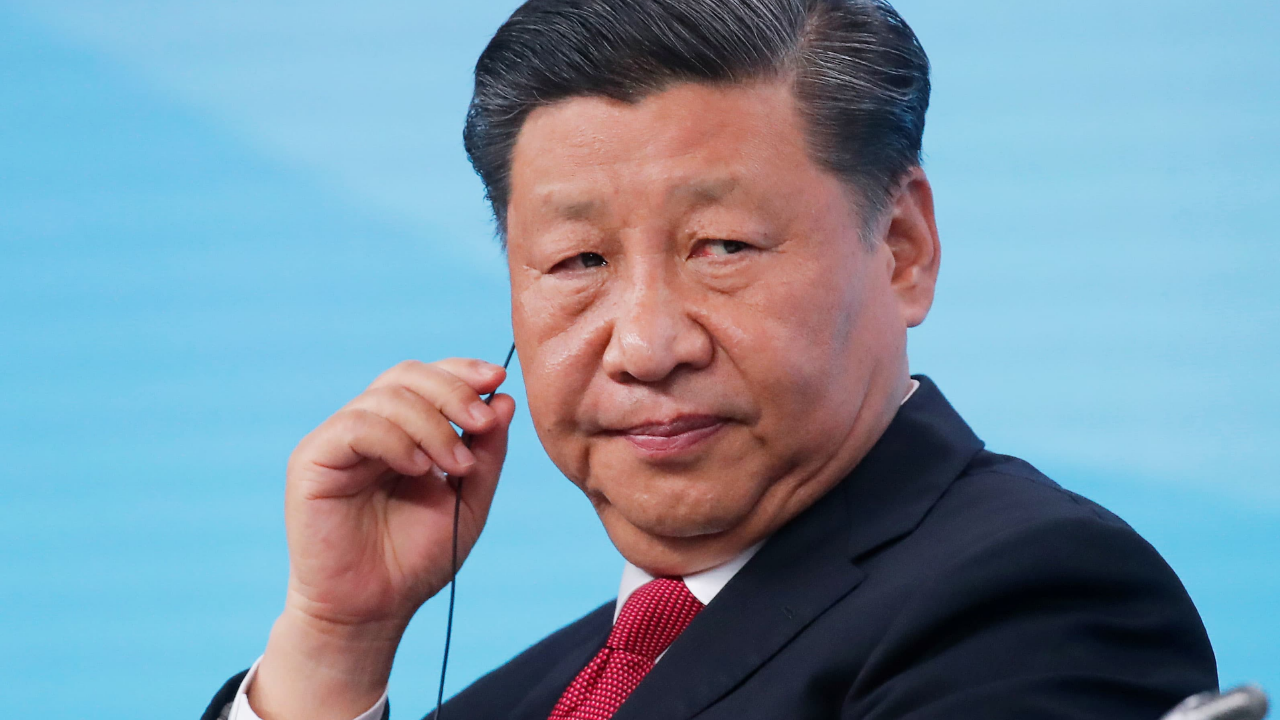
Xi Jinping has reshaped China’s military command at its most sensitive pressure point. In late 2025, two generals tied directly to Taiwan operations and Beijing’s defense were removed, one publicly disgraced, the other silently erased. Their replacements were installed personally by Xi as a sweeping purge accelerated across the People’s Liberation Army.
Nearly 30% of the generals Xi himself promoted since 2012 are now under investigation, removed, or missing. The upheaval is rewriting trust, loyalty, and command continuity inside China’s armed forces. Here’s what’s happening.
China’s Military Leadership Under Siege
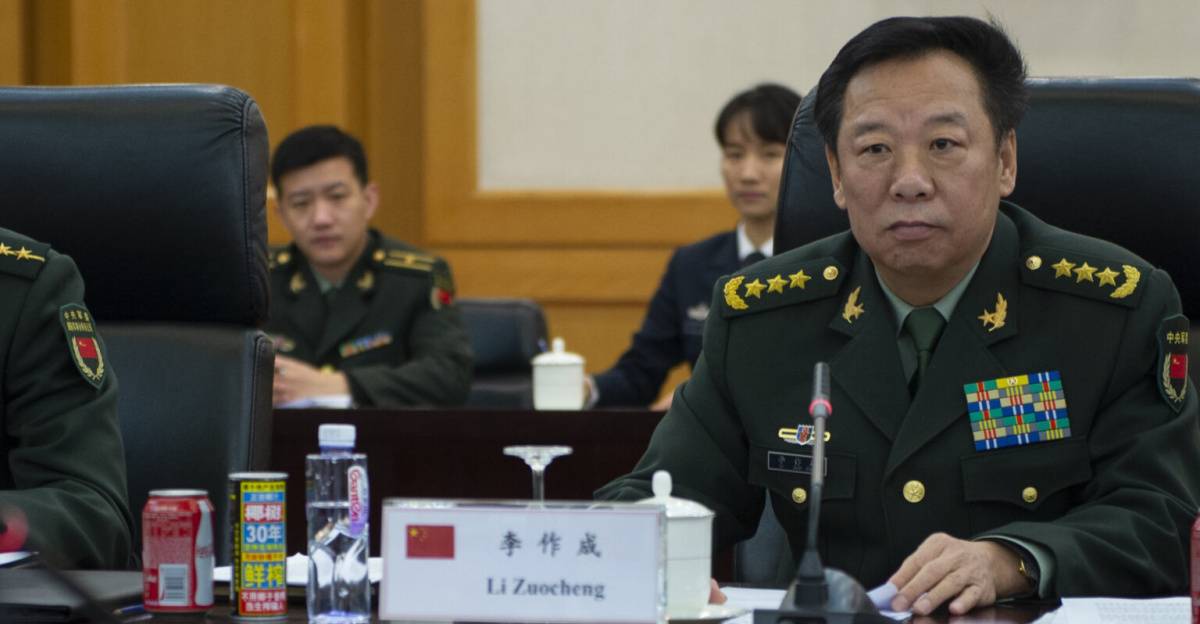
China’s senior military ranks descended into unprecedented turmoil throughout 2025. On December 22 at 2 p.m. Beijing time, Xi Jinping personally promoted two generals to full general in a rare ceremony, underscoring the stakes of the moment. Their elevation followed months of removals, disappearances, and investigations across the People’s Liberation Army.
The crisis became unmistakable on October 17, when the Ministry of National Defense announced the expulsion of nine senior officers in a single statement. While the announcement cited “extremely serious” violations, the broader context revealed a coordinated purge rather than isolated discipline cases.
What alarmed observers most was not just the scale, but the timing. The expulsions came three days before the Fourth Plenum on October 20, signaling internal instability at the very moment the Party sought unity and control over the military hierarchy.
The Fall of Xi’s Trusted Generals

General He Weidong’s removal marked a historic rupture. As vice chairman of the Central Military Commission, he effectively served as Xi’s military number two. After vanishing from public view in March 2025, He was formally expelled on October 17, accused of “seriously violating Party discipline and being suspected of serious duty-related crimes involving huge amounts,” according to China’s Ministry of National Defense.
His ouster was the first removal of a sitting CMC vice chairman since 1967. He’s downfall raised uncomfortable questions about trust at the top, since his rise had been closely tied to Xi’s own patronage system.
The purge also dismantled Xi’s long-standing Fujian network. He Weidong, Miao Hua, and Lin Xiangyang all built careers in the 31st Group Army in Fujian Province, where Xi spent 17 years before 2002. Their synchronized expulsion erased an entire power base inside PLA leadership.
Corruption, Loyalty, and a Shrinking Command Core
Authorities accused purged officers of corrupting the PLA promotion system, alleging that generals traded promotions for bribes and advanced loyalists through informal networks. The October 17 statement emphasized corruption, but state media quickly reframed the crisis as one of political loyalty.
PLA Daily accused the generals of “undermining CCP leadership of the PLA” and Xi’s Chairman Responsibility System. An October 18 editorial claimed some had “lost their chastity as Communists” and suffered a “total collapse of their beliefs.” Ideological allegiance to Xi personally had eclipsed institutional norms.
The fallout hollowed out the Central Military Commission itself. After October 17, only four members remained: Xi Jinping, Zhang Youxia, Zhang Shengmin, and Liu Zhenli. It became the smallest CMC since the Mao era, prompting Western analysts to warn that dissenting voices were being eliminated at the highest strategic level.
Taiwan Command Disrupted and Rebuilt
The purge struck directly at the command that would fight over Taiwan. General Lin Xiangyang, head of the Eastern Theater Command, was expelled on October 17, 2025. Based in Nanjing, the command oversees Taiwan Strait operations and includes five provinces and Shanghai, China’s economic core.
For more than two months, the Eastern Theater lacked a confirmed leader, creating a notable gap in continuity. That changed on December 22, when Xi personally promoted General Yang Zhibin and confirmed him as commander. Born in April 1963, Yang is a career PLA Air Force officer and former deputy commander of the theater.
According to Xinhua News Agency, Xi “presented certificates of order, extended his congratulations to the two generals and posed for photos with them.” The imagery publicly tied Yang’s authority directly to Xi, signaling trust at a moment of deep internal suspicion.
Drills, Disappearances, and Nuclear Doubts
Just seven days after Yang’s promotion, the Eastern Theater launched “Justice Mission 2025” drills on December 29 and 30, encircling Taiwan with maritime assault, air control, submarine operations, and live firing. Spokesperson Shi Yi called them “stern warnings against Taiwan independence separatist forces and external interference forces.”
Elsewhere, silence replaced explanation. At least 14 generals disappeared from public view between July and October 2025, according to Western defense analysts. Central Theater commander Wang Qiang vanished after missing a September 3 military parade. Southern and Western Theater commanders were also absent from key events.
The Rocket Force faced repeated upheaval. Its leadership changes since 2023 raised nuclear readiness concerns, with the U.S. Department of Defense’s December 2025 report warning that corruption disrupted procurement and weapons reliability.
Absolute Control, Rising Risk (Conclusion)
Xi Jinping’s objective remains unwavering: absolute control over the gun. By expelling generals he personally promoted, including He Weidong on October 17, 2025, Xi demonstrated that loyalty outweighs rank, connections, or past service. The December 22 promotions reinforced that authority flows directly from him.
Yet the cost is mounting. Analysts warn that fear-driven command structures discourage independent thinking and innovation. With the PLA ordered to be ready for “strategic decisive victory” by 2027, corruption probes, shrinking leadership circles, and trust deficits complicate planning. Whether this purge-scarred force can execute complex joint operations against a prepared adversary remains the unanswered test as Xi tightens his grip on China’s military future.
Sources:
CPC Expels Nine Senior PLA Officials. Ministry of National Defense of the People’s Republic of China, October 17, 2025
Xi Presents Orders to Promote Two Military Officers to Rank of General. Xinhua News Agency, December 22, 2025
Annual Report to Congress: Military and Security Developments Involving the People’s Republic of China. U.S. Department of Defense, December 23, 2025
Justice Mission 2025 Joint Military Drills Announcement. PLA Eastern Theater Command, December 29, 2025
SIPRI Top 100 Arms-Producing and Military Services Companies Report. Stockholm International Peace Research Institute, November 2025
Assessing China’s Fourth Plenum: Policy Continuity, Personnel Turmoil. Brookings Institution, October 2025