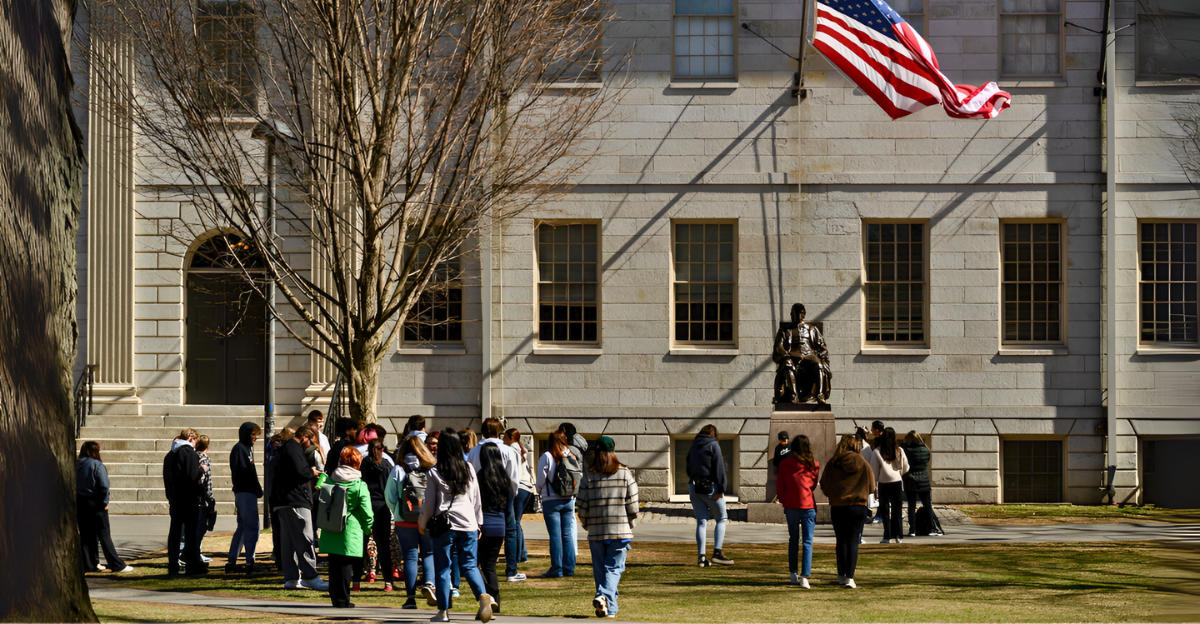
In fiscal 2024, Harvard University received about $686 million in federally sponsored research, roughly 11% of its operating revenue. Such funding underpins entire laboratories: when grants are suddenly at risk, whole projects can collapse.
Now the Trump administration is demanding sweeping policy changes in return for restoring these funds, putting well over a billion dollars of Harvard’s science budget on the line.
The nation’s leading research institutions realize the stakes: many campuses worry this may mark a new era of politicized science funding.
Mounting Pressure
Political pressure on campuses has surged. A Center for American Progress analysis found that more than 600 U.S. colleges have had their federal research grants targeted for termination.
In total, the administration has identified about $6.9–$8.2 billion in grants slated to be cut, roughly $3.3–$3.7 billion of which would be actually clawed back from active awards.
These actions have often focused on diversity, equity and free-speech initiatives, using funding cuts to enforce political priorities.
Experts warn that this is an unprecedented use of research dollars as leverage over higher education.
Historical Partnership
This pressure contrasts with a historic model of collaboration. Nearly eighty years ago, President Roosevelt’s science advisor Vannevar Bush and Harvard’s President James Conant argued that federal support of university research was vital to national security.
In 1945, NIH began funding university labs, and in 1950, Congress created the NSF.
Over the following decades, federal grants have fueled breakthroughs in every field.
Today, U.S. universities perform a majority of America’s basic science: in FY2008, they conducted about 56% of the nation’s basic research, illustrating how much of the innovation pipeline runs through campus science.
Escalating Demands
Then, in April 2025, the fight escalated. On April 11, a federal task force delivered Harvard a list of sweeping demands: outside audits of ideological “viewpoint diversity,” elimination of campus DEI programs, a shift to purely merit-based admissions and hiring, and even bans on protest masks at commencement.
The letter demanded “meaningful governance reforms,” including quarterly government reports on faculty hiring and curricula.
It sought to blur the line between private university governance and political agendas — essentially putting federal eyes on what Harvard can teach and whom it can hire.
The Confrontation
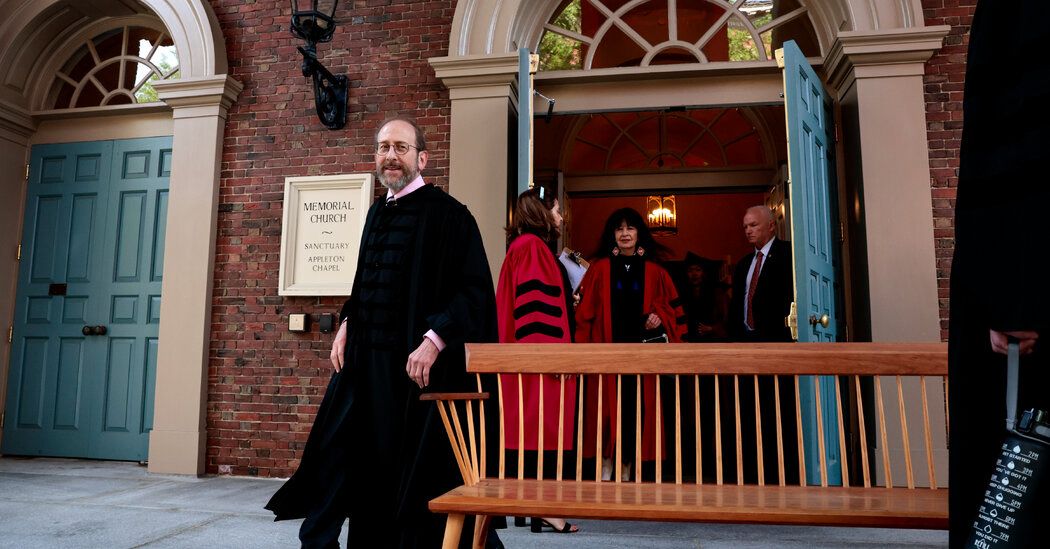
Harvard President Alan Garber flatly rejected the demands on April 14. In a campus letter he wrote, “No government — regardless of which party — should dictate what private universities can teach, whom they can admit and hire, and which areas of study and inquiry they can pursue”.
Within hours, the Trump administration followed through on its threat: it froze about $2.2 billion in Harvard’s grant funding and $60 million in contracts. (The White House also threatened to strip Harvard’s tax-exempt status if the university did not comply.)
Garber vowed to fight on, declaring Harvard would not surrender its independence to political pressure.
Research Impact
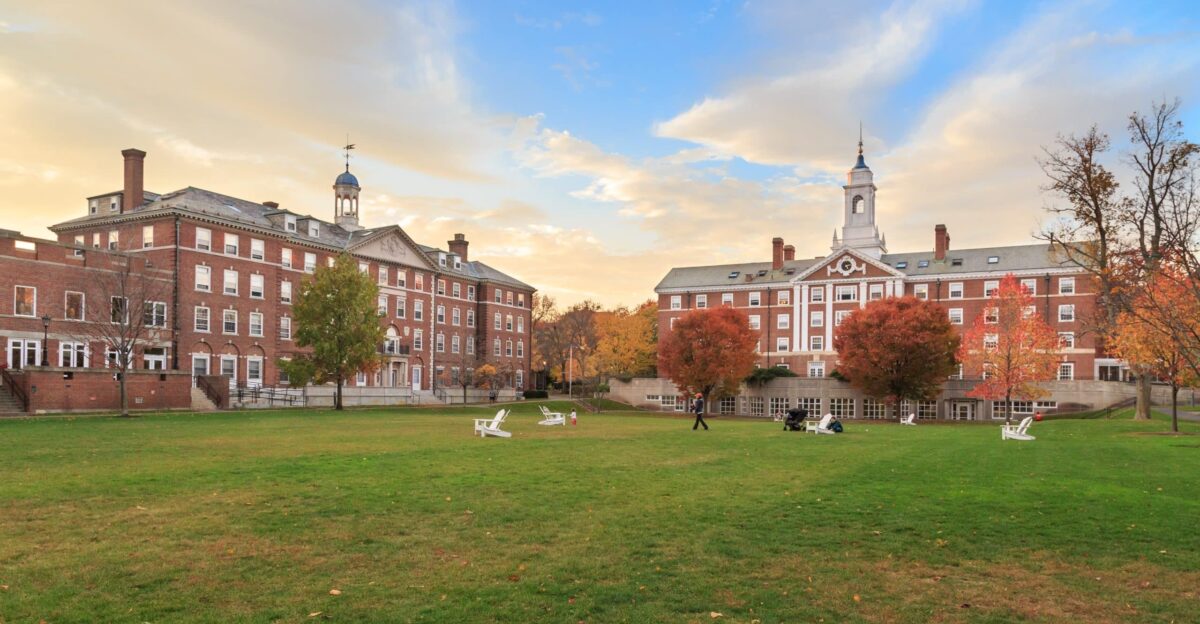
The impact was immediate. Nearly 1,000 active Harvard grants and contracts were halted by the freeze.
Projects from cancer immunotherapy to climate modeling ground to a halt as lab leaders suddenly lost critical funding.
The stakes were clear: federally supported research is woven into Harvard’s budget. For example, roughly 35% of Harvard Medical School’s revenue and 59% of the School of Public Health’s budget come from federal grants.
Countless experiments and clinical trials now hang in the balance as university researchers scramble for alternative funding or risk shutting down.
Human Cost

The human toll began to surface immediately. Neuroscientist Sharad Ramanathan, who lost around $1.5 million per year in grant support, said bluntly, “Things are really worse than people think”.
He reported that many of his brightest postdoctoral researchers were already seeking positions abroad, and eager undergraduates were being turned away from summer lab work because of funding gaps.
Ramanathan warned that this moment could echo the breakup of Bell Labs — once a research powerhouse that dwindled rapidly after deregulation — cautioning that “there is this point of no return, and that happens fairly quickly”.
His message: science depends on continuous support, and stopping it can do lasting damage.
Industry Ripple

The ripple effects went beyond academia into Boston’s life-sciences industry. Harvard’s affiliated hospitals and institutes collectively receive well over a billion dollars in NIH funding. For example, Mass General Brigham alone secured more than $1 billion from NIH in FY2024, with substantial NIH awards to Dana-Farber, Boston Children’s, and others.
That federal support helps power a vast biotech and pharmaceutical ecosystem—an ecosystem that employs hundreds of thousands and drives regional innovation.
Cutting off university research funds thus threatens the local economy: startups tied to Harvard’s discoveries may lose their pipelines, and health-care jobs that rely on ongoing trials could dry up.
Bell Labs Warning

Professor Ramanathan drew a stark historical parallel. He pointed to AT&T’s Bell Labs, which was a leader in research until the 1984 breakup.
Within a few years, Bell Labs shrank from 25,000 researchers to just a handful, losing its creative edge.
“There is this point of no return,” he said, cautioning that if federal cuts continue, university science could face a similar collapse.
His warning underscored the fragility of big research: once supporting structures erode, even leading labs struggle to restart.
Financial Lifeline
By May, Harvard had taken emergency steps to keep science alive. It announced a $250 million infusion from its central reserves (on top of its usual roughly $500 million research budget).
The Faculty of Arts and Sciences launched an emergency grant program covering roughly 80% of operating costs for suddenly unfunded labs, and ensured affected graduate students would keep their stipends.
Even so, officials warned that researchers were already enacting contingency plans—trimming projects, pausing new hires and tapping other departmental funds.
These measures merely bought time. As President Garber warned, “there will undoubtedly be difficult decisions and sacrifices ahead” — Harvard cannot absorb multi-billion-dollar losses indefinitely.
Internal Tensions
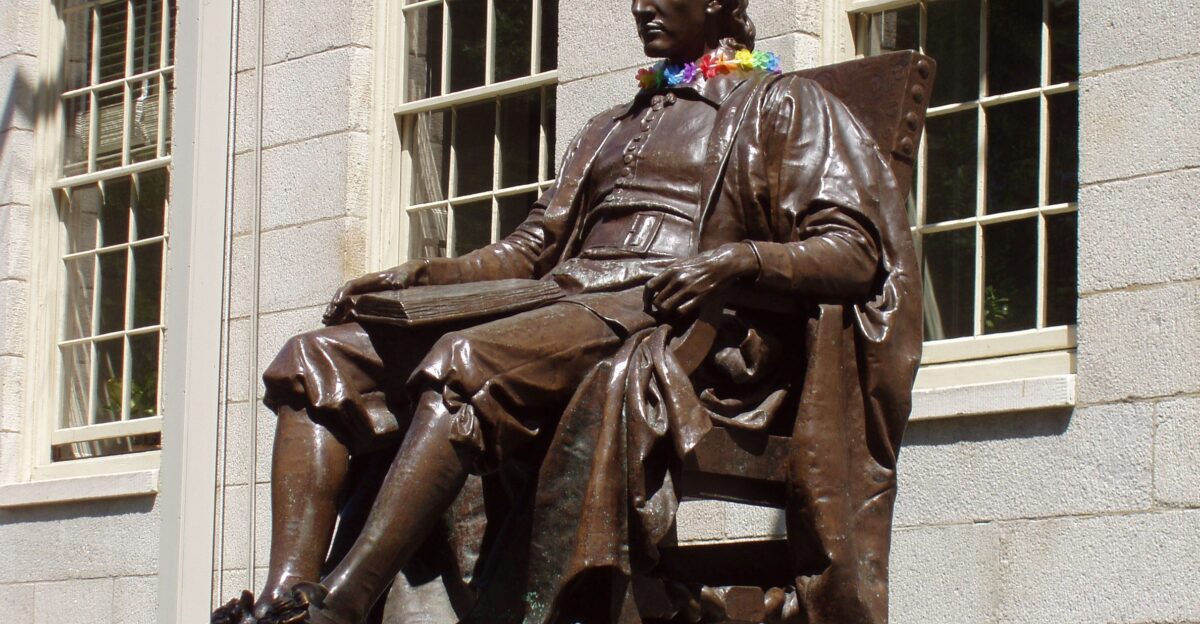
Inside Harvard, tensions ran high. Faculty and students rallied to defend the university’s independence — one protester even held a sign reading “Educate, Don’t Capitulate!”.
Meanwhile, some major donors quietly pressured administrators to negotiate, worried about the long-term costs and student welfare.
News reports said the IRS was preparing to revoke Harvard’s tax-exempt status if the school continued to defy federal demands. (As economist Greg Mankiw quipped, “I’m not sure what they’d call Harvard without that status”.)
Alumni and philanthropists nonetheless responded with gifts and pledges to help Harvard weather the crisis.
Negotiation Shift
By summer 2025, the atmosphere had shifted slightly. Harvard’s leaders quietly reopened communication. In late June, President Garber confirmed in a donor conference call that talks with the Trump administration had indeed resumed.
He emphasized that Harvard was already addressing shared concerns — noting ongoing efforts on campus climate, antisemitism, and promoting diverse viewpoints in the classroom.
The university framed these as common goals rather than new concessions. Meanwhile, it continued its federal lawsuit over the funding freeze, keeping both diplomatic and legal paths open.
Recovery Strategy
Harvard pursued a multi-front recovery strategy. It filed federal lawsuits asserting that the funding cuts and demands were unlawful.
Internally, it continued to use its own funds to prop up research. For example, FAS emergency grants covered about 80% of operating costs for faculty whose federal projects were terminated, ensuring continuity of as much work as possible.
Graduate students on those grants still received tuition and stipends.
These stopgap measures prevented an immediate shutdown of most labs, but only for the short term as the court battle unfolded.
Expert Skepticism
Higher-ed experts warn the freeze inflicts lasting damage. Former NSF Director Neal Lane calls it “unprecedented” and says “a lot of damage has already been done”.
Economist Robert Kelchen adds a sobering perspective: of Harvard’s roughly $53 billion endowment, only about $10 billion is unrestricted.
“If Harvard fights this for years,” he notes, “they will expend all their unrestricted reserves in just a few years”.
Financial officers point out that spending down the endowment would squeeze faculty, facilities and scholarships—so no university can indefinitely withstand the full force of federal pressure without severe tradeoffs.
Future Stakes
The Harvard confrontation raises far-reaching questions. TIME Magazine hailed Harvard’s decision to stand firm as “a watershed moment” for higher education.
The core issue: can America’s research universities maintain their independence and innovation if Washington conditions federal support on ideological compliance?
As TIME notes, decades of federal-university partnership produced an “ever-growing list of lifesaving discoveries” and dramatic gains in human health.
The Harvard case tests whether that model can survive political turmoil, or whether scholarly inquiry will be reshaped by power plays.
Political Weaponization
This is more than a skirmish — it’s a wide assault. In mid-May, eight federal agencies coordinated to cancel another ~$450 million in Harvard grants, on top of the $2.2 billion frozen in April.
The White House cited anti-Semitism enforcement, but critics noted the cuts spanned NIH, NSF, DOE and other departments.
Harvard’s president and provost decried the multi-agency terminations as an attack on the “80-year productive partnership” between the federal government and universities.
To them, these actions confirmed that research funding had become a blunt political weapon — not a neutral policy tool.
Global Competition

Observers warn this standoff has global consequences. Cutting U.S. research funding would cede ground to rivals. Economists estimate that halving federal R&D spending would depress GDP by an amount comparable to the 2008 financial crisis, making the average American roughly $10,000 poorer.
That would undermine long-term growth driven by innovation.
Meanwhile, China’s government is rapidly ramping up R&D investment.
The AAU notes that slashing American science support “would allow China to quickly surpass the United States’ global scientific and technological dominance”.
Constitutional Questions
Harvard’s legal battle has become a test of constitutional principles. The university argues that insisting on ideological conditions — audits of thought and policies — in exchange for grants violates the First Amendment and exceeds Congress’s spending power.
President Garber wrote that the demands “violate Harvard’s First Amendment rights and [exceed] the statutory limits of the government’s authority”.
Legal experts say the case will clarify how far the federal purse strings may reach: can the government legally dictate a private university’s curriculum, hiring or campus politics as a condition of funding?
Cultural Battleground
At its core, this fight reflects a broader culture war over higher education. The White House’s demands explicitly target campus protests, diversity offices and faculty hiring – issues squarely tied to ideological debates.
For example, officials have pushed Harvard to enact new rules to discourage pro-Palestinian demonstrations and change admissions and hiring practices.
Many see these as not just policy measures but a challenge to academic values. As one Harvard insider put it, it is “unprecedented” to see American universities — once “the envy of the world” — being told how to govern themselves.
Demanding audits of “viewpoint diversity” is thus widely seen as an attempt to reshape campus ideology by wielding federal funding as a cudgel.
Defining Moment
Harvard’s resistance to political demands has become a defining moment for American higher education. TIME calls it “a watershed moment” — a turning point that will shape what universities stand for.
It also reminds us that federal-university partnerships have driven medical breakthroughs and economic growth for decades.
If Harvard holds firm, it could reinforce the principle that academic freedom is inviolable, even under federal grants. If it yields, the precedent may be that the government can condition research funding on ideological compliance.
Either way, observers agree this battle will be remembered as a watershed for U.S. research leadership and the values of academia.