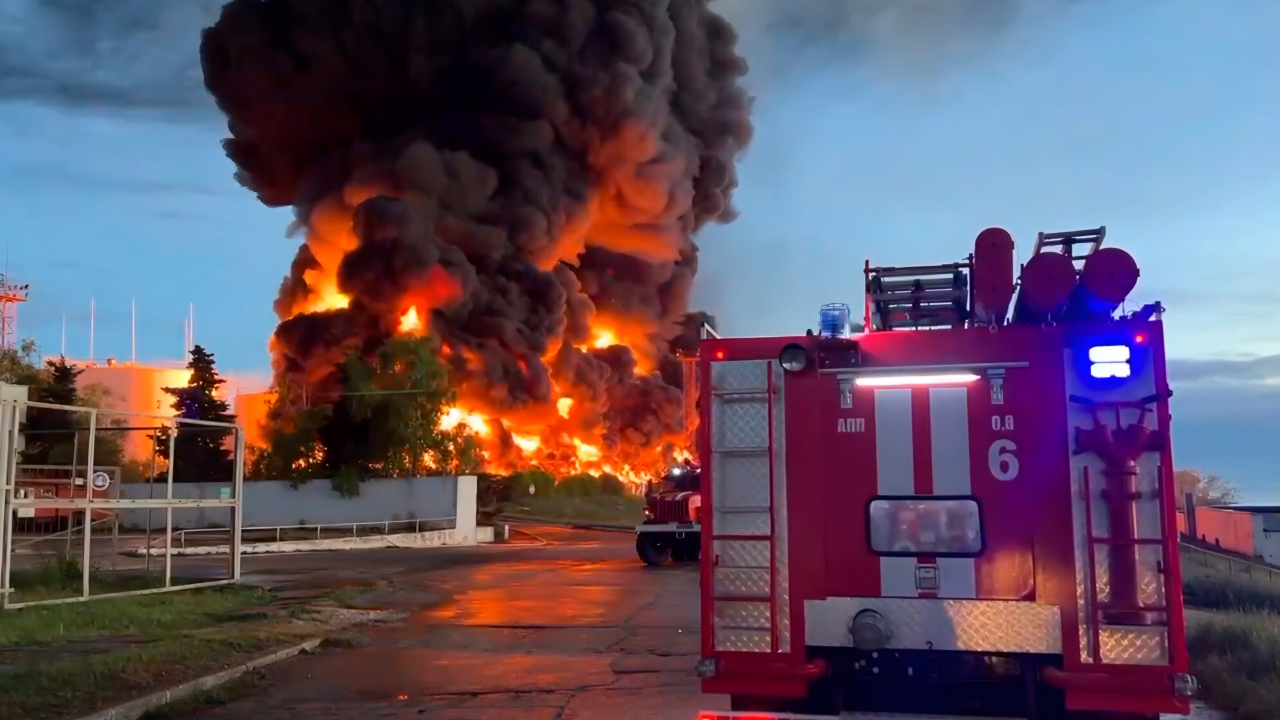
On the night of October 28–29, 2025, Ukraine launched its most extensive drone assault yet on Russian territory, striking oil depots and chemical plants across three regions. The attacks ignited massive fires at facilities in Ulyanovsk, Mari El, and Stavropol, with dramatic footage circulating online of fuel tanks and processing equipment engulfed in flames. While Russian air defenses intercepted some drones, falling debris sparked additional blazes, underscoring the challenge of fully protecting critical infrastructure. This operation marks a significant escalation in Ukraine’s campaign to disrupt Russia’s military logistics and energy supply.
Fuel Shortages and Economic Strain
By late September 2025, Ukrainian strikes had knocked out roughly 40% of Russia’s oil refining capacity, equivalent to 338,000 tons of crude per day. The resulting fuel shortage has driven gasoline prices up by 10% since January—the sharpest increase in 15 years. According to a survey by WEBBANKIR, 74% of Russian drivers have noticed price hikes since August, and 90% expect further increases. More than 40% of drivers have changed their driving habits, and many report encountering empty gas stations. These shortages threaten not only civilian mobility but also the logistics supporting Russia’s military operations.
Precision Strikes and Strategic Intent

Ukraine’s drone campaign, which began with limited strikes in 2024, intensified sharply in 2025. In the first ten months of the year, Ukrainian forces targeted 21 of Russia’s 38 major refineries—a 48% increase over the previous year. The strikes have reached as far as the Leningrad region in the northwest, Krasnodar in the south, and deep into the Urals and Volga regions. Each targeted facility processes hundreds of thousands of tons of crude oil annually, demonstrating Ukraine’s ability to inflict economic damage at distances exceeding 2,000 kilometers.
On October 28–29, Ukrainian Special Operations Forces hit three major energy facilities: the NS-Oil refinery in Ulyanovsk, which processes 600,000 tons of crude annually; the Maryinsky Oil Refinery in Mari El, with a capacity of 1.6 million tons per year; and the Budyonny Gas Processing Plant in Stavropol Krai, which supplies 2.2 billion cubic meters of gas annually. These coordinated attacks severely disrupted production and highlighted Ukraine’s growing reach.
Economic Warfare and Global Comparisons
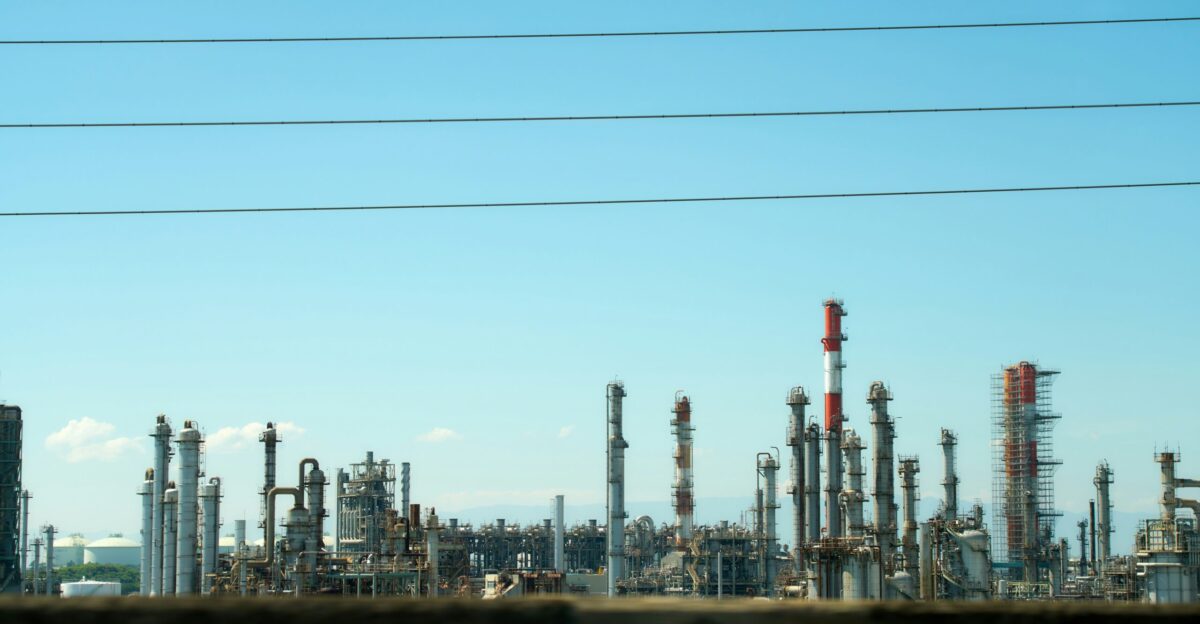
Ukrainian officials frame these strikes as a deliberate economic strategy. President Volodymyr Zelenskyy stated, “This is their war money from oil refining. That’s why we’re targeting it.” Kyrylo Budanov, head of Ukraine’s Main Intelligence Directorate, argued that the damage from drone strikes now exceeds the impact of Western sanctions, noting a 17.1% drop in Russian oil product exports in September.
Military analysts have noted parallels between Ukraine’s targeting of economic infrastructure and strategies employed in previous conflicts, including operations against oil facilities during the Gulf War. Ukraine’s approach leverages long-range drones for precision strikes with reduced risk to personnel.
Crimea and the Expanding Battlefield
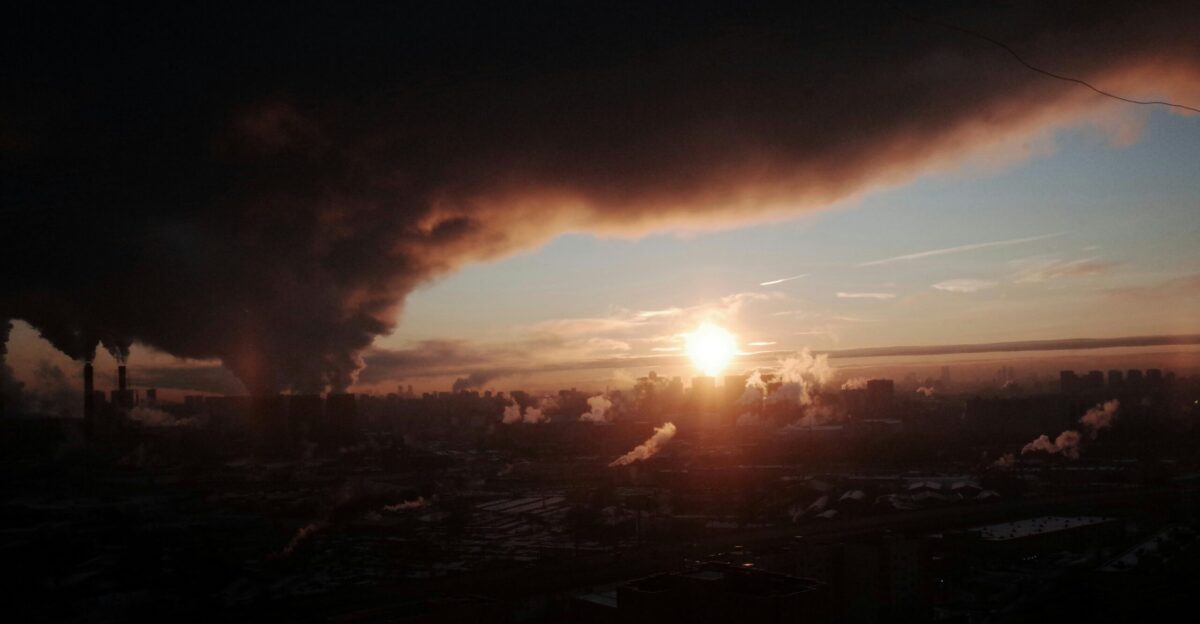
The same night as the mainland strikes, Ukrainian drones targeted two oil depots in occupied Crimea—Hvardiiske and Komsomolske. The Hvardiiske facility, a key node in Crimea’s fuel network, suffered catastrophic damage, including the destruction of a Pantsir-S2 anti-aircraft system valued at $20 million. Fires at Komsomolske sent thick smoke into the night sky, while additional attacks in Simferopol sowed further chaos. These operations disrupted supply lines for Russian occupation forces and signaled Ukraine’s intent to apply pressure across multiple fronts.
International Response and Future Implications

Ukraine’s escalating drone campaign has drawn close attention from Western allies. The effectiveness of these strikes has prompted discussions about increasing military support, including intelligence-sharing and advanced drone technology. Ukraine’s demonstrated success with long-range drone operations is reshaping modern warfare tactics.
The economic fallout is not limited to Russia. Disruptions in Russian oil supplies have begun to ripple through global energy markets, threatening higher prices and renewed inflation in countries dependent on energy imports. Experts warn that continued instability could force nations to rethink their energy strategies and accelerate the search for alternative sources.
As Ukraine continues its campaign, both sides face mounting pressure to adapt their tactics. The stakes are high: the outcome could redefine not only the course of the war but also the future of economic warfare and energy security worldwide.