When workers at Bollinger Motors checked their emails on November 21, 2025, many were already missing two paychecks. That same day, they learned the Michigan-based electric truck maker was closing immediately, halting operations across multiple states and cutting off support for its vehicles. The abrupt shutdown marked the culmination of a catastrophic workforce reduction that eliminated hundreds of positions through a series of cascading layoff waves throughout 2025.
A Year-Long Collapse in Employment
Bollinger’s final downturn represents a dramatic compression of job losses accumulated over the preceding months. As of September 30, 2024, the company employed approximately 388 people across its operations. By November 2025, that workforce had been decimated through successive rounds of cost-cutting measures. Multiple sources confirm that Bollinger had announced “staff reductions” and “workforce cuts” as part of emergency measures implemented in the months leading up to the shutdown, systematically eliminating the majority of its headcount before the final closure.
The company’s human resources director, Helen Watson, announced in the November 21 closure email that the firm would “officially close the doors of Bollinger Motors, effective today,” affecting all remaining employees across manufacturing, engineering, and administrative functions. By that date, the company’s employment had been slashed from nearly 400 people to a minimal core, representing cumulative layoffs in the hundreds as the organization contracted across multiple rounds of restructuring.
Payroll Breakdowns and Mounting Lawsuits

Internal messages show Bollinger first failed to process payroll on October 31 because funding was not available, then missed another scheduled pay period in November. At the same time, the company was facing supplier lawsuits totaling more than $5 million and a separate founder lawsuit centered on a $10 million loan. Together, those disputes underscored an acute cash shortage.
By mid-November, Bollinger no longer had enough liquidity to continue operations. Management proceeded with an abrupt shutdown, notifying employees, customers, and dealers on November 21 that facilities were closing and support functions ending. Phone lines were reported inactive, and there was no parallel bankruptcy filing to provide an orderly process for handling debts or claims.
The stoppage came barely 14 months after Bollinger launched its B4 Class 4 electric truck, a chassis cab aimed at municipal and commercial fleets. The B4 was assembled in Oak Park, Michigan, and positioned as a new zero-emission option for medium-duty applications. But production volumes remained modest and heavily dependent on fresh capital and fleet conversion schedules. As finances deteriorated in 2025, the program never reached the scale the company had projected.
Mullen Takeover, Rebranding, and Rapid Collapse

Bollinger’s failure followed a compressed series of corporate restructurings. After emerging from receivership in June 2025, the company was acquired by Mullen Automotive, which took a 95 percent ownership stake. Mullen then rebranded itself as Bollinger Innovations, making the commercial truck operation a core part of its identity.
Despite the transaction, the combined business remained undercapitalized. Within six months of the receivership exit and takeover, the operation had collapsed. The short span between court-supervised restructuring, acquisition, rebranding, and shutdown stands out even in a sector marked by high-risk ventures and frequent failures. It has raised questions about how much working capital was available, how quickly it was consumed, and whether integration and funding plans were realistic given market conditions.
The parent firm brought its own challenges. Bollinger Innovations, previously Mullen Automotive, had already faced a Nasdaq delisting in October 2025 after a sustained decline in share price and multiple reverse stock splits. That market history constrained its ability to raise additional equity or debt at meaningful scale. With investor confidence strained and manufacturing costs high, the parent entity lacked the financial strength to sustain Bollinger’s cash needs as operating expenses, supplier obligations, and legal liabilities increased.
National Footprint Unwinds as SEC Filings Flag Cost Cuts

Before the shutdown, Bollinger operated across four states. It carried out manufacturing and engineering in Oak Park, Michigan, while planning a major production shift to Robinsonville (Tunica), Mississippi. It also maintained a retail site in Oceanside, California, and an energy-focused division in Fullerton, California.
On November 21, management filed a Form 8-K with the Securities and Exchange Commission describing a cost-reduction plan. That disclosure outlined workforce reductions and the closure of the company’s office in Troy, Michigan, along with a consolidation of remaining staff into the Oak Park facility. The filing came on the same day employees received confirmation that the company would “officially close the doors” immediately, and dealers were told that operations and support were ending.
Because Bollinger did not file for bankruptcy protection, creditors and employees have no centralized court process to prioritize claims, oversee asset sales, or set clear timelines. Instead, suppliers, workers, and other stakeholders must pursue remedies independently, creating more uncertainty than in other recent electric vehicle failures where Chapter 11 proceedings provided a structured path.
Dealers, Workers, and Suppliers Bear the Immediate Impact
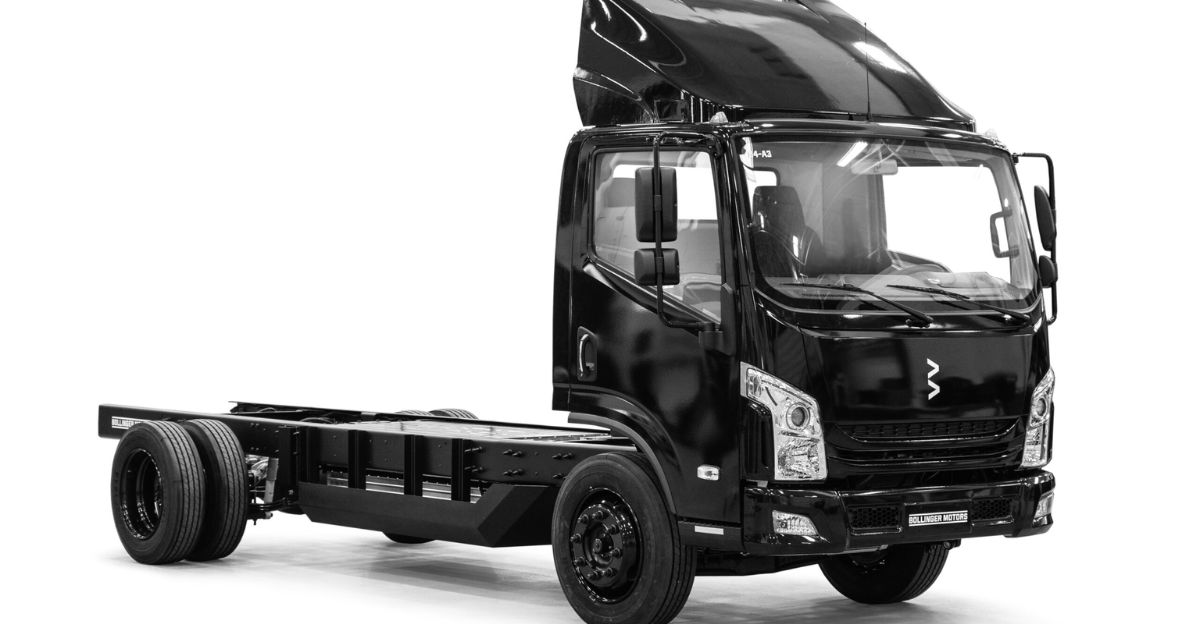
For dealers and fleet customers, one of the most significant effects is the loss of factory support for the B4 trucks already in service. As part of the shutdown, Bollinger canceled warranty coverage and discontinued factory-authorized service. Dealers were informed that parts pipelines and service authorizations were being cut off, leaving them without access to branded technical support or guaranteed components.
Many dealer partners had already invested in specialized tools, diagnostic equipment, and technician training tailored to the B4. With official communication effectively ending, they must now source parts where possible and arrange independent service solutions for fleet clients on their own.
Workers experienced the impact earlier than most other stakeholders. By the time of the closure notification, employees had already gone without two pay periods. At least 59 to 70 wage claims were subsequently filed with the Michigan Department of Labor and Economic Opportunity, as workers sought unpaid wages, accrued paid time off, and benefits. Without a bankruptcy case, they do not have the usual status and procedures afforded to employees in formal insolvency.
Suppliers that had tooled up for B4 production now confront stranded inventory, unpaid invoices, and the loss of expected future orders. Engineering and development partners such as Roush Industries lose ongoing and anticipated work tied to Bollinger programs. Smaller vendors with thin financial cushions may feel the impact most acutely, as there is no orderly wind-down or centralized claims process to spread losses or provide partial recoveries.
Broader Shock to Fleets, Local Economies, and the EV Sector
The shutdown disrupts electrification plans for municipal and commercial fleets that had adopted, ordered, or evaluated B4 trucks. With warranty coverage voided and parts availability uncertain, operators must recalibrate emissions strategies, procurement timelines, and maintenance plans. Many will turn to larger, better-capitalized manufacturers whose order books are already crowded, potentially stretching wait times for new vehicles and slowing some climate-oriented fleet transitions.
The collapse also carries regional economic consequences. In Mississippi, Bollinger had planned to shift major production to the Tunica/Robinsonville area, a move expected to create jobs and new investment. In Michigan, state incentives had been tied to job creation and capital spending. With operations in Oak Park pared back and expansion plans halted, both states face unrealized economic benefits, and officials may review or attempt to reclaim some incentive packages.
Bollinger’s failure joins a series of high-profile setbacks among younger electric vehicle manufacturers. Fisker entered Chapter 11 in June 2024, followed by Ideanomics in December 2024 and Nikola in February 2025. Those cases highlighted the capital demands, long development cycles, and narrow margins that confront smaller firms competing against entrenched automakers. Investors have increasingly shifted toward companies with stronger balance sheets and established service networks, accelerating consolidation across the sector.
For fleets already running B4 trucks, industry advisors suggest gathering and preserving all warranty and technical documentation, stockpiling critical parts where possible, and lining up independent service providers capable of supporting the vehicles over their remaining service life. Buyers considering new electric trucks are being encouraged to weigh manufacturer stability, after-sales infrastructure, and production track record alongside technical specifications.
Looking ahead, the closure of Bollinger—only about a decade after its founding and little more than a year after the B4’s debut—stands as a cautionary example of the challenges in commercial EV manufacturing. As the market consolidates around companies with deeper capital reserves and broader service capabilities, policymakers and fleets may increasingly favor a smaller group of resilient suppliers. Commercial electrification is still advancing, but Bollinger’s rapid rise and fall underscores how fragile early-stage ventures can be in a capital-intensive, rapidly evolving industry.
Sources
IndexBox (citing Detroit Free Press), Nov 2025 – Covers payroll issues, HR emails, dealer notifications, Mississippi plans, B4/B5/B6 models.
Detroit Free Press, Nov 2025 – Reports shutdown date, payroll misses, lawsuits, Nasdaq delisting, B1 prototype history.
EVPedia/YouTube, Nov 2025 – Discusses competitors, state incentives, fleet timelines, global perceptions.
TheStreet, Nov 2025 – Details collapse overview, Mullen rebranding, competitors, market stress, advice for fleets, decade-long history.
FreightWaves, Nov 2025 – Quotes HR director Helen Watson’s closure email, wage claims.