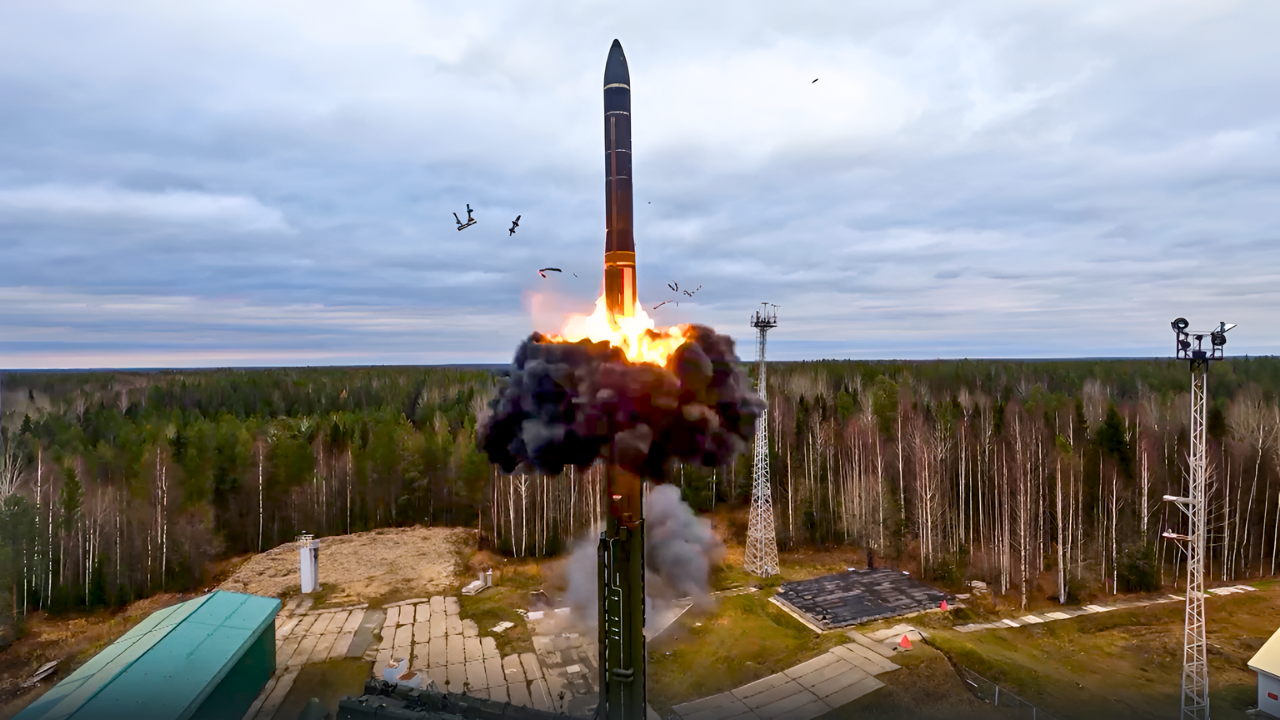
Russia has placed nuclear-capable Oreshnik hypersonic missiles at the Krichev-6 airbase in eastern Belarus, moving one of its fastest strike systems directly onto NATO’s eastern flank.
Belarusian President Alexander Lukashenko confirmed that no more than a dozen missiles are slated for deployment under the Union State security treaty that entered into force in March 2025. The move effectively turns Belarus into a forward launch platform for Russian strategic weapons.
Why Russia Moved Oreshnik to Belarus
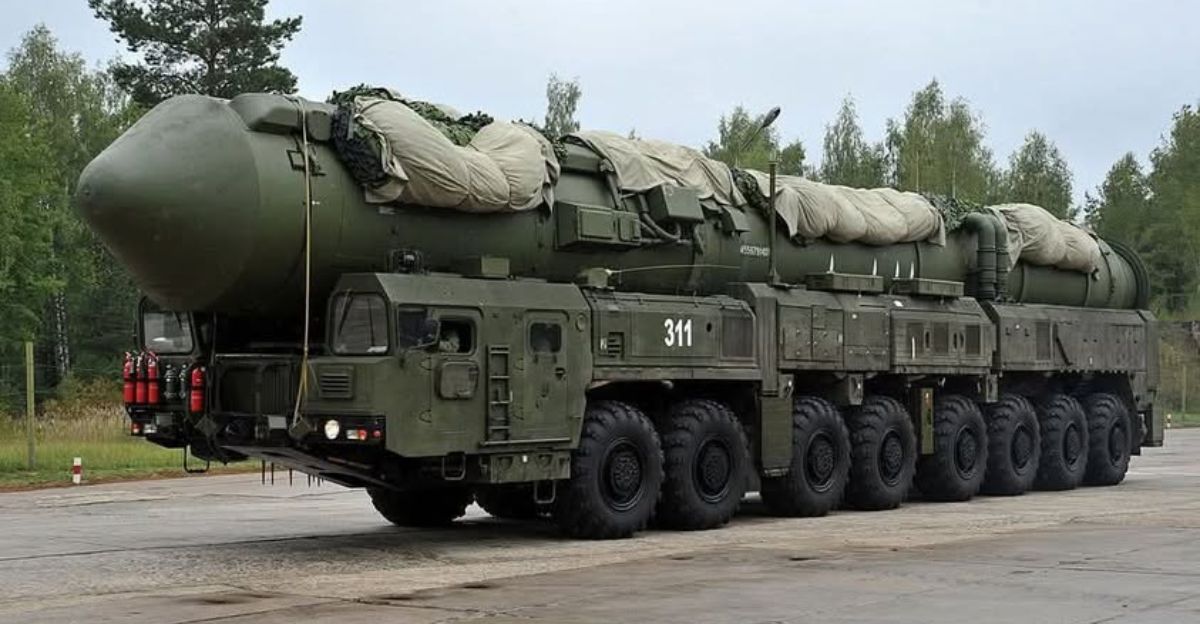
The deployment follows prolonged confrontation with NATO, the ongoing war in Ukraine, and the collapse of Cold War-era arms limits. Russian President Vladimir Putin has described Oreshnik as impossible to intercept and devastating even with a conventional warhead.
Moscow frames the move as deterrence, warning Western capitals over long-range weapons supplied to Kyiv and signaling that escalation risks now sit much closer to Europe’s core.
Europeans Confront Shorter Warning Times
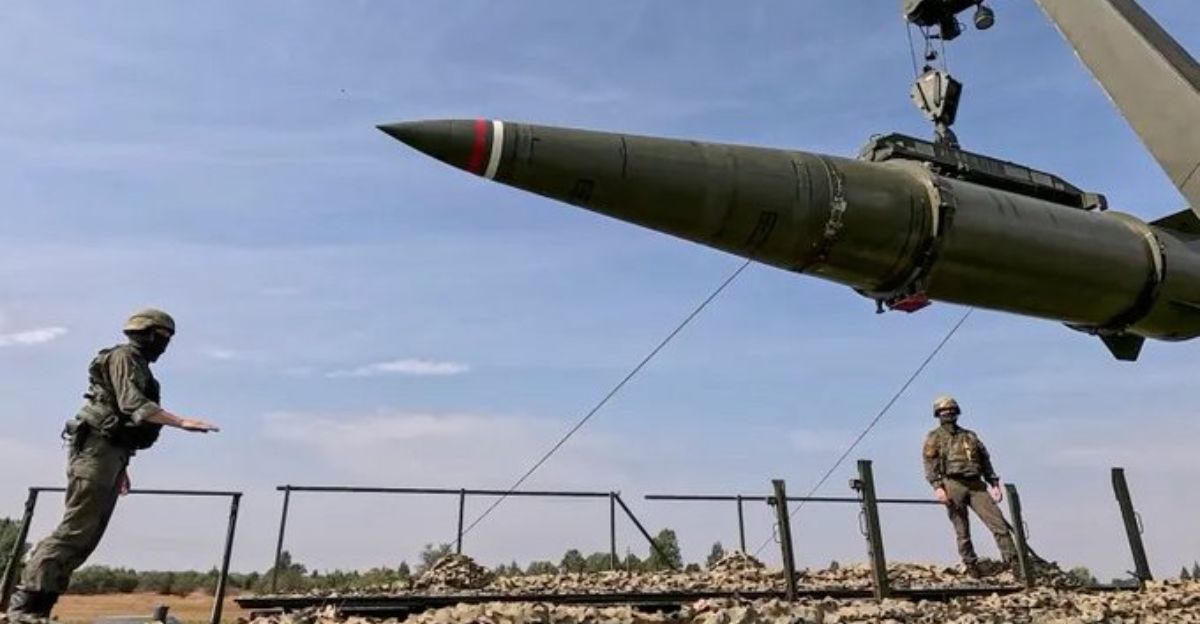
Stationing Oreshnik in Belarus dramatically compresses response windows for European capitals. At hypersonic speeds exceeding Mach 10, analysts estimate flight times of roughly 8–10 minutes to Warsaw or Berlin and about 17 minutes to Brussels.
With a reported range of up to 5,500 kilometers, the system places virtually all of Europe within theoretical reach, heightening concern over crisis decision-making, evacuation planning, and civil defense readiness across NATO member states.
A Missile NATO Struggles to Stop
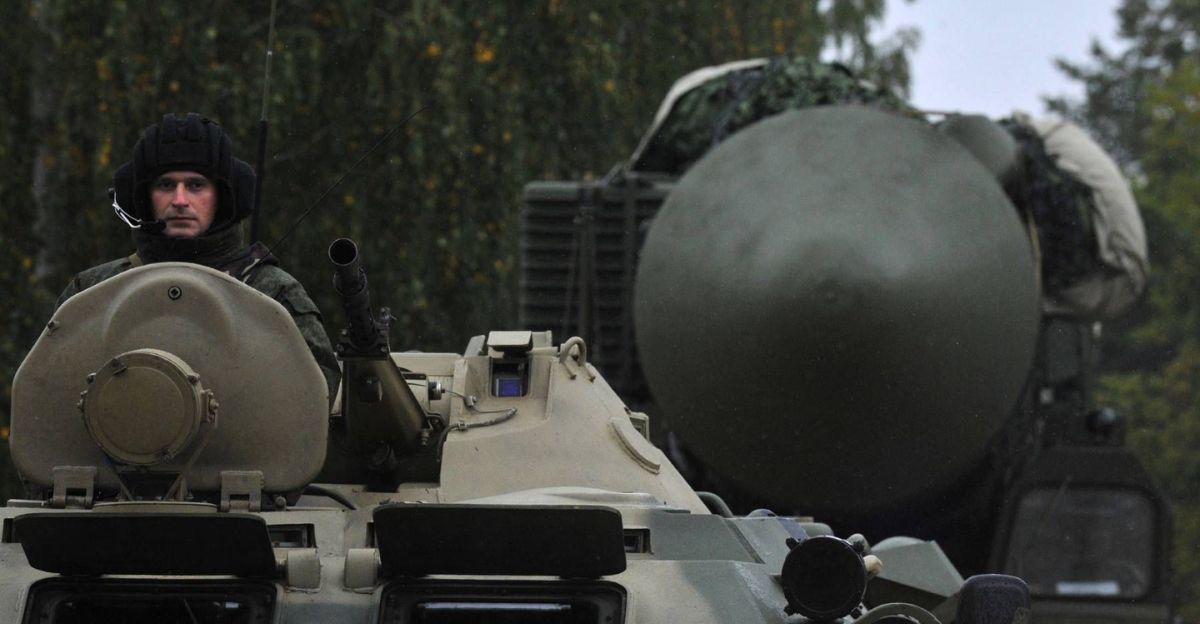
Oreshnik’s defining threat lies in speed and maneuverability. Traveling well beyond Mach 10 and capable of altering its trajectory, it challenges existing missile defense architectures designed for slower ballistic paths.
Russian officials claim interception is impossible, a point Western analysts dispute cautiously but acknowledge as a serious gap. The deployment underscores fears that current NATO defenses may lag behind a new generation of hypersonic strike weapons.
Satellite Imagery Confirms the Deployment
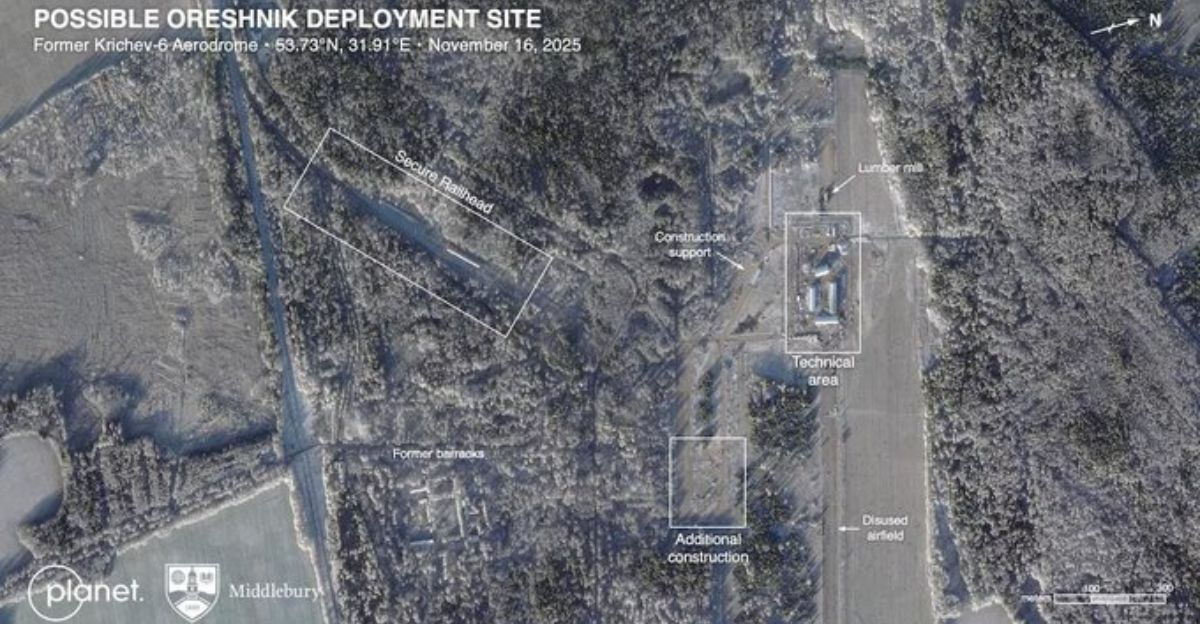
Independent confirmation came from commercial satellite imagery analyzed by researchers at the Middlebury Institute and CNA. Images from Planet Labs matched video footage showing construction and launcher activity at Krichev-6 in November.
This marks the first public evidence of Oreshnik systems stationed outside Russia on combat duty, highlighting how commercial space assets now play a central role in exposing sensitive military movements once hidden from public view.
The First Combat Test Came in Ukraine
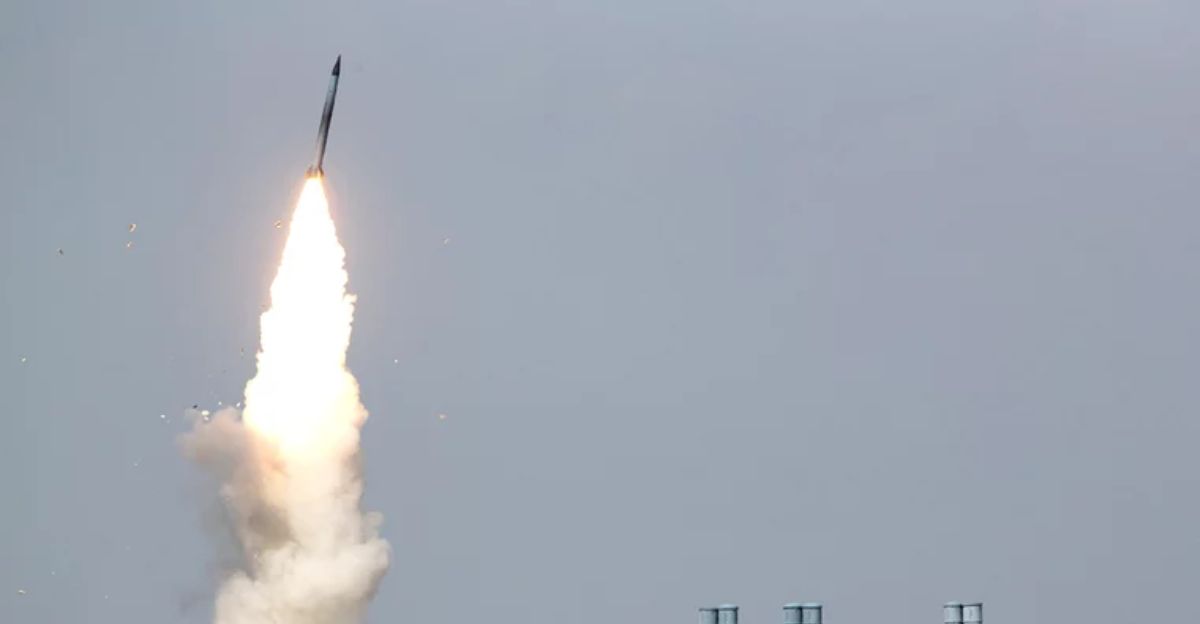
Oreshnik is not just theoretical. In November 2024, Russia conducted a confirmed test strike using a conventionally armed Oreshnik missile against a target in Ukraine. That strike demonstrated operational readiness and paved the way for the Belarus deployment.
The timeline from first combat use to forward nuclear-capable positioning under the Union State treaty spans barely four months, an unusually rapid escalation for a strategic weapon system.
Belarus Becomes a Nuclear Launchpad

Belarus has avoided direct troop involvement in Ukraine, yet the missile deployment pulls it deeper into the conflict’s strategic core. Hosting nuclear-capable hypersonic weapons places the country squarely on NATO’s target maps.
While Minsk frames the move as defensive, the reality is that Belarus now hosts one of Russia’s most advanced strike systems, fundamentally altering its role from buffer state to frontline launch territory.
European Leaders Sound the Alarm

European officials reacted sharply. German Chancellor Friedrich Merz warned that Russia’s actions are part of a broader plan aimed at all of Europe, citing daily sabotage, espionage, and cyber pressure alongside military threats.
Ukrainian leaders echoed concerns, arguing that Oreshnik’s reach turns European cities into hostages of escalation, even as Moscow insists the deployment is purely defensive.
Alleged Provocation and Russian Retaliation

Russia links the timing to an alleged provocation: claims that roughly 100 Ukrainian drones targeted Putin’s Valdai residence in the Novgorod region. Ukraine denies the accusation. Russian officials argue the Belarus deployment signals retaliation and deterrence, not escalation.
Whether the move was reactive or long-planned remains unclear, but the allegation adds urgency and emotional charge to an already volatile strategic decision.
Defense Budgets Brace for Impact
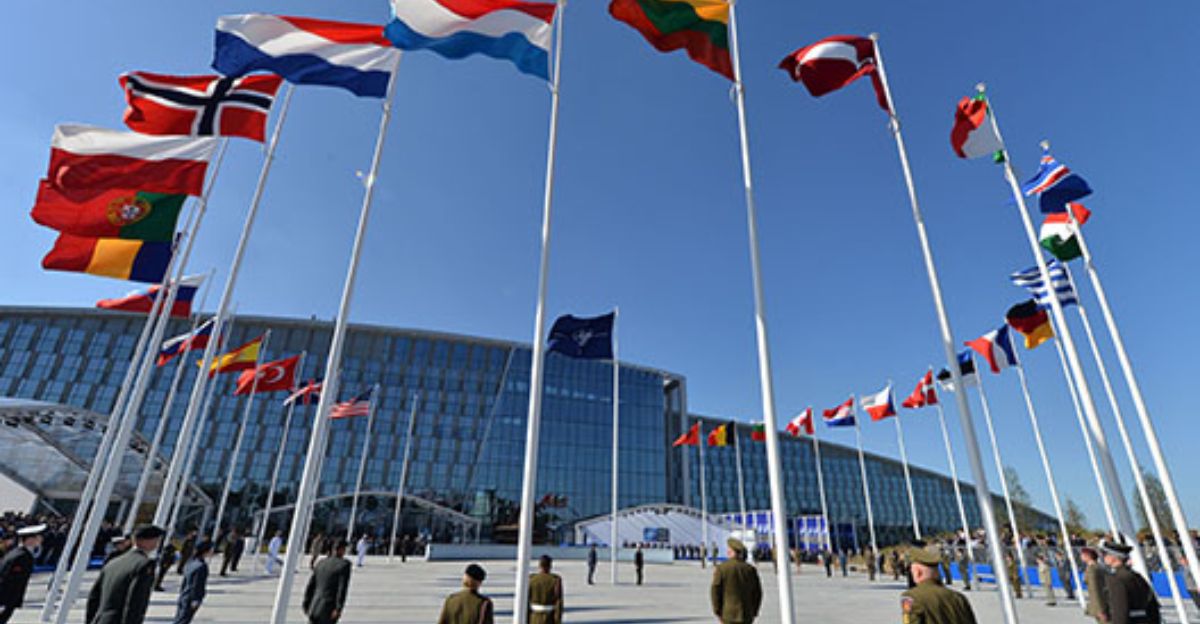
The presence of hypersonic missiles on NATO’s border is expected to accelerate European defense spending. Governments are weighing investments in missile tracking, early-warning satellites, hardened infrastructure, and experimental hypersonic interceptors.
Analysts estimate long-term implications could run into tens of billions of dollars as NATO adapts to threats that compress response times and strain existing air-and-missile defense doctrines.
Economic and Infrastructure Ripple Effects
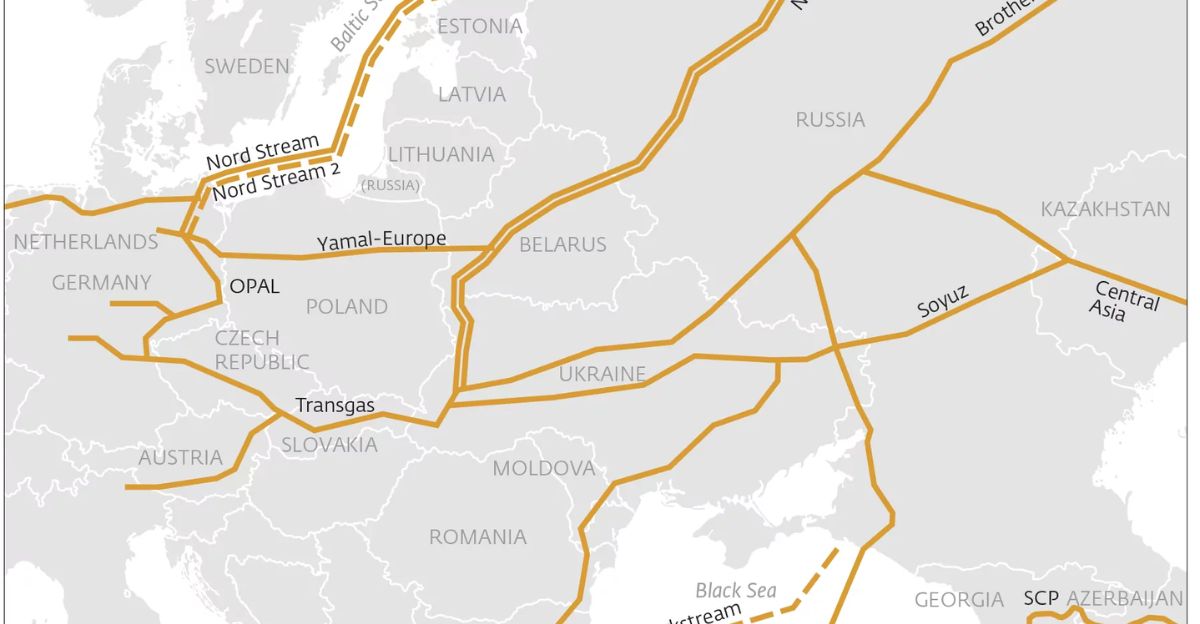
Belarus sits astride critical energy, rail, and road corridors linking Russia to the European Union. Nuclear-capable missiles stationed nearby elevate perceived risk to pipelines, logistics hubs, and cross-border trade routes.
Even without conflict, insurers and shippers may price in higher risk premiums, raising transport and energy costs for nearby states, particularly Poland and the Baltic countries.
Life Near a High-Value Target
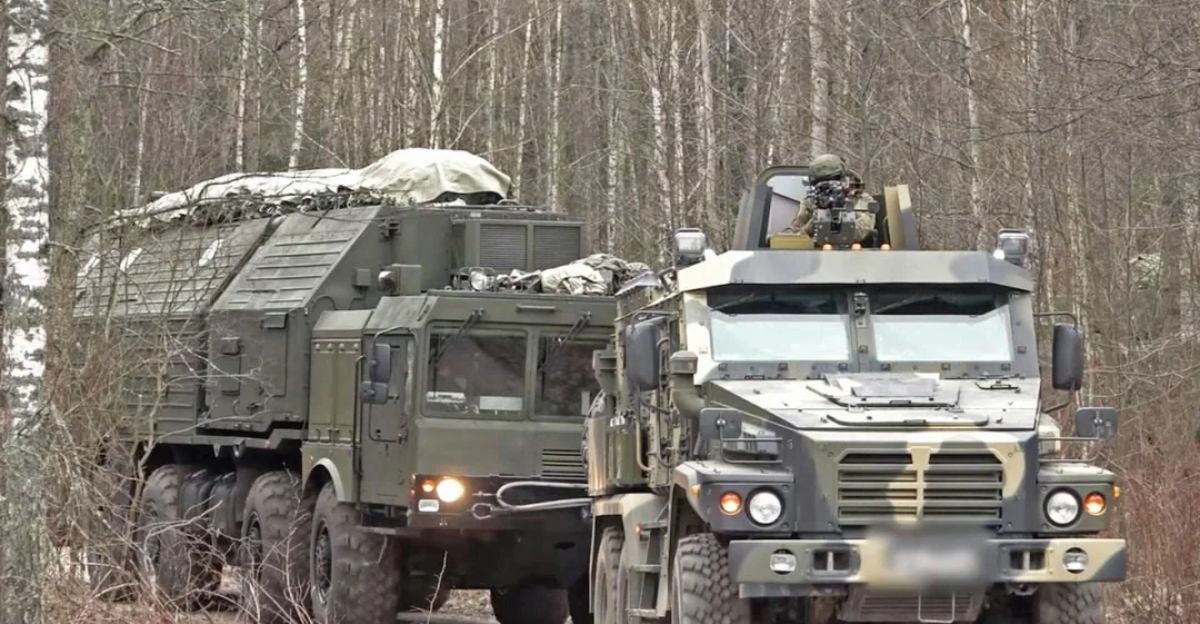
At the local level, Krichev-6 has brought construction, security upgrades, and specialized training for Russian and Belarusian personnel.
A ceremonial flag-raising in late December marked the unit’s entry into combat duty. For surrounding communities, the base brings jobs and infrastructure—but also the reality of living next to a high-priority military target in any future confrontation.
Arms Control Fears Resurface
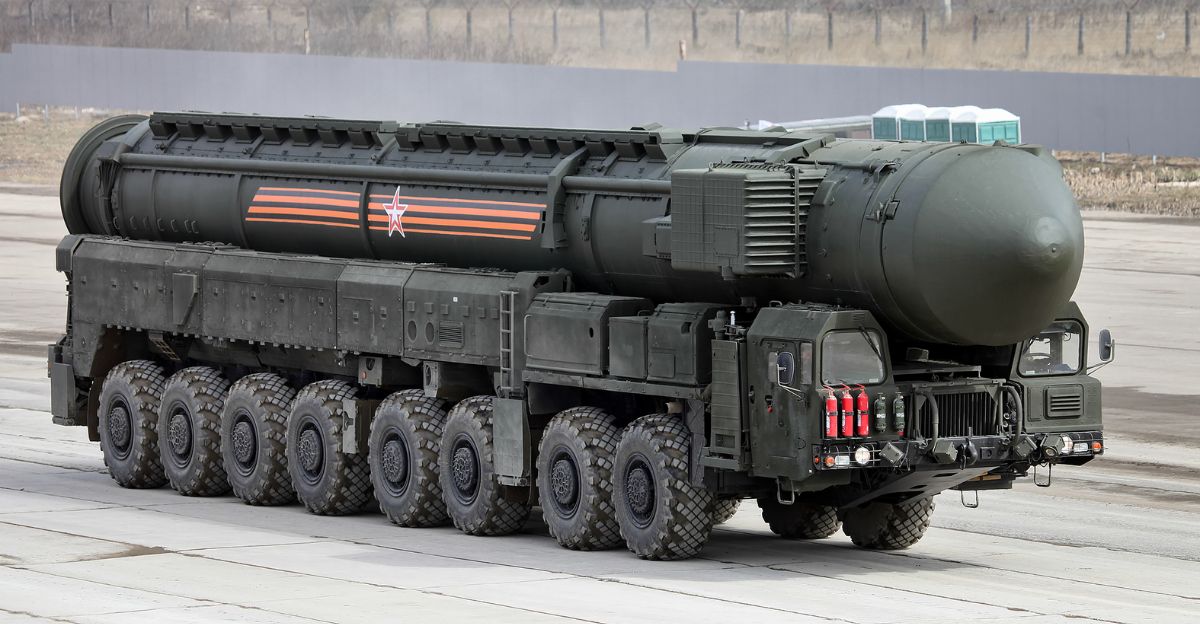
The deployment revives dormant arms-control debates. With intermediate-range missile treaties collapsed, hypersonic systems like Oreshnik compress decision times and raise the risk of miscalculation.
Critics argue that nuclear-capable weapons stationed closer to borders increase the chance of unintended escalation, while supporters say deterrence requires matching new technologies with forward positioning.
Markets and Public Anxiety React

Financial markets track the deployment as a new geopolitical risk factor, particularly for energy and regional equities. For European households, the psychological effect may be more immediate.
Living within minutes of a potential strike amplifies stress, even as officials emphasize deterrence and alliance guarantees. Governments face pressure to update alert systems, shelters, and public guidance in response.
Europe Enters the Hypersonic Era
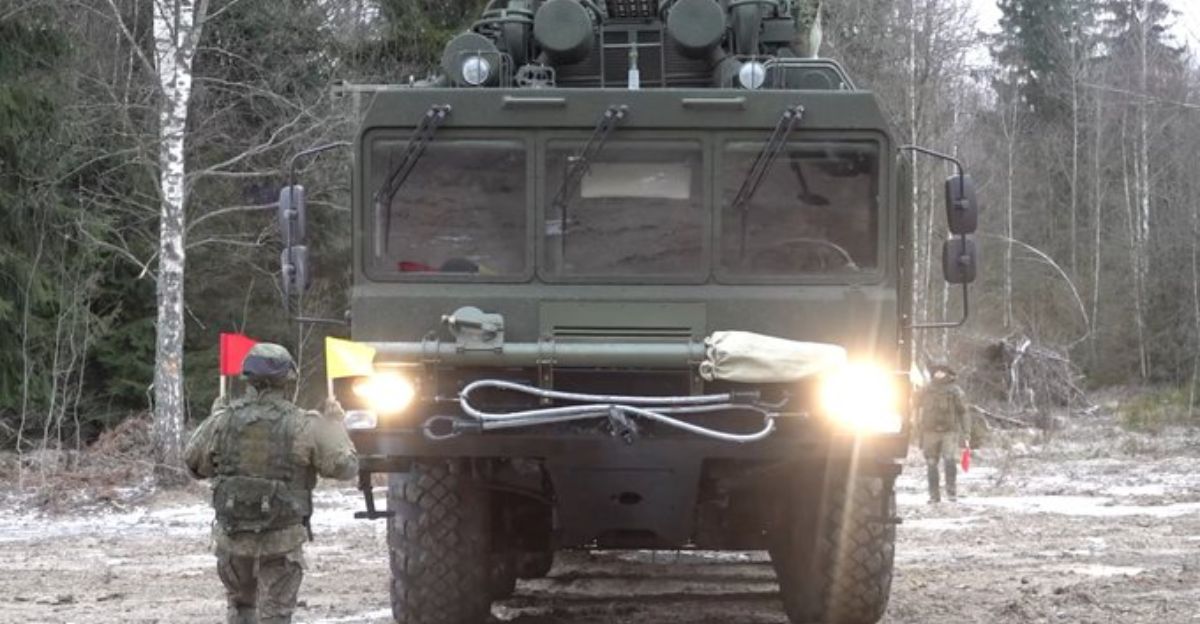
With Oreshnik now on combat duty in Belarus, Europe confronts a security reality defined by hypersonic speed and minimal warning.
The deployment marks the first forward nuclear placement under the 2025 Union State treaty and the first time Russia has stationed this weapon outside its borders. How NATO, Moscow, and Minsk manage this standoff may shape Europe’s strategic balance for decades.
Sources:
“Exclusive: Russia likely placing new hypersonic missiles at Belarus site, U.S. researchers say.” Reuters, 26 Dec 2025.
“Russia deploys hypersonic Oreshnik missiles in Belarus amid Europe tensions.” Al Jazeera, 31 Dec 2025.
“Russia has used its hypersonic Oreshnik missile for the first time. What are its capabilities?” Associated Press, 10 Dec 2024.
“Belarus-Russia Union State treaty on security guarantees comes into force.” Belta (Belarus Telegraph Agency), 13 Mar 2025.