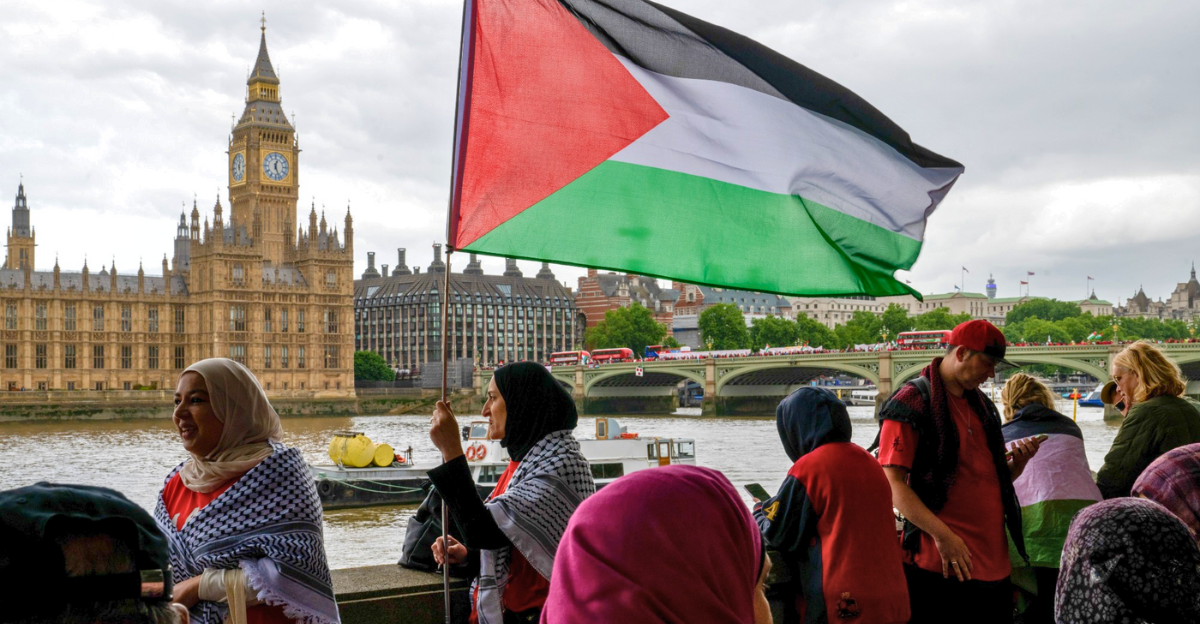
Prime Minister Keir Starmer made history on September 21, 2025, when he announced the UK’s formal recognition of Palestinian statehood. The decision, coordinated with Canada, Australia, and Portugal, marks a significant shift in British foreign policy and comes 108 years after the controversial Balfour Declaration promised support for a Jewish homeland in Palestine.
Government Defends Symbolic Recognition Move

In his video statement, Starmer emphasized that “in the face of the growing horror in the Middle East, we are acting to keep alive the possibility of peace and a two-state solution”. The Prime Minister made clear that recognition “is not a reward for Hamas,” stating the terrorist organization will have “no future, no role in governance, and no involvement in security” in any Palestinian state. Foreign Secretary Yvette Cooper described the decision as reflecting “our unwavering commitment to a two-state solution” at a time when it faces “unprecedented threat”.
Sharp Political Divisions Emerge Over Decision

The recognition has created deep splits across British politics. Shadow Home Secretary Robert Jenrick dismissed concerns about potential reparations as “ahistorical nonsense,” pledging that no taxpayer funds would be used for such purposes. Reform UK leader Nigel Farage called the recognition “a mistake” and labeled it “a surrender to terrorism and a betrayal of Israel”. Conservative leader Kemi Badenoch condemned the move as “utterly disastrous,” arguing it rewards terrorism without conditions on Hamas.
Separate Legal Petition Predates Recognition Announcement
Weeks before the UK’s recognition announcement, a group of Palestinians filed a comprehensive 400-page legal petition seeking acknowledgment of British colonial violations during the Mandate period from 1917 to 1948. The petition, submitted to the government on September 7, 2025, was drafted by prominent King’s Counsel lawyers and focuses on documented abuses during Britain’s administration of Palestine. This legal action is entirely separate from the state recognition process and makes no specific financial demands.
Palestinian Leaders Welcome Long-Awaited Recognition
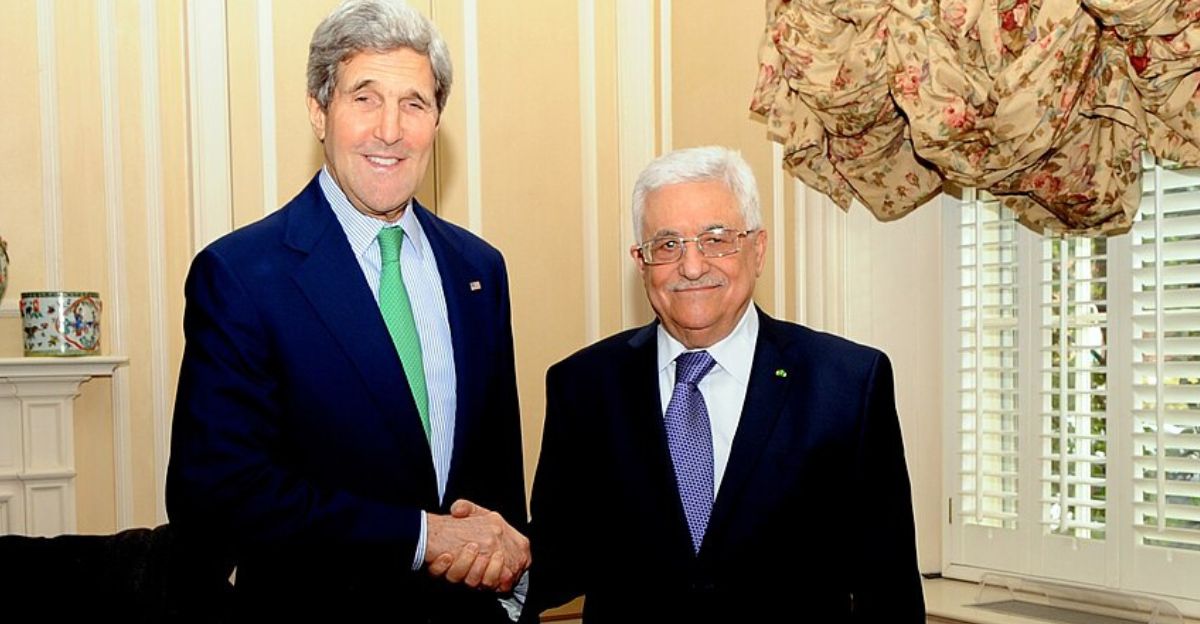
Palestinian Authority President Mahmoud Abbas welcomed the UK’s decision, describing it as facilitating the coexistence of “a state of Palestine alongside the state of Israel in safety, peace, and good neighborliness”. The Palestinian Mission to the UK celebrated the recognition as an “inalienable right” that marks “the end of the denial of our existence”. Notably, official Palestinian statements focused entirely on the diplomatic significance without mentioning reparations.
Colonial Legacy Questions Surface Through Legal Challenge

The Palestinian legal petition centers on Britain’s role during the Mandate period, particularly the 1917 Balfour Declaration and subsequent policies that the petitioners argue violated international law. Led by 91-year-old industrialist Munib Al Masri, who was shot by British soldiers at age 13, the group seeks acknowledgment, apology, and investigation into potential reparations. The petition argues that Britain’s occupation lacked legitimate authority under the League of Nations framework.
Legal Experts Outline Petition’s Seven Key Demands

The comprehensive legal document presents seven specific requests to the UK government, including reviewing evidence of colonial violations, releasing hidden archive documents, delivering a transparent assessment, issuing a public response, admitting wrongful acts, offering an official parliamentary apology, and exploring accountability measures. Legal experts note the government is obligated to respond or could face judicial review proceedings.
International Recognition Movement Gains Western Support

The UK joins over 150 countries that already recognize Palestinian statehood, with France, Belgium, Luxembourg, Malta, and Monaco announcing similar decisions during the UN General Assembly week. This represents 81 percent of UN member states, though recognition remains largely symbolic without universally agreed borders or effective governance structures. The momentum reflects growing international pressure following the Gaza conflict.
Media Speculation Creates Reparations Confusion

Following the recognition announcement, some media outlets speculated about potential reparations demands, with reports suggesting a £2 trillion claim based on articles in publications like the Daily Mail and Winnipeg Sun. However, fact-checking organizations, including Snopes, have found no evidence of any formal reparations demand from Palestinian authorities. These reports appear to conflate the separate legal petition with speculative financial claims.
Official Sources Confirm No Reparations Link
The UK government’s official recognition statement makes no reference to financial obligations, emphasizing instead the symbolic nature of the diplomatic gesture. Reuters and other major news agencies covering Abbas’s response to recognition reported his focus on diplomatic progress rather than financial demands. The Palestinian Authority’s official statements have consistently centered on the political significance of recognition.
British Officials Express Frustration Over Claims

Government sources have expressed frustration over suggestions that recognition automatically triggers financial liability. Officials maintain that diplomatic recognition operates entirely separately from any historical grievance processes. The government’s position emphasizes that recognition aims to preserve the two-state solution rather than address colonial-era disputes.
Historical Context Shapes Contemporary Debates

Britain administered Palestine from 1917 to 1948 under the League of Nations Mandate system, a period marked by significant tensions between Jewish and Arab populations. The Balfour Declaration’s promise of a Jewish homeland while protecting Arab rights created contradictions that persist today. Legal scholars note this historical context underlies contemporary discussions about accountability, though formal recognition and historical grievances remain separate issues.
International Law Questions Remain Complex
The Palestinian legal petition invokes international law frameworks including the Hague Conventions and International Law Commission principles on state responsibility. Legal experts acknowledge that while historical violations occurred, establishing direct causation and overcoming sovereign immunity present significant challenges. The petition represents the first comprehensive legal challenge to Britain’s Mandate-era conduct.
Regional Implications Extend Beyond Britain

Israel has strongly condemned the recognition wave, with Prime Minister Benjamin Netanyahu accusing Western leaders of giving “a huge reward to terrorism”. The coordinated recognition by multiple Western allies represents a significant diplomatic setback for Israel amid the ongoing Gaza conflict. Other countries are closely monitoring the precedent set by these Western recognitions.
Questions Persist About Implementation

Recognition of Palestinian statehood raises practical questions about borders, governance, and security arrangements that remain unresolved. The Palestinian Authority lacks full control over its claimed territory due to Israeli military presence in the West Bank and Hamas control in Gaza. Experts note that while recognition provides diplomatic momentum, actual statehood requires negotiated agreements between the parties.
Public Opinion Reflects Deep Divisions

British public opinion on Palestinian recognition shows significant divisions, with polling suggesting limited support for unconditional recognition. The issue has created tensions within Labour’s ranks, with some MPs supporting the move while others express concerns about timing. These divisions reflect broader societal debates about Britain’s role in Middle East diplomacy and historical accountability.
Political Legacy Questions Mount for Government

The recognition decision has raised questions about the long-term political implications for Starmer’s government. Some political analysts suggest the move could strengthen Labour’s position with pro-Palestinian constituents while potentially alienating others. The decision reflects broader shifts in British foreign policy approaches to Middle Eastern conflicts and international law.
International Community Watches Precedent Closely
The coordinated Western recognition of Palestinian statehood has drawn attention from governments worldwide, with many viewing it as a potential template for future diplomatic initiatives. Regional powers are assessing whether this precedent could influence their own recognition policies. The move has also prompted discussions about the effectiveness of symbolic diplomatic gestures in conflict resolution.
Legal Challenges Could Set Important Precedents
The Palestinian legal petition against Britain could establish significant precedents for how former colonial powers address historical grievances. Legal scholars are closely monitoring the case as it may influence similar claims against other European nations. The outcome could reshape the understanding of state responsibility for colonial-era violations under international law.
Looking Ahead: Symbolic Gesture or Substantive Change
As Britain navigates the aftermath of its recognition decision, questions remain about whether this diplomatic gesture will translate into meaningful progress toward peace. While Palestinian leaders celebrate the symbolic victory and Israeli officials condemn the move, the fundamental challenges of achieving a viable two-state solution persist. The separate legal petition process continues independently, potentially establishing precedents for how former colonial powers address historical grievances.