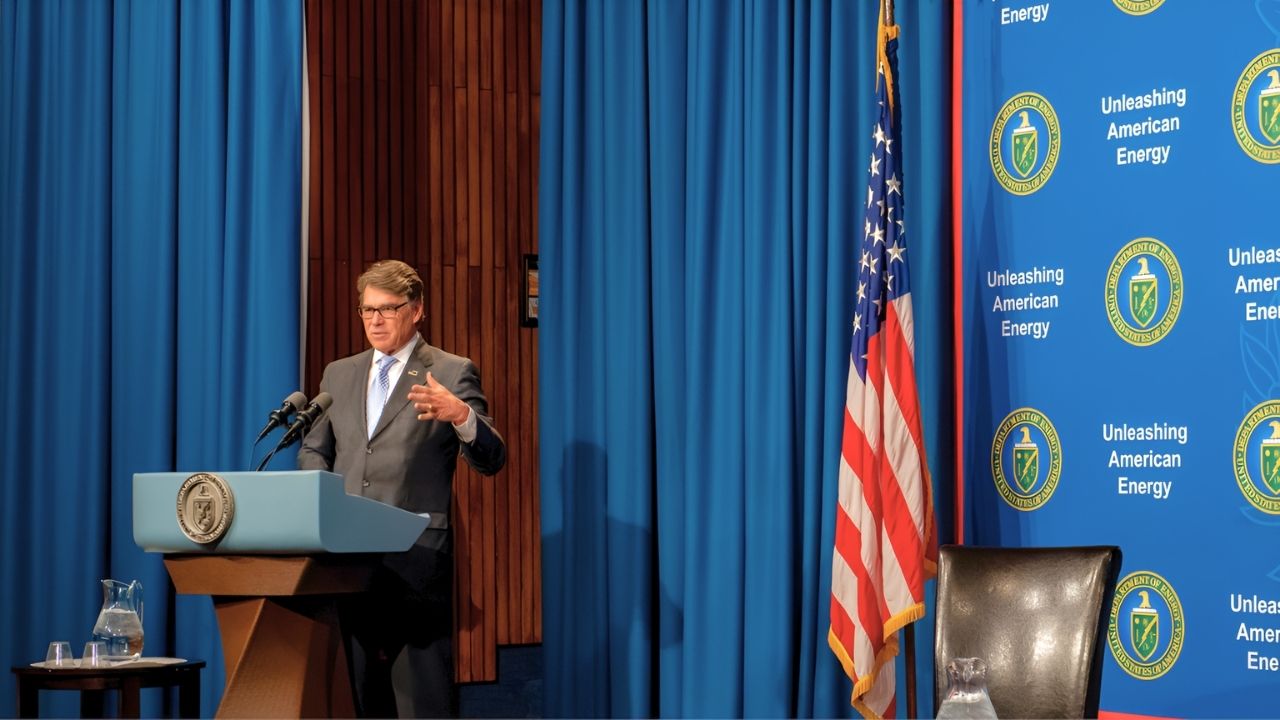
A surge in artificial intelligence (AI) development is pushing America’s power grid to its limits, prompting urgent warnings from federal officials. On July 7, 2025, the Department of Energy (DOE) issued a rare alert, citing immediate risks to grid reliability as the nation races to support both economic growth and the rapid expansion of AI data centers. The warning follows President Trump’s April executive order mandating swift federal action to safeguard energy security and prevent widespread outages.
AI’s Unprecedented Appetite for Power

The explosive growth of AI is reshaping the U.S. energy landscape. Major technology companies—including Microsoft, Amazon, Google, Meta, and Apple—are investing hundreds of billions of dollars in new data centers. Microsoft alone has committed $80 billion, while Amazon’s plans top $86 billion. In 2024, total capital expenditures for data infrastructure exceeded $200 billion. By 2030, data centers could account for 9% of all U.S. electricity consumption.
Each large-scale AI cluster requires as much as 500 megawatts of power, equivalent to the needs of a mid-sized city. The latest AI hardware, such as NVIDIA’s Blackwell B200 GPUs, consumes up to 1,200 watts per chip, with server racks drawing 240 kilowatts or more. This rapid escalation in demand is straining a grid originally designed for slower, more predictable growth.
Shrinking Supply and the Reliability Gap
While demand soars, the U.S. is simultaneously retiring significant amounts of traditional power generation. By 2030, 104 gigawatts (GW) of coal, gas, and nuclear capacity are scheduled to go offline. Coal-fired capacity alone has dropped nearly 50% since 2011, falling from 317.6 GW to 164.6 GW by the end of 2025.
Some utilities are delaying planned retirements to shore up supply. Duke Energy, the Tennessee Valley Authority (TVA), and Arizona Public Service (APS) have all extended the operation of key coal plants. However, these measures may not be enough to close the gap, especially as most new generation projects are focused on intermittent sources like wind and solar.
The DOE reports that of 209 GW of new generation planned, only 22 GW will provide firm, always-available power. The remaining 187 GW comes from renewables, which cannot guarantee continuous supply. This 8.5-to-1 ratio of intermittent to firm generation leaves the grid exposed to shortages during periods of low wind or sunlight—conditions that data centers, with their near-zero tolerance for outages, cannot afford.
Regional Hotspots and Emergency Measures
The DOE has identified five regions at highest risk: PJM (Mid-Atlantic), ERCOT (Texas), MISO (Midwest), SPP (Southwest Power Pool), and WECC (Western U.S.). PJM alone faces 30 GW of new data center demand by 2030, while ERCOT has already issued emergency alerts to manage surging loads. In the summer of 2025, PJM’s capacity market hit its price cap for the first time, signaling acute supply stress.
Utilities in these regions are taking extraordinary steps. In July 2025, PJM requested emergency authorization to operate the Wagner Unit 4 coal plant beyond its regulatory limits. ERCOT has issued maximum generation alerts to prepare for an anticipated 32 GW of new data center demand by 2030. TVA projects 11 GW of growth—enough to power six million homes. These emergency actions underscore how thin the margin for error has become.
Economic and Security Consequences
Rising electricity costs and grid instability are already affecting consumers and businesses. Some U.S. households face the prospect of rolling blackouts lasting up to 800 hours per year, threatening essential services like refrigeration, medical devices, and communications. Small businesses are cutting hours or closing, while manufacturers face energy prices up to 50% higher than global competitors.
Supply chain pressures are mounting as well. Delivery times for critical equipment, such as transformers, have doubled since 2022, and prices have risen by a third. Tariffs on energy infrastructure components have further inflated project costs, delaying both generation and transmission upgrades. Without rapid investment, AI and high-tech manufacturing could shift overseas, raising concerns about national security and economic competitiveness.
Policy Response and the Path Forward
To address the crisis, the DOE has invoked emergency powers under Section 202(c) of the Federal Power Act, streamlining approvals for new generation and transmission projects. The agency is urging utilities to extend the life of existing coal plants, accelerate natural gas construction, and fast-track nuclear deployment—including small modular reactors. In 2025, Google and NextEra Energy partnered to reactivate nuclear facilities in Iowa, while Microsoft partnered with Constellation to restart Three Mile Island in Pennsylvania. Industry analysts estimate that new nuclear capacity could meet 10% of projected AI power demand.
Tech companies are also stepping in as energy developers. Microsoft’s $100 billion Global AI Infrastructure Partnership is funding new power projects, while Amazon and Google are working directly with utilities to secure reliable supply. Meanwhile, regional transmission operators are investing billions to expand capacity, though permitting and engineering challenges persist.
The Stakes Ahead
Federal projections warn that, without immediate action, the risk of blackouts could increase 100-fold by 2030, with annual outage hours potentially reaching 800. The outcome will shape not only the future of AI and digital innovation but also the resilience of America’s economy and national security. As the nation stands at an energy crossroads, the race to power the next era of technology will depend on decisive investments and coordinated emergency measures to keep the lights on.