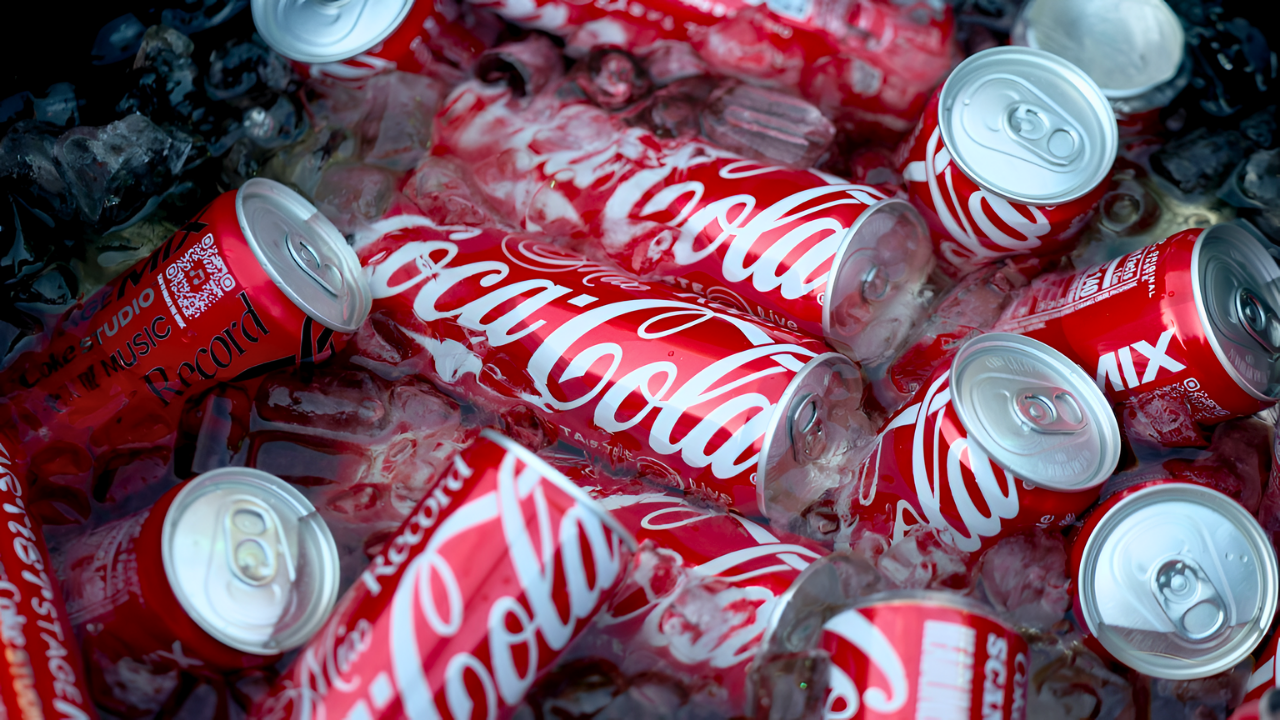
Coca-Cola’s Irish subsidiary has shifted another €4.4 billion—equivalent to about $5.17 billion—from its operations to a Cayman Islands entity, bringing total transfers since 2016 to more than €16.6 billion, or roughly $19.5 billion. These moves sit alongside a long‑running U.S. tax dispute in which federal authorities say billions in profits were inappropriately booked in low‑tax jurisdictions rather than in the United States.
How the Ireland–Cayman Mechanism Works
Coca-Cola’s European Refreshments Unlimited Company, based in Drogheda, Ireland, manufactures beverage concentrate for various markets. This subsidiary has directed large dividends to Atlantic Industries, a related entity in the Cayman Islands, a jurisdiction known for low or zero corporate taxes and widely used by multinationals as an offshore booking center.
Company filings and media reports indicate that the more than €16.6 billion routed from Ireland since 2016 represents only part of the global income that U.S. tax authorities allege was shifted to foreign “supply points” over earlier years. Analysts note that in its court filings and SEC reports, Coca‑Cola has acknowledged that, if the IRS’s approach is applied across all relevant years, its total potential transfer‑pricing exposure could reach around $18 billion in U.S. tax on offshore profits.
In 2024, European Refreshments sent billions of euros in dividends to Atlantic Industries, followed by further multi‑billion‑euro payments in 2025. These recent payouts form the latest €4.4 billion batch in a pattern that has accumulated over €16.6 billion since 2016.
The Core U.S. Tax Dispute
A U.S. Tax Court decision backed the Internal Revenue Service’s claim that Coca-Cola shifted substantial profits from the U.S. through foreign supply points, including Ireland, by reallocating more than $9 billion of income to the U.S. parent for 2007–2009.
The court’s acceptance of the IRS’s transfer‑pricing method led to an additional tax bill of roughly $2.7–$3.3 billion for that period; with interest, Coca‑Cola has said the amount at issue for those three years is approximately $6 billion, which it has deposited with the U.S. Treasury while it appeals. Transfer‑pricing specialists note that this three‑year assessment is often cited as a reference point for the broader case, and is widely described as a $6 billion tax hit linked to profits the IRS says were effectively parked offshore.
Potential $18 Billion Exposure and Global Tax Context
Coca-Cola has disclosed that if the IRS’s approach is extended to later years and upheld on appeal, its total potential U.S. tax liability on the disputed foreign profit stream could reach about $18 billion as of mid‑2025. Commentators emphasize that such a liability would correspond to a very large pool of overseas earnings, encompassing returns from Irish, Brazilian, Chilean, Costa Rican, Mexican and other supply points that historically booked some of the company’s highest margins.
While Coca‑Cola disputes the characterization and denies any wrongdoing, critics argue that, in aggregate, more than $30–35 billion in profits have effectively been kept offshore for tax purposes over the contested period. The company is pursuing an appeal, arguing that the IRS departed from a profit allocation framework accepted for decades. Supporting briefs from business groups warn that retroactively changing the rules in a case of this scale could unsettle multinationals’ reliance on long‑standing transfer‑pricing methods.
The Drogheda facility employs nearly 1,000 people and operates a state‑of‑the‑art concentrate and flavors plant, showing that substantial real activity sits alongside the tax‑efficient structures. Even so, Irish filings reveal relatively low effective tax rates, and global minimum tax rules—such as the OECD’s Pillar Two—may still leave room for low-tax offshore profits.
Environmental Impact and Transparency Push
Coca-Cola topped the Break Free From Plastic movement’s 2023 Global Brand Audit as the leading plastic polluter for the sixth consecutive year. In that audit, 8,804 volunteers in 41 countries collected and analyzed more than half a million pieces of waste, with 33,820 items bearing Coca-Cola branding—more than any other company.
Environmental and tax watchdogs increasingly link corporate accountability across issues, calling for country‑by‑country disclosures on profits, taxes, and waste. As of late January 2026, Coca-Cola’s appeal following the Tax Court decision remains pending, with no final appellate ruling issued. The convergence of offshore tax controversies and plastic pollution concerns continues to place mounting pressure on the company to increase transparency and reform its global practices.
Sources:
- Institute on Taxation and Economic Policy. “Coca-Cola To Shareholders: $18 Billion Tax Bill? What $18 Billion Tax Bill?” Oct. 2, 2025.
- KBKG. “Do Investors Understand the Stakes of Coca-Cola’s $18B Tax Case?” Nov. 25, 2025.
- Coca-Cola Co. “U.S. Tax Court Enters Decision in Ongoing Dispute Between The Coca-Cola Company and the IRS.” News release, Aug. 1, 2024.
- Yahoo Finance. “Coca-Cola Raises Eyebrows After Funneling Billions of Euros From Its Ireland Operations to the Cayman Islands.” Jan. 19, 2026.
- Business Post. “Irish Coca-Cola Office Facing U.S. Tax Probe Makes €4.4bn Payout to Cayman Islands Entity.” Nov. 17, 2025.
- Break Free From Plastic. “2023 Global Brand Audit: The Coca-Cola Company Is Once Again the World’s Top Plastic Polluter.” Feb. 6, 2024.