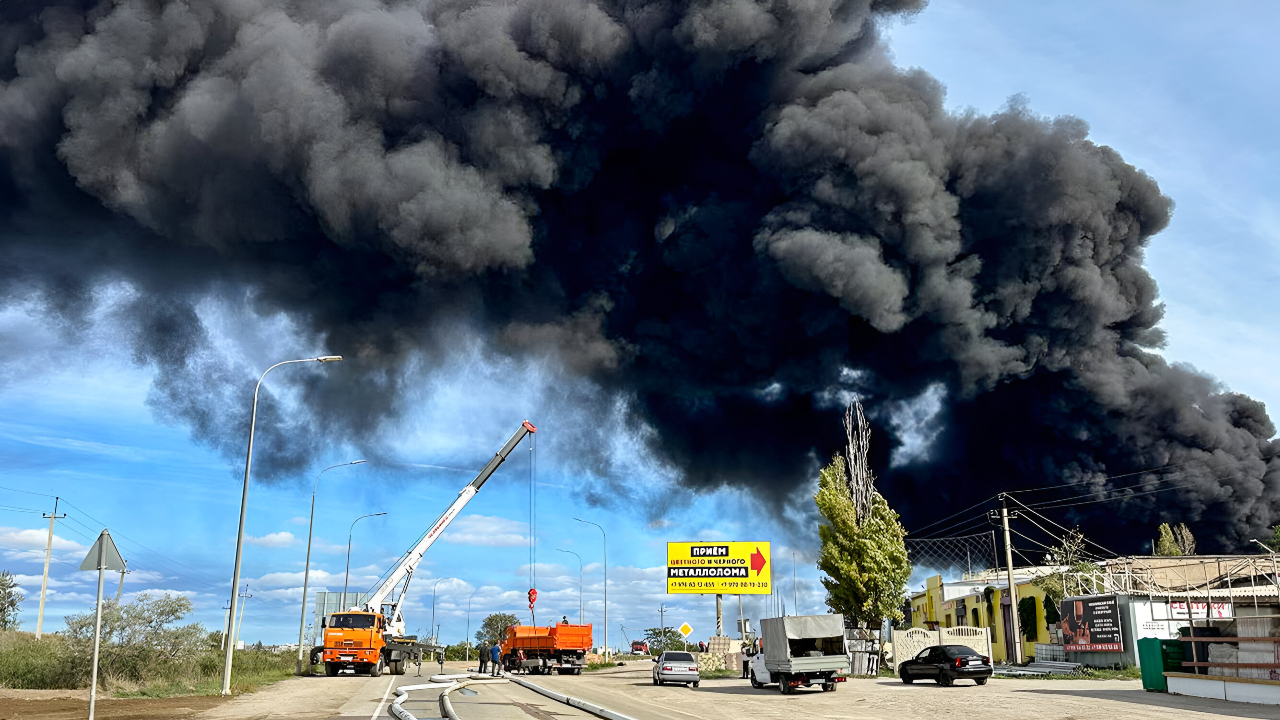
On November 9, 2025, a major explosion lit up the night sky in Hvardiiske, a village in Crimea under Russian control. The blast took place at an oil depot, an important fuel storage area for the Russian military in the region.
Both Ukrainian and Russian sources said the attack was carried out by Ukrainian drones, part of Ukraine’s effort to harm Russia’s military supply network and disrupt its presence in Crimea.
Drones Strike a Vital Fuel Supply
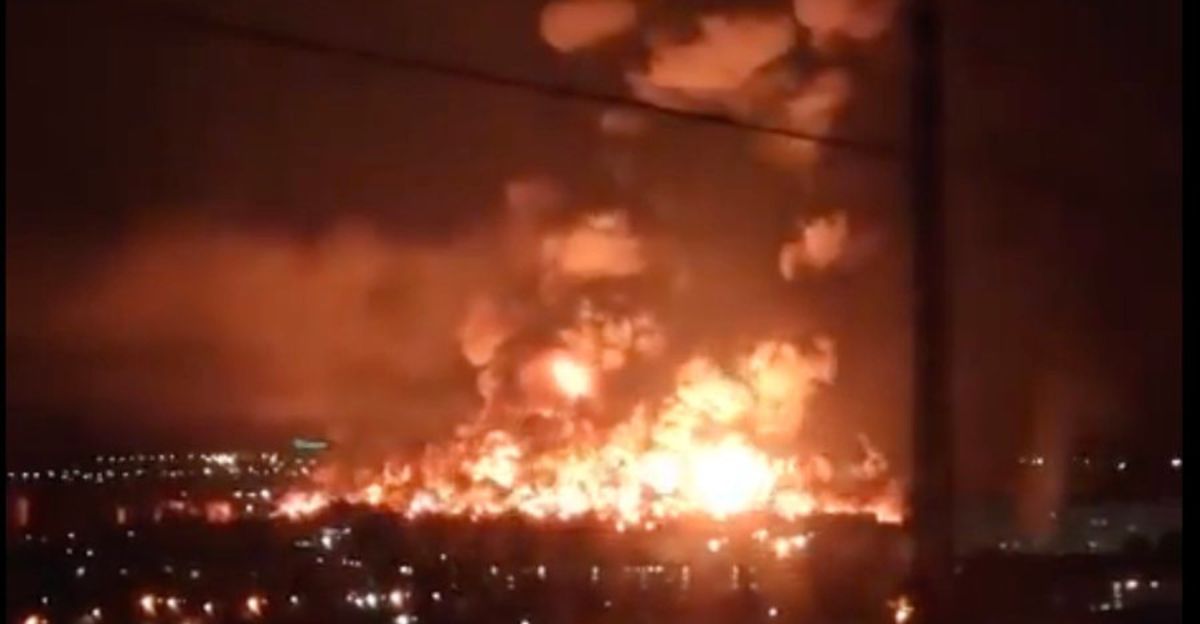
Over the last few months, Ukraine has increased drone attacks on oil depots throughout Crimea. The Hvardiiske facility was already damaged by a drone strike in October 2025. Experts say these attacks are meant to make it harder for Russian soldiers and vehicles to get the fuel they need. Without steady fuel, Russian forces struggle to move vehicles, supply their troops, or operate planes and ships.
Crimea is crucial to Russia’s war effort because it acts as a launch site for attacks and a key refueling spot for both planes and ships. The Royal United Services Institute, a defense think tank, has called Crimea Even though Russian officials claim their air defenses destroyed most incoming drones during the November 9 strike, satellite photos and witness statements showed at least one major oil tank was completely destroyed with thick smoke visible for miles.
These incidents highlight vulnerabilities in Russia’s air defense systems, even after spending heavily on advanced anti-drone technologies. Attacks continue to get through and damage critical infrastructure, proving that no defense system is perfect.
Large Fires and Immediate Fallout
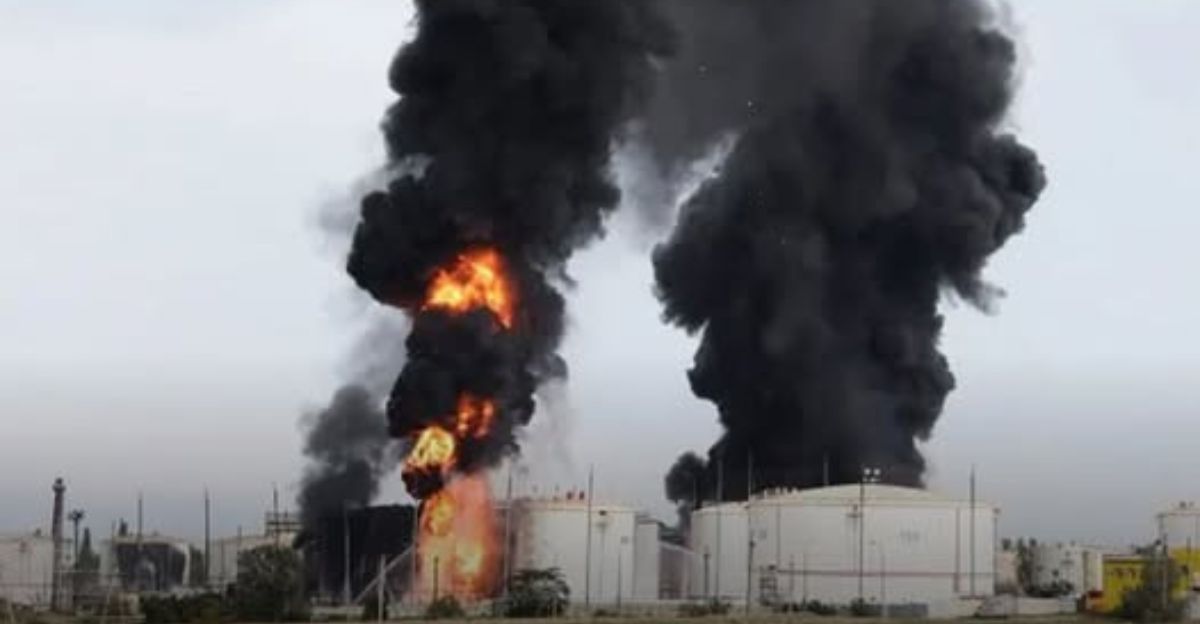
People living near Hvardiiske described the fire as the biggest in recent years, with smoke filling the sky and loud explosions shaking homes. While it’s hard to know for sure if this fire was the very largest, it was certainly one of the most dramatic. The November 2025 incident was already the third drone-caused oil depot fire in Crimea that month, showing that these sorts of attacks are becoming more common and powerful.
After the explosions, Russian military units faced brief fuel shortages. Local officials admitted that these attacks disrupted the supply of fuel, which could slow down military movement. Firefighters worked all night to keep the fire from spreading to more storage tanks. This showed how even a few cheap drones could disrupt an entire support system, forcing Russia to scramble to fix the damage and keep their operations moving.
Fear Among Civilians and Political Response
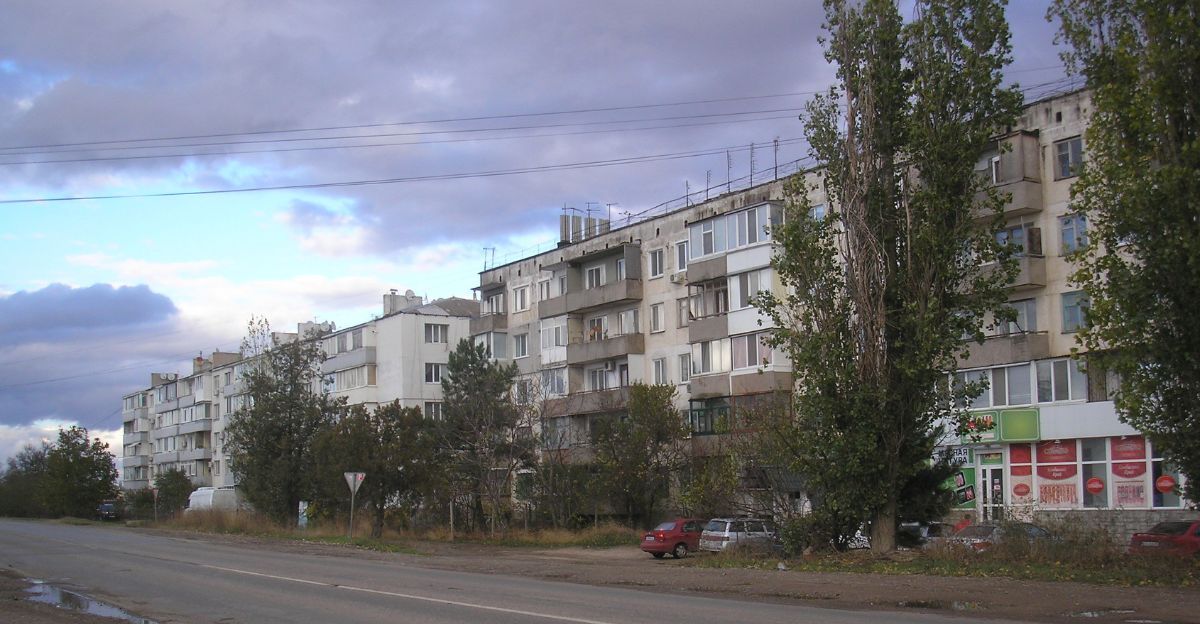
People living in the area were frightened by the explosions, with some neighborhoods being evacuated for safety. Windows rattled and the fear of follow-up attacks spread quickly. Reports suggest that while no one was hurt, the anxiety was very real, and many residents remembered similar panic from previous drone strikes.
In reaction, Russian officials said they would improve air defenses in Crimea by adding more radar and speeding up repair work. However, many remain doubtful that these steps will work as promised. Briefings in Moscow warned about the dangers of drone attacks, with officials suggesting that the whole defense system would need major upgrades by 2026 to stop these incidents. Critics argue that simply adding more equipment may not be enough if Ukrainian tactics continue to adapt.
Growing Impact and Future Risks
Ukraine is also sending drones deep into Russian territory, striking oil and gas facilities farther from the front lines. These attacks are causing fuel shortages and rising prices in some areas. Local news has noted higher pump prices for gas, long lines at stations, and slower delivery of oil for heating, problems that directly affect the daily lives of people in Russia and Crimea.
Russian officials play down these issues, but energy experts say that as Ukraine keeps targeting key fuel sites, economic troubles are likely to grow. The attacks not only cause headaches for the military but also make it harder for civilians to access affordable energy. This rising public frustration may put new pressure on Russian policymakers to find long-lasting solutions.
Military leaders in Russia now face tough questions about how to protect fuel depots from future drone assaults. After the Hvardiiske blaze, emergency teams prioritized getting fuel back to the air force and the Russian navy. Engineers quickly started studying how to better protect storage tanks and spot drones before they can strike.
Looking ahead, experts think Ukraine will keep using drones to try and stop Russia from easily supplying its forces in Crimea. Because Crimea is exposed and supply routes are limited, maintaining a steady flow of fuel and supplies is becoming more and more difficult. As winter arrives, both sides are under pressure to adapt: Ukraine is likely to keep up its drone strategy, while Russia desperately works to fix and protect its critical infrastructure.
The November 9 attack shows how modern warfare is changing, with cheap drones causing big problems for even the strongest militaries. The fight for Crimea’s fuel supply will likely continue, and how both Ukraine and Russia react will have serious consequences for the ongoing conflict.