
In 2025, some of the nation’s most influential corporations—Amazon, UPS, Target, Charter Communications, Novo Nordisk, Paramount, Starbucks, and Microsoft—collectively wiped out more than 75,000 American jobs. These were not isolated cost-cutting decisions but part of a sweeping shift toward AI-enabled restructuring.
Companies now openly frame automation as a strategic priority, signaling a historic turning point in how U.S. employers balance human labor, organizational efficiency, and the accelerating capabilities of generative AI.
The Acceleration: AI Becomes a Layoff Catalyst

Corporations are testing how far AI can go in replacing office-based roles. MIT economist Daron Acemoglu notes that many companies will “test the limits” of automating white-collar work. Amazon explicitly cited AI as justification for cutting 14,000 jobs.
UPS eliminated 48,000 positions in 2025, emphasizing efficiency. Globally, AI chatbots alone are projected to save tens of billions annually. The message is clear: automation is no longer an experiment but a core business strategy.
The Consumer Fallout Begins

As companies remove human customer-service layers, consumers increasingly face automated systems that struggle with nuance. With up to 80% of customer-service tasks exposed to automation, call centers that once employed thousands now operate with minimal staff handling escalations.
The result is longer wait times, fewer successful resolutions, and growing frustration with chatbots unable to solve real-world problems. Corporations save money, but customer experience—once a competitive differentiator—shows measurable decline.
Retail and Food Chains Join the Automation Wave

Following tech and logistics, U.S. retail and food-service chains are accelerating layoffs tied to automation investments. Target cut about 1,000 employees and eliminated 800 open roles.
Charter Communications announced 1,200 job cuts. Starbucks removed roughly 900 non-retail positions as part of its restructuring. Across retail, AI-driven systems—from self-checkout to automated stock management—are replacing human workers at scale. Retail’s long-running warning has arrived: adapt to automation or exit the workforce.
Investment Flows Shift From Workers to Machines

Corporations are channeling capital away from payroll and into AI infrastructure. Executives report that AI tools save employees more than three hours per week on administrative tasks—yet instead of improving workloads, these efficiencies justify eliminating entire roles.
Manufacturing companies increasingly deploy AI to manage predictive maintenance and quality control. In many cases, one AI system effectively replaces five to ten human workers. The economic priority is unmistakable: scalable machines over salaried humans.
A Global Ripple: Automation Reshapes Supply Chains

U.S. layoffs are not contained domestically—global supply chains feel the shock. Novo Nordisk’s 9,000 worldwide job cuts, including U.S. roles, illustrate a broader trend of transnational restructuring. Manufacturing organizations face millions of positions globally at risk as automation spreads.
In logistics, analysts project up to 1.5 million job losses worldwide by 2030. As international competitors automate aggressively, U.S. companies accelerate upgrades to remain positionally competitive in a tightening global market.
Entry-Level Workers Face the Steepest Decline

Young professionals are enduring disproportionate fallout. Unemployment among 20- to 30-year-olds in tech-exposed occupations has risen sharply in 2025.
Big Tech reduced new-graduate hiring by roughly 25% compared to the previous year. Analysts warn that AI may eliminate half of all entry-level white-collar roles within five years. Many students graduate to discover promised roles have vanished, replaced by automated systems or distributed globally. The entry-level ladder is splintering in real time.
Government Embraces Automation Too

The U.S. government is not resisting the automation trend—it’s accelerating it. The Department of Government Efficiency (DOGE), led by Elon Musk since January 2025, explicitly aims to reduce federal staffing through AI-based optimization.
Yet, no national retraining infrastructure exists to support displaced workers. This contradiction—government-driven job elimination without parallel worker support—highlights a widening policy gap. While automation speeds up, public institutions lag in preparing millions for the disruption ahead.
Wage Compression Hits New Entrants

As entry-level roles shrink, wages for remaining junior positions face downward pressure. Nearly 50 million U.S. jobs carry significant automation risk in coming years, with early-career roles most vulnerable. Employers reduce recruitment volumes and compensation expectations.
Meanwhile, workers with AI skills earn premiums exceeding 50% over comparable roles. The American labor market is bifurcating: high-skill AI roles flourish, while traditional entry-level pathways either vanish or offer lower wages than before.
Retail’s Strategic Shift Toward Self-Operation

Retailers are scaling self-service technologies at unprecedented speed. Target’s layoffs tracked closely with its expansion of automated systems. With retail jobs carrying a 65% automation risk, stores now operate with fewer staff who focus on managing technology rather than assisting shoppers.
Consumers increasingly encounter longer queues at self-checkout, error-ridden kiosks, and reduced in-store support. For retailers, the trade-off is cost savings; for customers, the loss of human help is increasingly unavoidable.
Hospitality Reimagined by Automation

Hotels, restaurants, and food-service chains are restructuring heavily around automation. AI chatbots reduce telemarketing and customer-service costs dramatically, accelerating displacement. Starbucks’ 900-person non-retail layoff wave reflects broader hospitality trends. Workers who remain face intense workloads overseeing automated systems.
Customers encounter slower service, rigid processes, and fewer personalized interactions. A sector historically dependent on human labor is transitioning toward a leaner, tech-first model that prioritizes efficiency above all else.
Secondary Industries Feel the Shockwaves
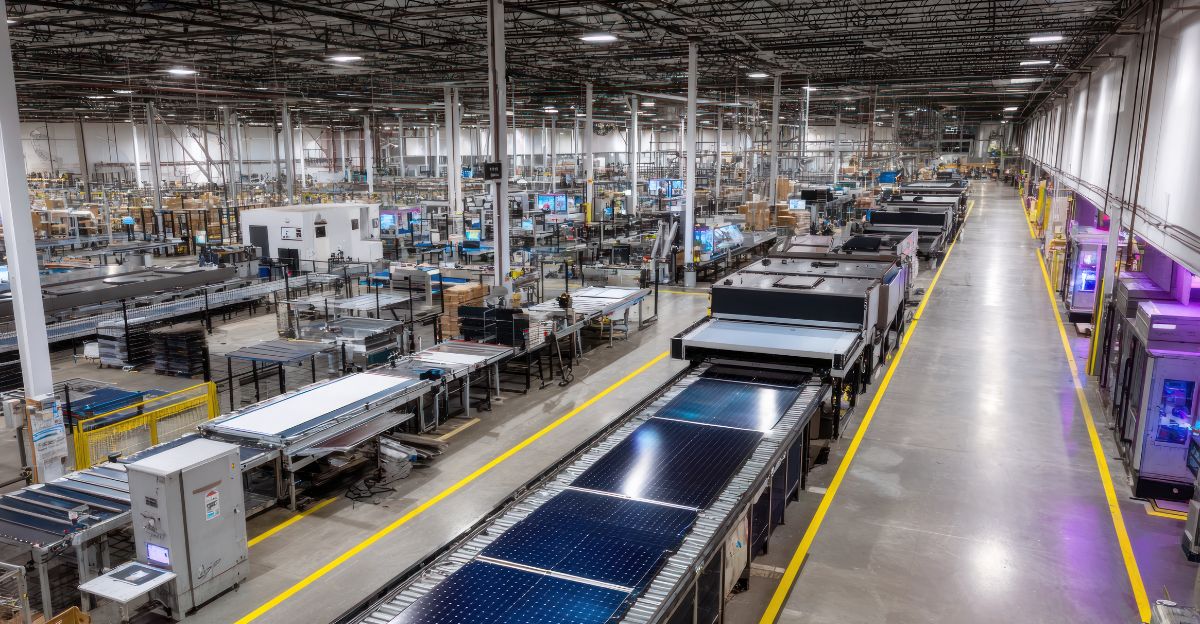
Automation-driven job losses in major sectors create cascading impacts across dependent industries. As manufacturing restructures, industries like leather goods, industrial supplies, fertilizer production, and even pet-food manufacturing face declining demand.
Many of these sectors anchor rural economies, where alternative employment is limited. Reduced consumer spending from displaced workers amplifies the downturn. The automation wave is no longer confined to tech or retail—it is reshaping the economic fabric of entire regions.
The Global Consumer Economy Flattens

As American workers lose jobs, global markets feel the pressure. U.S. consumer spending—70% of national GDP—drives international trade. Layoffs reduce purchasing power, slowing imports and weakening foreign manufacturers reliant on American demand.
Emerging markets face declines in export volume. Meanwhile, AI-intensive industries report dramatically higher revenue per employee, indicating wealth consolidation rather than broad prosperity. Economic gains increasingly pool at the top, creating a polarized global economy with fewer winners.
Stress, Instability, and Widening Inequality

Job displacement correlates with rising mental-health challenges, increased healthcare use, and growing household instability. Young professionals in AI-exposed roles show sharply higher unemployment, amplifying stress and uncertainty.
Workers in retail and manufacturing communities face local economic decline. At the same time, AI-skilled employees enjoy rising wages and job security. The divide between those benefiting from automation and those displaced is widening, with profound implications for public health and community resilience.
A Cultural Clash: Innovation vs. Human Costs

American society is divided over AI’s rapid expansion. Tech leaders frame automation as progress, celebrated for efficiency and innovation. Workers, unions, and many economists argue the benefits are not widely shared. Acemoglu warns that companies are experimenting aggressively with white-collar automation without fully considering social fallout.
Media narratives split along similar lines: technology outlets celebrate breakthroughs, while labor-focused reporting increasingly documents the human consequences. Cultural consensus is unraveling.
Growth for Those Who Train the Workforce

While traditional employers cut staff, AI-training providers, coding academies, and upskilling platforms are booming. More than 350,000 new AI-related roles are emerging—prompt engineers, AI auditors, ethics officers, and more.
Yet, over three-quarters of these roles require advanced degrees or specialized training, creating barriers for displaced workers. Educational-technology firms report surging enrollment, but the gains are concentrated among those already positioned to transition. Opportunities expand, but not evenly.
Markets Reward Automation, Punish Labor

Financial markets applaud companies that aggressively pursue automation. Tech giants like Amazon and Microsoft see stock bumps following deep layoffs. Investors interpret job cuts as productivity improvements and stronger future margins. Meanwhile, labor-intensive sectors—retail, hospitality, logistics—face skepticism and underperformance.
Hedge funds increasingly bet on the acceleration of automation. Yet analysts caution that only a small share of U.S. jobs can be fully automated in the short term, meaning market enthusiasm may be outpacing reality.
How Workers Can Protect Their Future

Workers must now assess how exposed their roles are to AI. Occupations in computing, mathematics, and customer service face high exposure, while roles requiring specialized judgment—like air-traffic controllers, executives, and radiologists—are lower risk. Upskilling is urgent: AI-literate workers earn nearly 60% higher wages.
However, many high-growth AI jobs require advanced degrees. Practical strategies include gaining AI certifications, cultivating creativity and leadership skills, and diversifying income sources before disruption hits.
The Coming Inflection: 2027–2028

Analysts forecast a sharp acceleration in workforce disruption by 2027–2028. By 2030, up to 30% of current U.S. jobs could be fully automated, while most others will undergo significant redesign. Globally, 170 million new jobs may emerge, offsetting roughly 92 million displaced positions.
The challenge is not total job count but mismatched skills and geography. Without coordinated national retraining and local support, millions risk long-term unemployment while new roles go unfilled.
A New Economic Era Takes Shape

The 75,000 job cuts of 2025 are not an anomaly—they are the opening act of a long-term structural transformation. Waves of change spread from corporate boardrooms into supply chains, consumer experiences, public policy, and household livelihoods.
AI companies, advanced-skill workers, and training platforms are ascendant. Entry-level workers, retail employees, and manufacturing communities face increasing vulnerability. The defining question ahead: Will AI’s immense productivity gains be broadly shared, or concentrated among the few who control the technology?