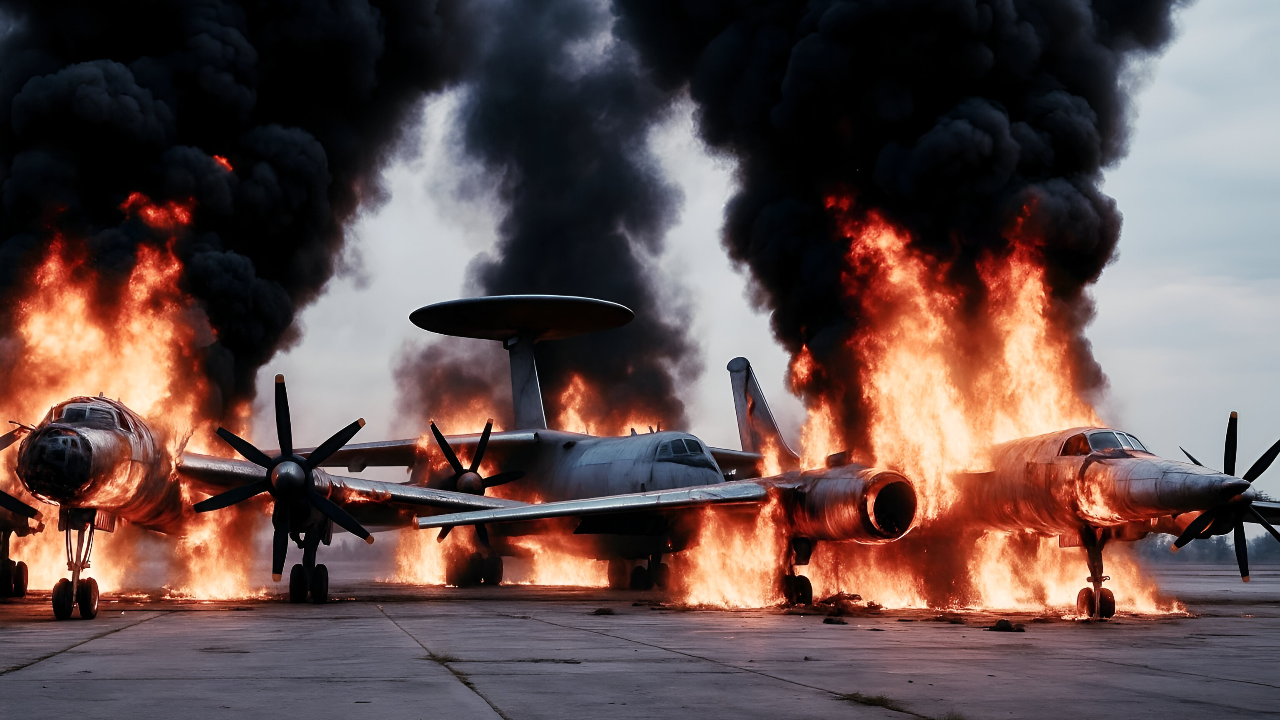
Ukraine’s drone warfare has reshaped the battlefield, striking deep into Russian territory and inflicting unprecedented damage on military and economic infrastructure. From strategic bombers to oil refineries and air defense systems, Ukrainian drones have reached targets once considered out of reach, transforming the nature of modern conflict.
Operation Spider Web: A Strategic Breakthrough
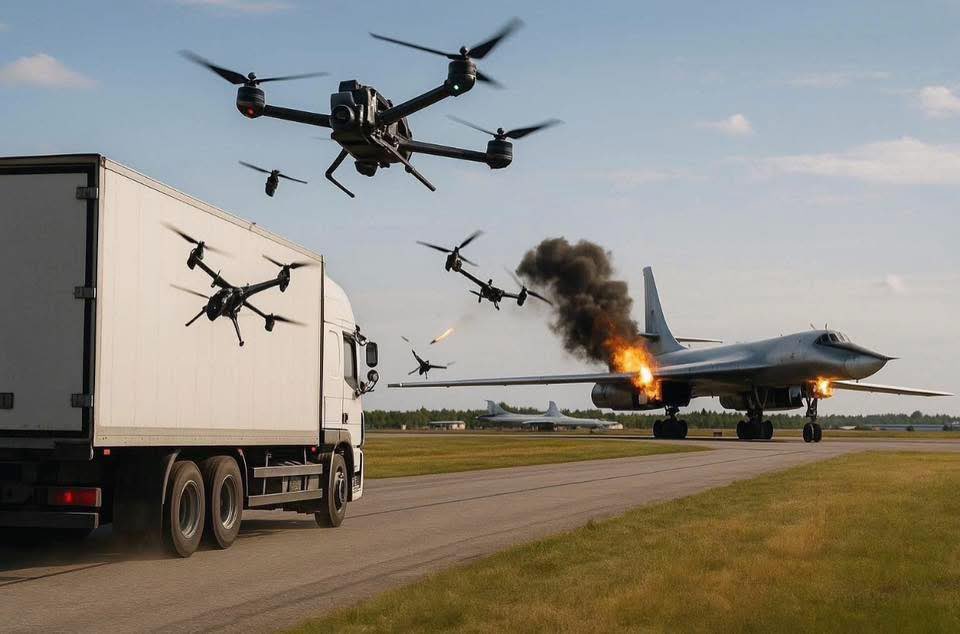
On June 1, 2025, Ukraine launched Operation Spider Web, the most ambitious drone strike of the war. In a coordinated assault, 117 drones launched from hidden trucks inside Russia simultaneously attacked five airbases across five time zones. The operation targeted aircraft thousands of kilometers from Ukraine, including the Belaya base in Siberia—4,300 kilometers from Kyiv—destroying or damaging over 40 strategic aircraft. The strike was the result of 18 months of meticulous planning by Ukraine’s Security Service (SBU), which covertly transported 150 drones, launch systems, and 300 explosive payloads into Russia. The drones were concealed in truck containers with sliding roofs, positioned near military bases, and remotely activated. All operatives were extracted before the strikes, and the trucks self-destructed to maintain operational secrecy.
Strategic Losses and Economic Impact
The operation destroyed irreplaceable Soviet-era aircraft, including Tu-95 Bear, Tu-160 Blackjack, and Tu-22M3 Backfire bombers—Russia’s nuclear-capable strategic fleet. Satellite imagery confirmed at least 12 aircraft destroyed, with Western officials estimating 20 hit and 10 destroyed. These bombers, no longer in production, represented roughly one-third of Russia’s long-range strike capability and carried cruise missiles used against Ukrainian cities.
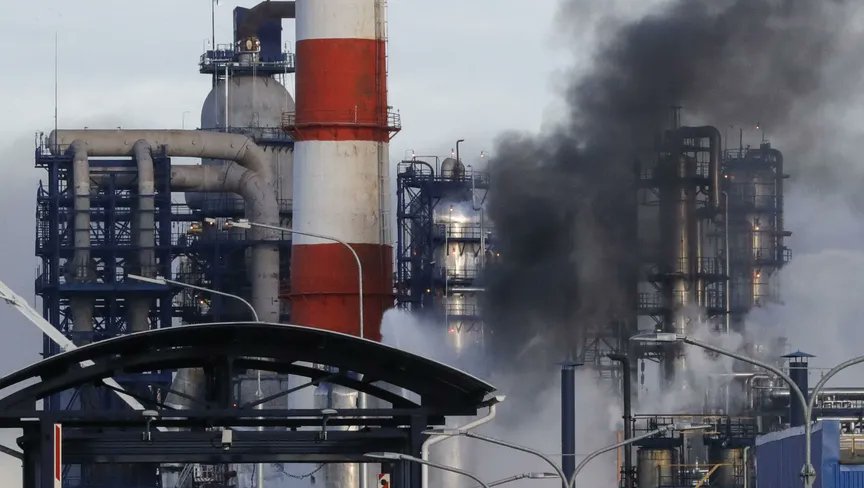
Beyond aircraft, Ukrainian drones have systematically targeted Russia’s oil sector. In 2025 alone, Ukraine conducted nearly 160 successful strikes on oil extraction and refining facilities across Russia. In September and October, at least 20 facilities were hit, including six oil refineries, two oil terminals, three fuel depots, and nine pumping stations. The Saratov refinery was struck seven times in 2025, while facilities over 2,000 kilometers from Ukraine’s border have been successfully targeted, causing fires and production shutdowns.
Crippling Air Defenses and Technological Edge
Ukraine has systematically dismantled Russia’s air defense umbrella. The SBU claims to have destroyed 48% of Russian Pantsir systems since early 2025—each valued at $20 million. Ukraine has also eliminated S-300 and S-400 systems, along with critical radar installations including Nebo-M, Podlet K-1, and 91L6E “Big Bird” radars, creating gaps in Russia’s defensive coverage.
Ukrainian drones range from $500 FPV quadcopters to sophisticated long-range platforms. The Firepoint FP-1, costing $55,000, carries 120-kilogram warheads to targets 1,500 kilometers away—accounting for 60% of deep strikes. Fiber-optic drones, immune to electronic jamming, extend up to 100 kilometers. These technologies deliver precision strikes at a fraction of the cost of traditional weapons, transforming asymmetric warfare.
Economic and Strategic Consequences

President Zelenskyy reports that Ukraine’s strikes have reduced Russian refining capacity by 20%, with the SBU claiming that 37% of the capacity has been forced offline. Repeated attacks on the same facilities prevent repairs, forcing extended shutdowns. Russia is facing fuel shortages, with deficits reported in 57 regions and gasoline export bans being implemented. Since the February 2022 invasion, Russia has earned over €950 billion from fossil fuel exports—with energy providing up to 50% of state budget revenue, directly funding Putin’s war machine.
Ukraine’s drones have obliterated Russia’s historical reliance on vast territory for protection. Strikes reaching 4,300 kilometers into Siberia demonstrate nowhere is safe. The Belaya airbase attack marked “the first of this sort in Siberia.” Ammunition plants in Nizhny Novgorod, petrochemical facilities in Bashkortostan, and refineries in the Urals—all once considered beyond reach—now face regular attacks.
The Future of Warfare
Ukraine has scaled domestic drone production dramatically. From producing 1.2 million drones in 2024, Ukraine aims to reach 4.5 million in 2025, with the potential capacity to exceed 8 million annually. Over 95% of frontline drones are now domestically manufactured. With €7 billion in EU funding announced, Ukraine leads global drone warfare innovation, reducing dependence on inconsistent Western arms supplies.
NATO has recognized Ukraine as the world’s leading drone warfare expert. NATO Secretary General Mark Rutte called Ukraine “a powerhouse in military innovation.” Denmark, Poland, Britain, and Romania are establishing joint training programs and production partnerships with Ukraine. The Alliance is adapting lessons from Ukraine’s experience, as the war represents history’s first fully fledged drone conflict with implications for future warfare.
Ukraine’s drone offensive shows no signs of slowing. With expanding production capabilities, improving technology, and identified vulnerabilities in Russian defenses, the campaign will intensify. Each strike reduces Russia’s military and economic capacity while demonstrating to Moscow that its vast territory offers no sanctuary. As Ukraine continues destroying billions in Russian assets with domestically produced weapons, the conflict’s strategic calculus shifts increasingly in Kyiv’s favor.