Company executives and customs brokers monitor tariff liabilities that have exceeded 100 billion dollars from President Donald Trump’s tariffs under the International Emergency Economic Powers Act, with total exposure potentially reaching well into the hundreds of billions of dollars if collections persist and courts ultimately rule against the government. These sums, derived from official customs revenue data and independent policy analysis, highlight the immense financial risks in the ongoing legal battle.
Texas Brands Challenge Emergency Duties

In Texas, prominent consumer brands including Yeti, jewelry maker Kendra Scott, and a Valero Energy marketing subsidiary have sued the U.S. government over the IEEPA tariffs. More than a dozen Texas firms across retail, energy, and manufacturing sectors have filed similar challenges, reflecting the duties’ impact on the state’s trade-dependent economy. These companies, both large and small, depend on cross-border supply chains for components and goods, making tariff hikes a direct hit to operations and costs.
These actions join a national surge of litigation in the U.S. Court of International Trade, the specialized federal court for customs and trade disputes. Hundreds of companies nationwide have filed suits, with filings climbing into the high hundreds over recent months, and some legal analyses estimate that close to a thousand importers have brought related challenges. Major consumer-goods and retail companies have also acted preemptively to safeguard refund rights if the tariffs are deemed unlawful.
IEEPA Tariffs Reach Record Scale

The duties collected since the tariffs took effect total well over 100 billion dollars, covering imports from industrial parts to consumer products and energy shipments. Analysts warn that total exposure could reach well over 100 billion dollars, and potentially into the hundreds of billions, when ongoing collections and broader refund scenarios after possible adverse court rulings are taken into account. Texas firms face century-high U.S. tariff levels, with business groups and policy analysts warning of added uncertainty, planning challenges, and eroded competitiveness.
Trump invoked the 1977 IEEPA, typically used for sanctions like asset freezes or transaction blocks, to impose these broad import duties—a departure from its historical focus. Traditional trade tariffs had relied on other statutes, making this application stand out. The state’s ports, pipelines, and highways underscore Texas’s deep ties to trade with Mexico and Canada in energy, manufacturing, agriculture, and consumer sectors.
Supreme Court Scrutiny Intensifies
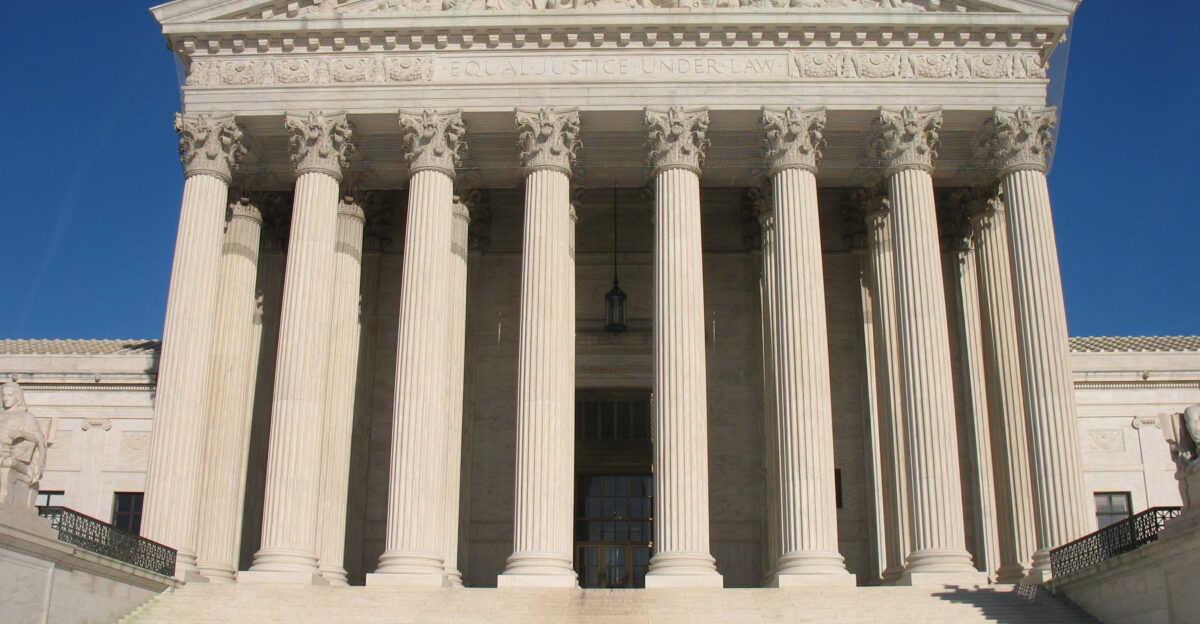
The Supreme Court heard arguments in November 2025 on whether IEEPA permits such sweeping tariffs or if Congress holds primary authority. Justices across ideologies questioned the government’s broad interpretation, probing risks of bypassing legislative trade powers. Transcripts show widespread skepticism, with expectations of clarification or limits on presidential emergency actions.
Most Texas plaintiffs have stayed silent publicly, declining reporter inquiries despite the stakes. This reticence suggests a preference for courtroom battles over open debate on the policy.
Refund uncertainties loom if the government loses. Customs rules give importers a limited window—on the order of several months—to amend paperwork before liquidation, after which straightforward refunds are much harder to obtain. For early 2025 entries, like certain Chinese goods hit in February, deadlines have passed. Companies file suits early to keep claims viable, especially for unliquidated shipments.
As of January 2026, no decision has emerged, leaving Texas firms like Yeti, Kendra Scott, and Valero’s unit—and hundreds of others—in limbo. The ruling will shape tariff legality, refund paths, and long-term cost strategies for import-reliant businesses nationwide, potentially reshaping trade policy boundaries.
Sources:
“Kendra Scott, Yeti, Valero and Other Texas Companies Sue U.S. Over Tariffs.” Phil’s Stock World, 19 Jan 2026.
“IEEPA Tariffs.” Cato Institute, 8 Jan 2026.
“President Trump Levels Historically High Tariffs on Virtually All U.S. Imports.” Economic Policy Institute, 8 Sep 2025.
“The International Emergency Economic Powers Act.” Congressional Research Service, 29 Jan 2024.
“No Tariff Ruling Yet From U.S. Supreme Court.” Promotional Products Association International, 8 Jan 2026.
“Stage Is Set for Tariff Refunds if Supreme Court Rules Against Trump’s IEEPA Tariffs.” Kuehne+Nagel Customs Corner, 18 Jan 2026.
“Supreme Court Delays Decision on President Trump’s IEEPA Tariffs Until After Recess.” GEODIS, 22 Jan 2026.