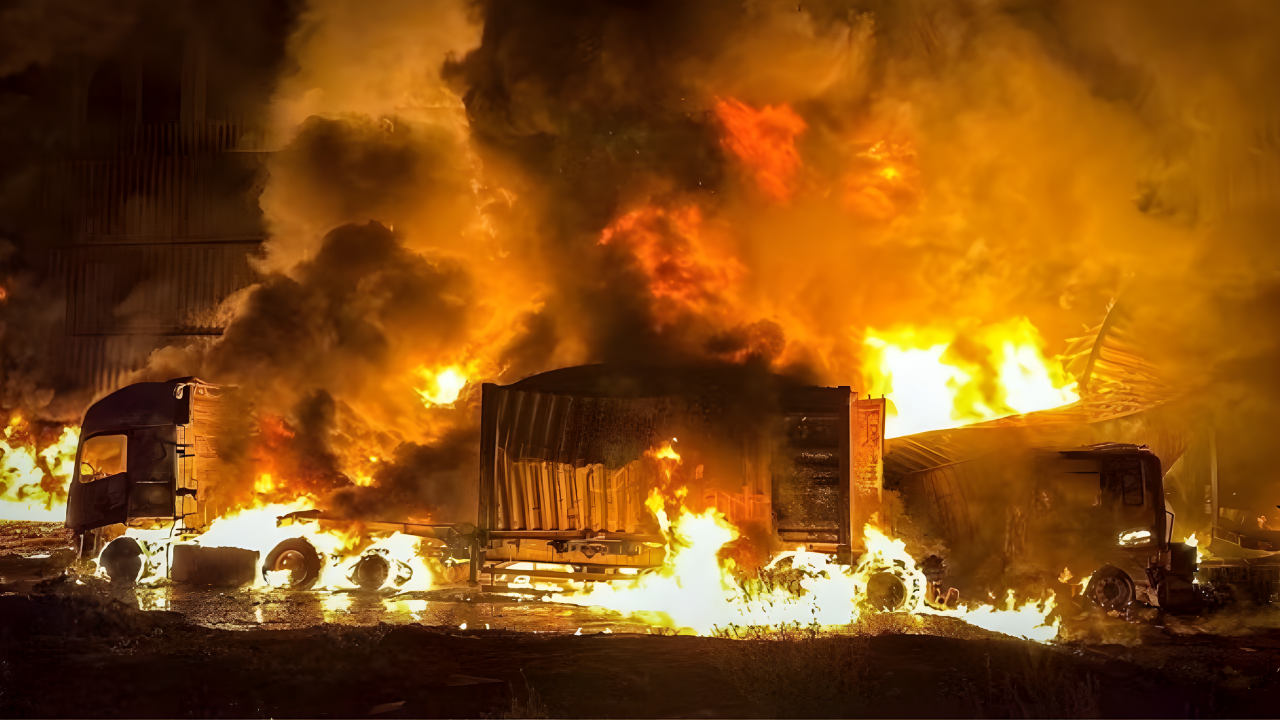
Ukrainian long-range drones struck 4 strategic Russian energy and military targets overnight on December 17–18, 2024, signaling another escalation in Kyiv’s expanding deep-strike campaign. The attacks hit oil facilities, transport infrastructure, and a military depot hundreds of kilometers from the front lines, triggering fires, explosions, and confirmed fatalities.
Ukrainian officials framed the operation as a direct challenge to Russia’s logistical backbone and fuel supply chain. As damage assessments continue, the strikes highlight how far the battlefield now extends beyond active combat zones. Here’s what’s happening as the campaign intensifies…
Deep Strikes Far From Front Lines
The targeted sites sit more than 500 kilometers from active front lines, underscoring how dramatically Ukraine’s long-range drone capabilities have evolved. Regions like Rostov and Krasnodar were previously considered secure logistical rear areas supporting Russia’s war effort. By striking deep inside these zones, Ukraine is challenging assumptions about Russian air defense coverage and internal security.
The Slavyansky oil refinery in Slavyansk-na-Kubani lies roughly 550–600 kilometers from Ukrainian-controlled territory, based on geographic analysis. Hitting sites at that distance reinforces a central message of Kyiv’s strategy: Russia’s interior is no longer insulated from the conflict. Each successful strike forces Moscow to spread defensive resources thinner, increasing pressure across a vast and complex infrastructure network.
Slavyansky Refinery Set Ablaze
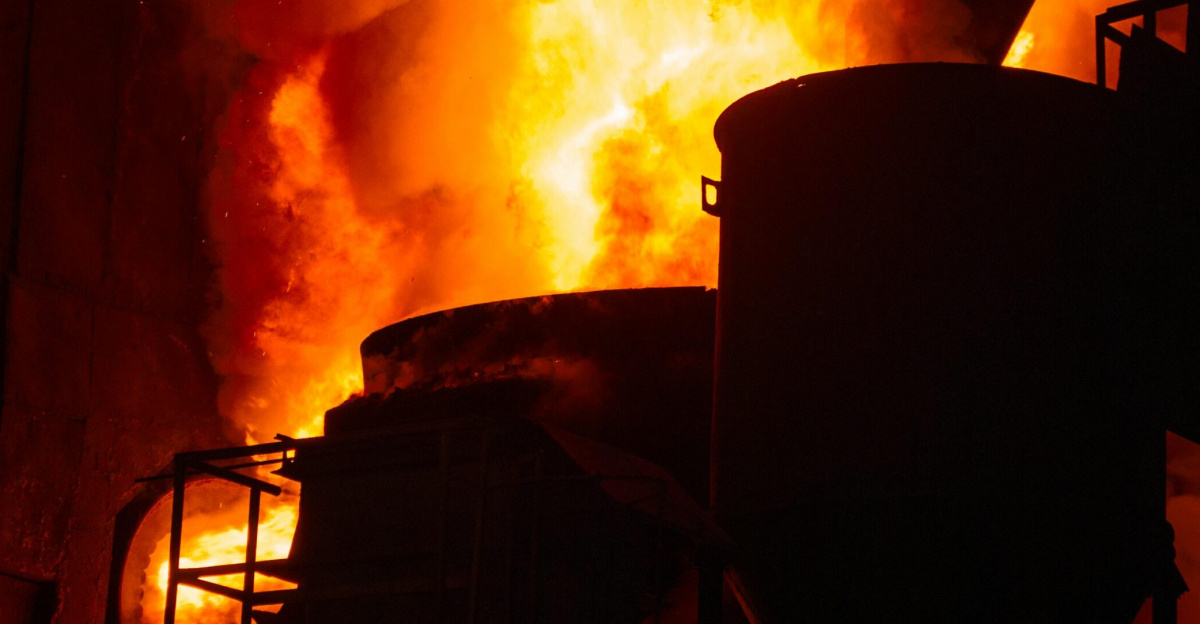
One of the most significant targets was the Slavyansky oil refinery, a major energy asset in southern Russia. The facility processes approximately 5.2 million tons of crude oil and condensate annually, making it an important contributor to regional fuel supplies. Ukrainian military officials reported explosions and a fire following the drone strike.
“The defense forces struck the Slavyansky oil refinery,” Ukraine’s General Staff confirmed in its December 17 operational update. While the full extent of the damage remains under assessment, even temporary disruption could affect both civilian fuel markets and military logistics. Any prolonged outage at Slavyansky would ripple through supply chains that support transportation, industry, and operations tied directly to Russia’s war effort.
Economic Pressure on Energy Revenues
With an annual processing capacity of 5.2 million tons, equivalent to about 38 million barrels, the Slavyansky refinery represents a substantial economic asset. At crude prices hovering around $70–75 per barrel in late 2024, its throughput translates into significant revenue for Russia’s energy sector. Even partial downtime could quickly erode cash flow.
Oil revenues remain central to funding military operations, especially as winter increases domestic fuel demand. Disruptions force authorities to draw from reserves or reroute supplies from other facilities, often at higher cost. By targeting high-value energy infrastructure, Ukraine is applying financial pressure alongside military strain, aiming to complicate Russia’s ability to sustain prolonged operations during a resource-intensive season.
Rostov Oil Base and Vessel Strike
In Rostov region, drones struck the Nikolayevskaya oil base and damaged the river vessel Valeriy Gorchakov while it was moored at Rostov-on-Don port. The vessel caught fire, and local officials confirmed that operations at the oil base were halted as emergency crews responded. The incident disrupted fuel handling along a key inland logistics route.
The Valeriy Gorchakov was reportedly carrying petroleum products and has been identified as part of Russia’s sanctions-evading shadow fleet, according to Ukrainian military intelligence. Targeting both storage facilities and transport vessels highlights a broader effort to disrupt fuel movement, not just production, across southern Russia and occupied territories dependent on these routes.
Fatalities and Containment Efforts
The strike at Rostov-on-Don port resulted in 3 fatalities, underscoring the human cost of the expanding campaign. Reuters reported that 2 crew members aboard the Valeriy Gorchakov were killed, with a third death occurring in the nearby Bataysk area. Several others were reportedly injured as fires burned at the port.
Officials later confirmed that no major oil spill occurred. “No petroleum products entered the water,” local authorities said, according to Reuters. Rapid containment reduced environmental damage, but port operations were temporarily shut down. The incident exposed the vulnerability of inland fuel transport hubs that play a critical role in Russia’s internal supply chains.
Pressure Mounts as Winter Sets In
Beyond energy targets, Ukrainian drones also struck a field artillery depot in occupied Luhansk linked to Russia’s 101st Logistics Brigade. Ukraine’s Special Operations Forces said the site supplied ammunition and equipment to frontline units, meaning its loss could slow artillery resupply. Combined with refinery and transport strikes, the operation reflects a coordinated effort to strain fuel and ammunition flows simultaneously.
With winter increasing demand for heating, transport, and military operations, any disruption carries amplified consequences. The December 17–18 assault shows how Ukraine’s deep-strike campaign is reshaping the conflict, extending risk far behind Russian lines and forcing difficult trade-offs between civilian needs and sustaining the war effort.
Sources:
Ukraine drone debris sparks fire at Russia’s Slavyansk refinery. Reuters, December 17, 2024
Ukraine confirms drone strike on oil refinery in Russia’s Krasnodar Krai. Kyiv Independent, December 16, 2024
Ukrainian drones kill three people in Russia’s Rostov port. Reuters, December 17, 2024
Three Dead, Cargo Ship Catches Fire in Drone Attacks on Russia’s Rostov Region. U.S. News & World Report, December 18, 2024
Ukraine’s Special Operations Forces strike Russian artillery depot in Luhansk region. Ukrainska Pravda, December 16, 2024
Ukrainian forces hit two oil refineries and oil rig in Russia. Ukrainska Pravda, December 17, 2024