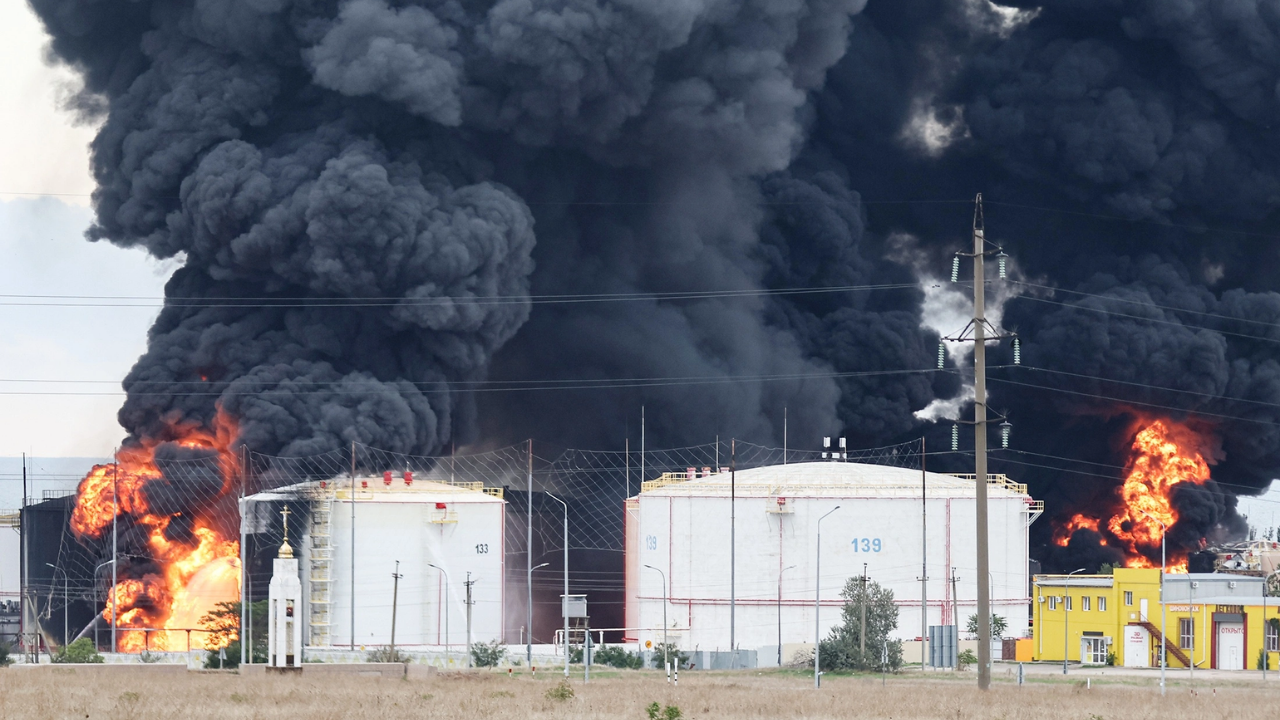
Ukrainian forces unleashed 94 drones overnight on December 16-17, 2025, striking deep into seven Russian regions in a bold escalation of the conflict’s aerial campaign. The assault highlighted Kyiv’s growing ability to disrupt Russia’s energy infrastructure from afar, with fires erupting at key facilities despite Moscow’s claims of total interception.
Refinery Under Fire
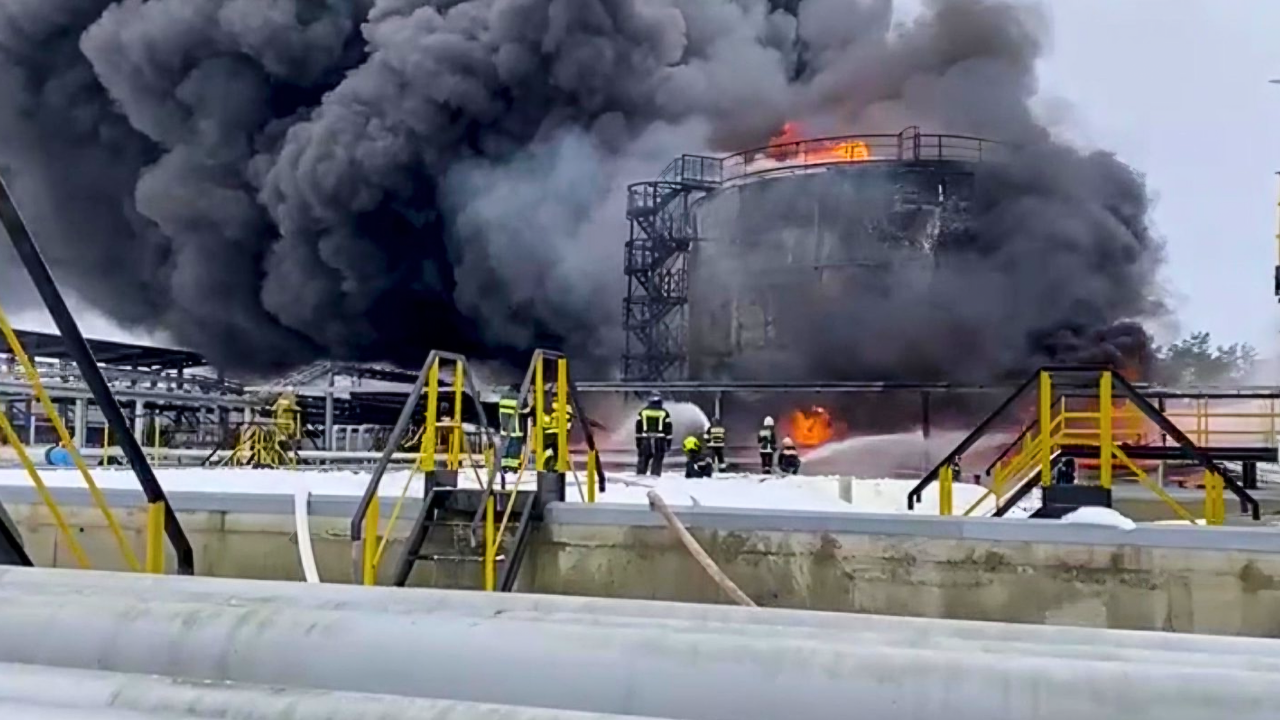
Explosions rocked the Slavyansk oil refinery in Krasnodar Krai, damaging processing equipment and igniting fires. Ukraine’s General Staff confirmed the hit on this facility, which handles 5.2 million tons of crude oil yearly, equivalent to about $1.76 billion in value. Located roughly 809 kilometers from Kyiv, the refinery marks the fourth such strike in 2025, following attacks in February, August, and November.
Owned by Slavyansk ECO, the plant processes 104,000 barrels per day and fuels Russian military operations. It forms part of Krasnodar Krai’s vital Black Sea energy network, including the Novorossiysk export terminal, and represents 9% of refining capacity in Russia’s Southern Federal District.
Human and Infrastructure Toll

Falling drone debris injured two civilians in the Slavyansky district’s residential zones. Five private homes suffered damage, while strikes on power lines left over 38,000 residents without electricity; initial reports noted 13,000 still affected. Debris turned up in both Slavyansky and Krasnoarmeysky districts.
Multi-Region Onslaught
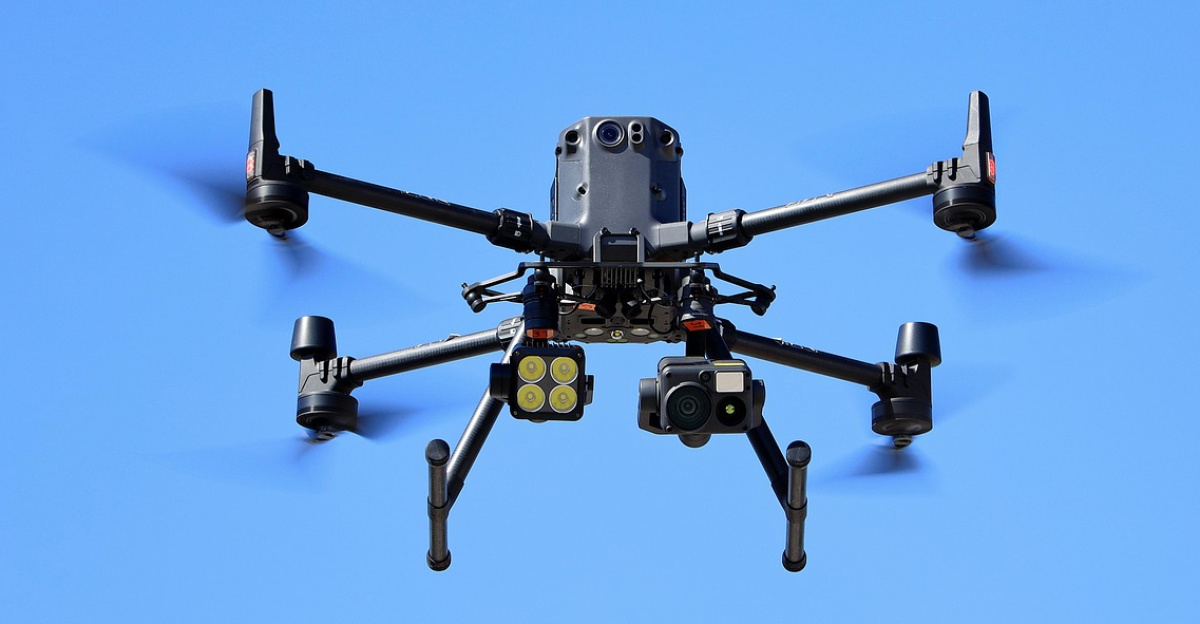
The drones hit simultaneously across vast distances. In Rostov Oblast, the Nikolaevskaya oil depot saw storage tanks and the river vessel Captain Gibert damaged. Ukraine also verified prior strikes on the R. Graifer offshore platform in the Caspian Sea, halting 14 gas wells that produced 3,500 tons daily.
Krasnodar Krai bore the brunt with 31 intercepts, followed by Rostov at 22. Voronezh, Saratov, Azov Sea, and Black Sea areas each saw 8-10, while Volgograd and Bryansk recorded 4 and 3. This spread underscores strikes over 700 kilometers from front lines, forcing Russian defenses to stretch thin.
Advanced Drones Fuel the Campaign

Ukraine’s drones, like the FP-1 used in 60% of deep strikes, reach 1,600 kilometers with 60-kilogram payloads. The Sokil-300 carries 300-kilogram warheads at speeds ranging from 150 to 450 kilometers per hour, while the FP-5 cruise missile extends range to 3,000 kilometers with 1,000-kilogram loads.
Since January 2025, Kyiv has targeted 21 of Russia’s 38 major refineries, hitting capacity of 123 million tons annually—38% of the total. This has idled 10-17% of refining output, dropping daily processing from 5.4 million barrels in July to 5.0 million by September.
Economic Ripples and Defensive Gaps
Oil and gas fund approximately one-quarter of Russia’s federal budget, with defense spending accounting for approximately one-third of total budget expenditures in early 2025. September’s energy income fell 26% year-on-year, prompting a 15% cut in projected 2025 export earnings to $200.3 billion.
Russia claims to intercept most drones, but analysis shows under 10% hit targets—offset by swarm tactics yielding nearly 160 successful oil strikes in 2025. Attrition, redeployments, and other factors have weakened defenses far from front lines. Repairs at Slavyansk, hit during modernization for new hydrotreater and reforming units, face delays from sanctions limiting parts; timelines range from one to six months.
The strikes aim to cut military fuel to occupied Crimea, Kherson, and Zaporizhzhia, while curbing war-funding exports. Domestic shortages drove gasoline prices to highs in 2025. Timed for winter, when heating demand rises and cold hampers refining, the attacks peak amid December’s tempo: Syzran halted, Saratov at 50% capacity, Novoshakhtinsk hit, and Temryuk port tanks ablaze on December 24.
Russia countered with 154 missiles and drones on Ukrainian energy sites December 10-11. Ukraine plans 30,000 one-way drones for 2025, sustaining pressure. As fiscal strains mount—reserves dwindle amid 8% GDP defense spending—the campaign could shape Moscow’s endurance into 2026, especially with potential talks looming.
Sources:
“Ukraine confirms drone strike on oil refinery in Russia’s Krasnodar Krai.” Kyiv Independent, December 16, 2025.
“Russia hit by 94 drones overnight, 2 injured in Krasnodar.” TASS, December 16, 2025.
“General Staff confirms strikes on the Slavyansk Oil Refinery.” UA News, December 16, 2025.
“How Ukrainian Drones Are Crippling Russia’s Oil Refineries.” Forbes, September 12, 2025.
“Ukraine’s long-range drone war rattles Russia, raises questions about strategy.” Associated Press, October 31, 2025.
“Have Ukrainian Drones Really Knocked Out 38% of Russia’s Oil Refining Capacity?” Carnegie Endowment for International Peace, October 2, 2025.
“The Russian economy in 2025: Between stagnation and militarization.” Atlantic Council, December 11, 2025.