` 10 Ways the British Royal Family Actually Makes Its Money - Ruckus Factory

10 Ways the British Royal Family Actually Makes Its Money

Yahoo – X

Britons face rising bills for food, energy, and housing, yet the royal family’s public funding has jumped sharply. The Sovereign Grant, which taxpayers provide for official royal duties, rose 53% to £132.1 million ($172 million) for 2025-26. This marks the highest amount ever, fueled by profits from renewable energy projects.

The increase, 326% above 2012 levels, pays for staff wages, travel, palace repairs, and public events. As economic pressures mount, this surge highlights tensions between public money and royal finances, raising questions about fairness and openness.

How the Sovereign Grant Works
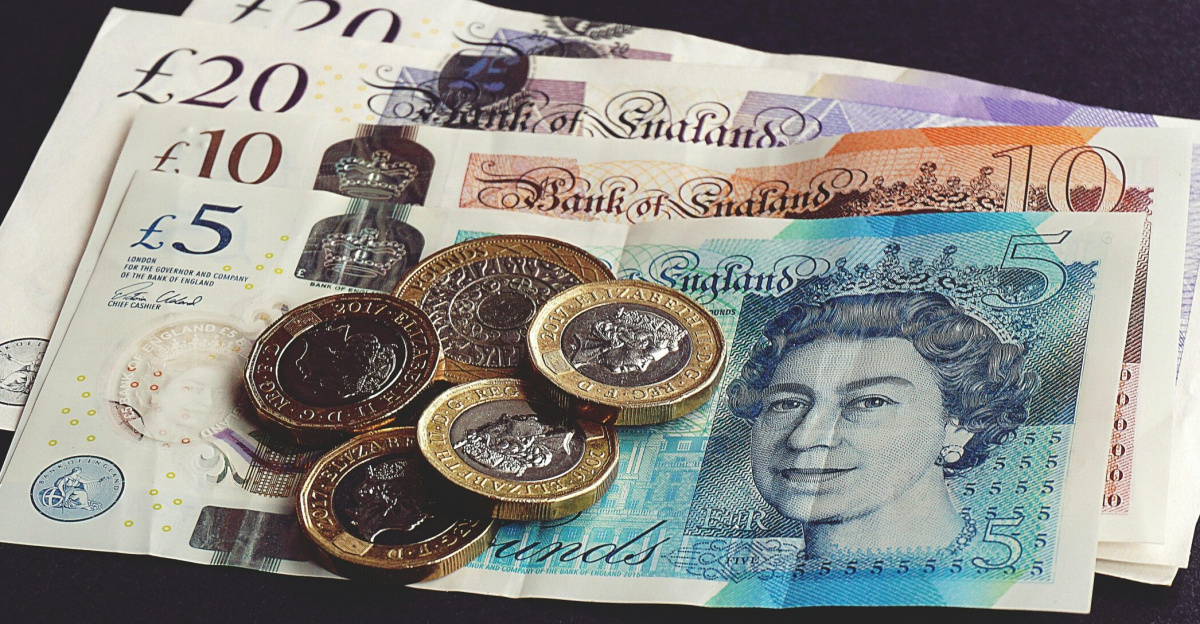
High-quality image of British pound notes and coins on a dark surface, showcasing currency detail.
Photo by Suzy Hazelwood on Pexels

The Sovereign Grant ties directly to profits from the Crown Estate, a vast £15 billion ($19.6 billion) collection of properties owned by the state. This includes city buildings, farmland, and rights to the seabed. In 2024-25, the estate earned £1.1 billion ($1.4 billion) in profits, and the royals received 12% of that as their grant. Offshore wind farms drove much of this growth, with six new projects adding revenue while supporting the UK’s green energy goals.

After the grant payment, extra profits return to the government Treasury. Critics argue this setup lets public assets benefit the monarchy directly. The estate stays under state control, but the link between its earnings and royal funds stirs debate over who truly gains from these national resources.

Private Estates Boost Royal Incomes
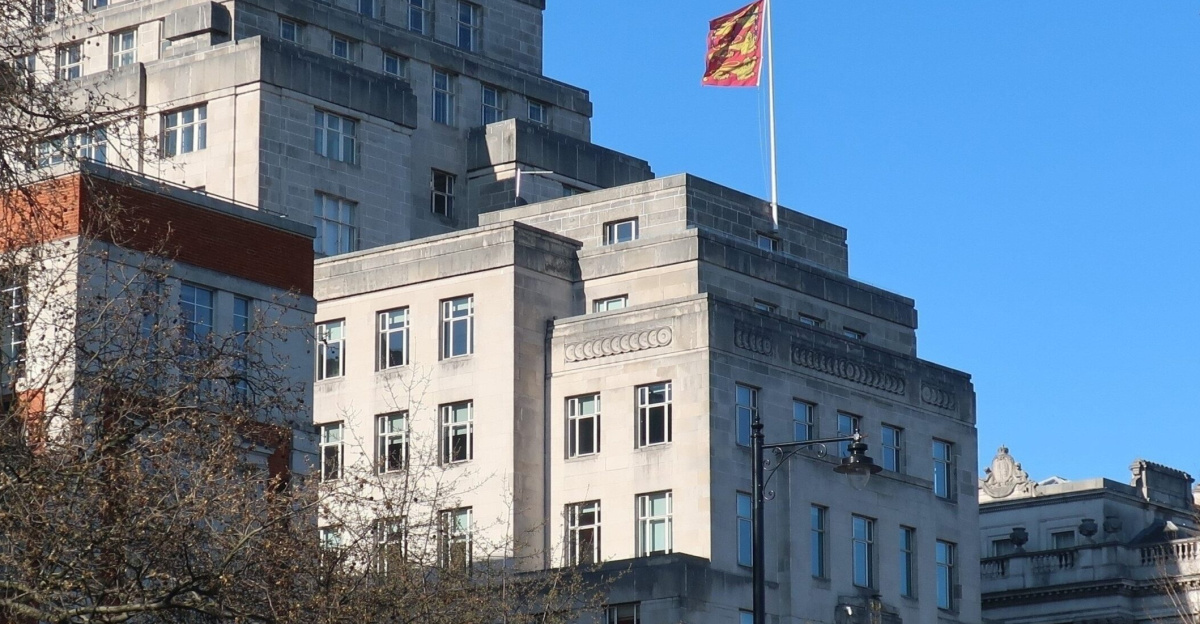
The Duchy of Lancaster offices, at 1 Lancaster Place, Strand, London WC2, viewed from the Victoria Embankment. It flies the Duchy flag. The taller building to the left is Brettenham House, a commercial office building also owned by the Duchy (and constructed at the same time).
Photo by GrindtXX on Wikimedia

King Charles earns key personal income from the Duchy of Lancaster, a 18,000-hectare estate worth £679 million ($886 million). It generated £24.4 million ($32 million) in profits for 2025 from farms, homes, and businesses. Prince William relies on the larger Duchy of Cornwall, covering 52,000 hectares and valued at £1.1 billion ($1.4 billion). That estate brought in about £23.6 million ($31 million) in 2024-25.

These ancient holdings together produce roughly £48 million ($62 million) each year for the King and his heir. Unlike regular companies, the duchies avoid corporation tax. The royals choose to pay income tax on profits voluntarily, but they do not reveal exact figures. This lack of detail fuels concerns about tax accountability in public eyes.

Tourism Gains and Tax Advantages
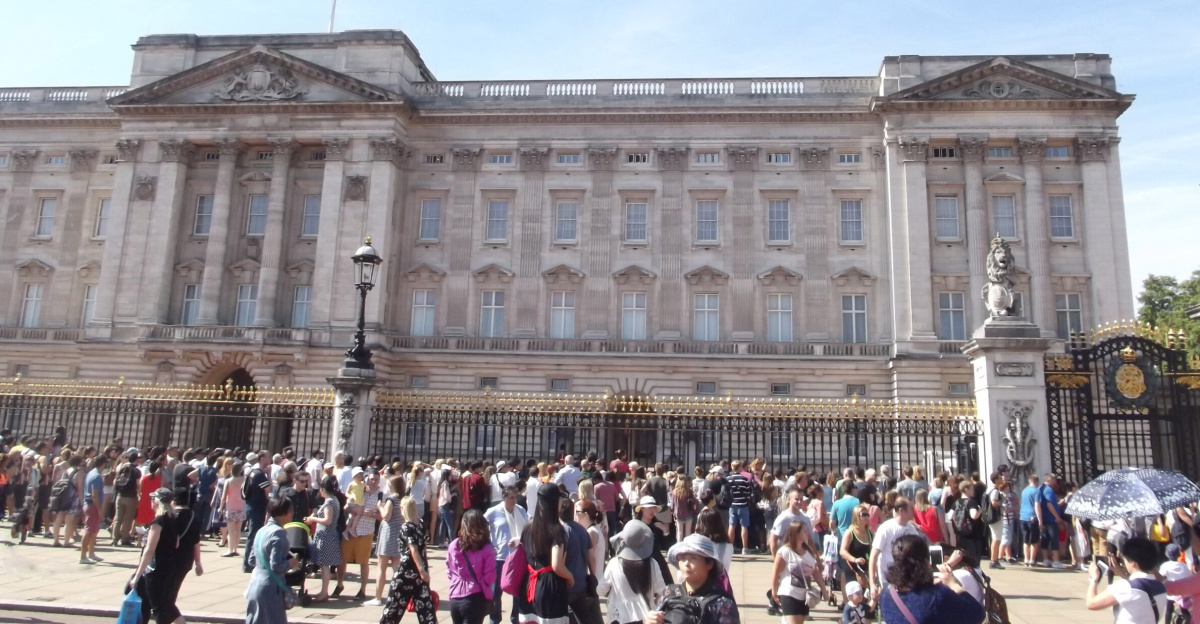
<p>A look at Buckingham Palace from The Mall. One of the most popular areas in London visited by tourists. As you can see here there was loads around!
</p><p>At this time of year The Queen is in Balmoral, so visitors can pay to go into the palace (via a side entrance I think). Probably best to book online beforehand, than showing up and buying tickets.
</p><p><br>
Buckingham Palace is Grade I listed.
</p><p><a href="<a rel="nofollow" class="external free" href="http://www.britishlistedbuildings.co.uk/en-416826-buckingham-palace-greater-london-authori#.VeITo_SC8Xw">http://www.britishlistedbuildings.co.uk/en-416826-buckingham-palace-greater-london-authori#.VeITo_SC8Xw</a>" rel="noreferrer nofollow">Buckingham Palace, Westminster</a>
</p>
<pre>   TQ 2879 NE and 2979 NW CITY OF WESTMINSTER THE MALL, SW1
   89/15 ; 90/22
   5.2.70 Buckingham Palace
</pre>
<pre>   G.V. I
</pre>
<pre>   Royal Palace. 1825 design, begun 1826 by John Nash, rebuilding Buckingham
   House of 1705 as a palace for George IV, completed 1837 with alterations by
   Edmund Blore; the east range added 1847-50 by Blore; the Ballroom block of
   1853-54, with Ambassadors' Court, by Sir James Pennethorne; the east front
   refaced 1913 by Sir Aston Webb for George V. Marble faced east front, the rest
   Bath stone except for Blore's west quadrangle front in Caen stone; slate and
   leaded roofs. Quadrangle plan. Monumental Graeco-Roman, composed with
   picturesque intent by Nash; Webb's east front a stiff Dixhuitieme exercise
   constrained by Blore's existing range but with elegant detailing:
   East front: 3 storeys with ground and attic floor mezzanines. Fenestration in
   rhythm 3:7:3:7:3 with centrepiece and terminal pavilion. Channelled ground
   floor with semicircular arched central gateway flanked by square headed
   doorways, all with fine ornamental iron gates of 1847; end pavilions and main
   range with square headed and semicircular arched gateways respectively;
   architraved sashes with open pediments on 1st floor and cornices on 2nd floor;
   fluted Corinthian pilasters rise through 1st and 2nd floors supporting main
   entablature with blocking course and balustraded parapet; centrepiece and
   terminal pavilions with Corinthian columns in antis and plain outer pilasters,
   in pairs on centrepiece, crowned by blind attics with pediments; continuous
   balustraded balcony to 1st floor. West front: of Blore's east range; advanced
   centrepiece with tetrastyle giant fluted Corinthian column portico above
   archway; sculpture in pediment. North and South quadrangle ranges: by Nash and
   given uniform 3 storey height, with attic, by him in 1828; slightly advanced
   5-window wide pilastered centrepieces; ground floor Greek Doric colonnades
   filled in by Blore; to the south Ambassadors' Court with temple portico-porch
   and flanking ranges with Corinthian colonnade in antis, adjoining Pennethorne's
   1853-1854 Ballroom block which continues giant columned corner pavilion theme
   of Nash's garden front. East front of Nash's West range: originally open to
   deep forecourt and Mall, has storeys and attic main block, 11 windows wide,
   with 3 storey 3-window wings, the main block with prominent, tetrastyle, 2
   storey portico centrepiece, its low ground storey with cast iron coupled Greek
   Doric columns and the upper with giant coupled stone Corinthian columns
   carrying entablature and pediment with sculpture by Baily and crowning figures
   in Coade stone by W Croggan; the cast iron Doric colonnade is returned across
   ground floor of main block which has pavilion end bays dressed with giant
   pairs of Corinthian columns; tall blind attic; the friezes either side of
   portico by Westmacott and originally intended for the attic of Marble Arch.
   West garden front, by Nash: Long symmetrical composition with 5 accents;
   basement, ground floor, piano nobile through 2 storeys and attic to main block
   with 3-storey wings; the main block with 5-window central bow and 3-window side
   ranges terminating in 1-window pavilions; the wings each of 4 windows with
   similar pavilion end bays; ground floor channelled, giant engaged Corinthian
   columns to bow and detached coupled Corinthian columns to pavilions carrying
   entablature with rich rinceau frieze; large frieze panels of Coade stone over
   1st floor by Croggan; the attic above half dome of bow (Blore's replacement of
   Nash's dome) has a frieze by Westmacott intended for Marble Arch; the range is
   flanked at east of terrace by projecting conservatories in the form of
   hexastyle Ionic temples with pediments; the south conservatory altered as
   palace chapel in 1893 and as the Queen's Gallery in 1962.
</pre>
<pre>   Interior: State Apartments in west range at 1st floor level, with 2 suites
   divided by the Picture Gallery, c1829-36 by Nash and Blore, in rich and already
   eclectic Graeco-Roman style with Louis XIV and Wren details in mouldings and
   motifs, approached via the Grand Hall with marble columns and Nash's recasting
   of the original Buckingham House staircase as well as by Pennethorne's Grand
   Staircase to south extended by Pennethorne to give access to his Ballroom
   block; the Picture Gallery redecorated 1914; the interior of the Ballroom
   retains Pennethorne's ceiling and throne recess but redecorated by Ludwig
   Gruner in 1902 when the walls, windows and doorways were remodelled by Verity;
   the plainer ground floor rooms below the State Apartments survive virtually as
   designed by Nash. Marble Arch (q.v.) designed by Nash in 1828 as the forecourt
   gateway was removed by Blore's east range and re-erected in 1851 on its present
   site.
</pre>
<pre>   History of the Kings Works; Vol VI
   Buckingham Palace; J Harris, G de Bellaigue & O Miller
   John Nash; John Summerson
</pre>
<p><br>
</p>
<pre>   Listing NGR: TQ2899779614
</pre>
<p><br>
This text is a legacy record and has not been updated since the building was originally listed. Details of the building may have changed in the intervening time. You should not rely on this listing as an accurate description of the building.
</p><p>Source: English Heritage
</p>
Listed building text is © Crown Copyright. Reproduced under licence.
Photo by Elliott Brown from Birmingham, United Kingdom on Wikimedia

Tourist visits to Buckingham Palace generated £21.5 million ($28 million) in 2024-25 from tickets to its state rooms and royal collections. The palace belongs to the nation, so these earnings go to the royals. Meanwhile, taxpayers cover a £369 million ($481 million) refurbishment project set to last 10 years.

The family enjoys other breaks too. When Queen Elizabeth II died, King Charles inherited her estate without the 40% inheritance tax that hits most people, thanks to a special “sovereign-to-sovereign” rule. Royals carried out 1,900 official engagements in 2024-25, with the Sovereign Grant funding security and travel linked to those duties. These perks blend public service with significant financial shields.

Unseen Costs and Growing Scrutiny
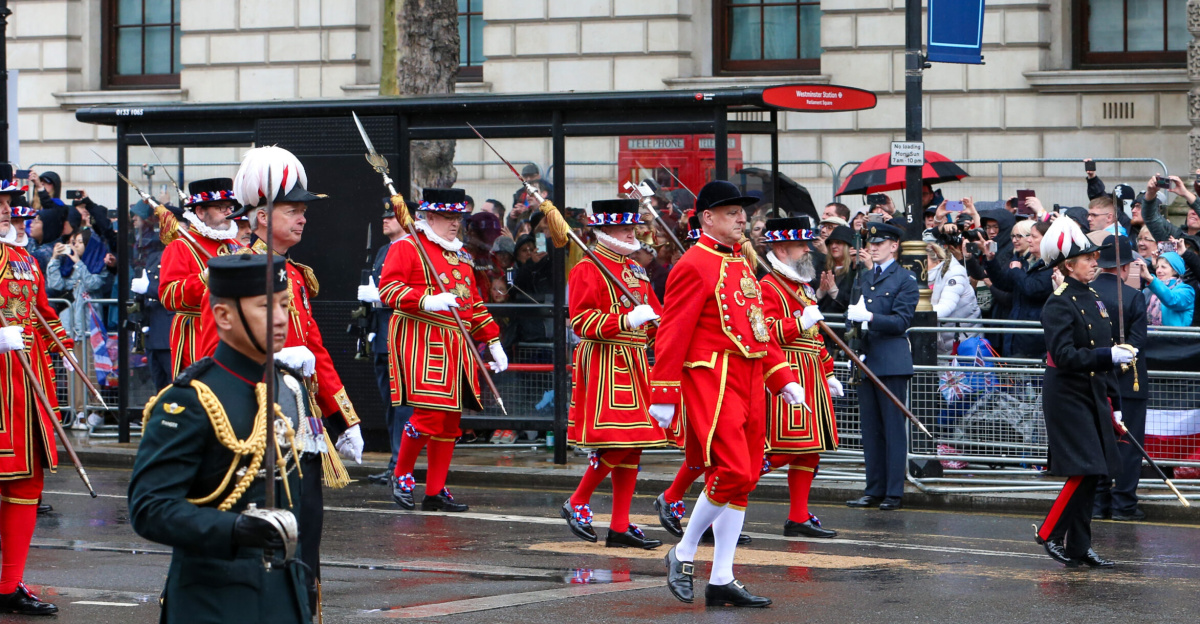
Coronation Procession at the Coronation of Charles III and Camilla - The King's Bargemaster, Yeomen Warders of HM Fortress the Tower of London / The King's Bodyguard the Yeomen of the Guard, King's Gurkha Orderly Officer
Photo by Katie Chan on Wikimedia

The Sovereign Grant grabs headlines, but full royal expenses run much higher. Campaigners against the monarchy estimate total yearly costs at £510 million ($665 million), including security, policing, and one-off events. These cover Queen Elizabeth II’s £162 million ($211 million) funeral and King Charles’s £72 million ($94 million) coronation.

Such costs pull from wider government budgets without full breakdowns. Official duties mix public value with ceremony, leaving taxpayers to foot hidden bills. Overall, grants, duchies, and tourism bring the royals more than £200 million annually. As questions grow over secret deals, like those involving Prince Andrew, and opaque taxes, pressure builds for clearer reporting. In tough economic times, many ask if this age-old system still fits modern Britain.

Sources:
Sovereign Grant Act 2011: Report of the Royal Trustees on the Sovereign Grant Review 2025-26, March 20 2025
Crown Estate Annual Report 2024-25, June 2025
Duchy of Lancaster Annual Report 2025, July 2025
Duchy of Cornwall Annual Report 2024-25, July 2025
Republic.org.uk Sovereign Grant Analysis, April 3 2025
Statista UK Sovereign Grant Trends, September 8 2024