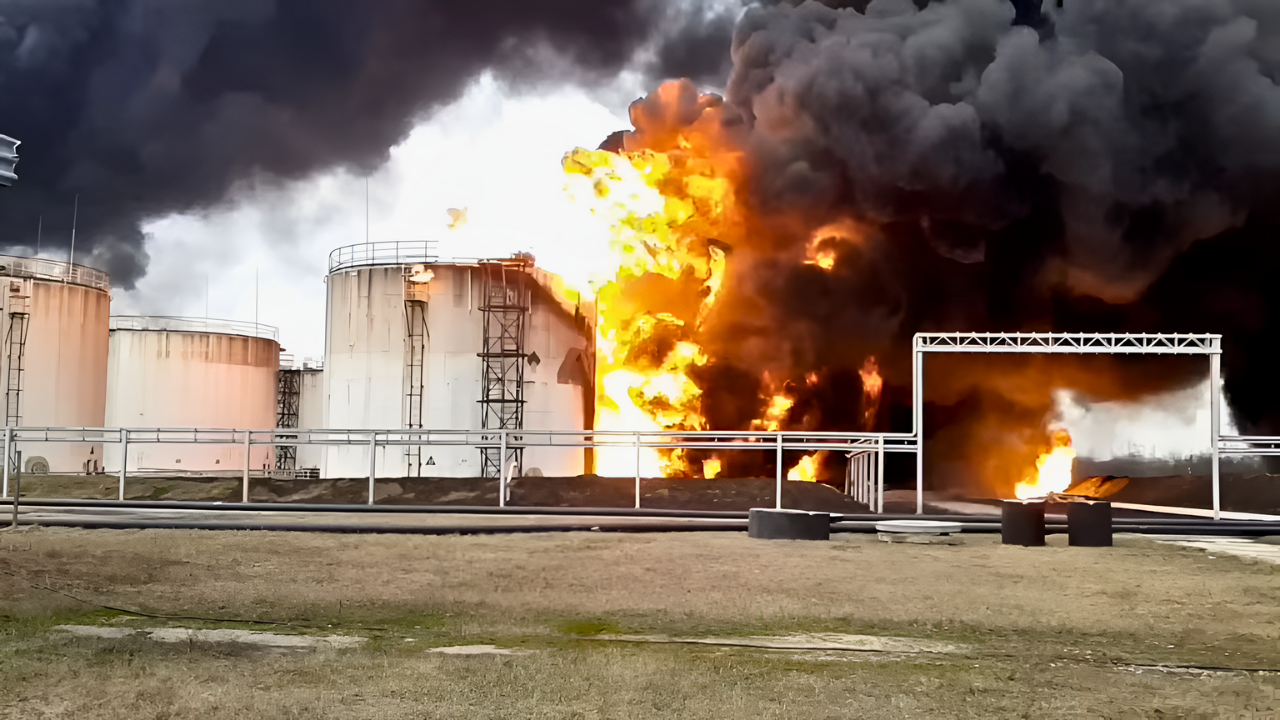
A single pipeline buried in rural Russia has ignited one of Central Europe’s most complex energy crises. On December 1, Ukrainian forces struck the Druzhba oil pipeline near Kazinskie Vyselki in Russia’s Tambov Oblast, hitting a route that moves about 2 million barrels of crude daily.
Ukraine’s military intelligence (HUR) confirmed the attack and framed it as a blow against Russia’s war economy, one that also affects Hungary and Slovakia, the last European states still reliant on Russian oil. The fallout is spreading quickly. Here is what is happening.
A Calculated Strike Inside Russia
The attack on the Taganrog-Lipetsk section of the Druzhba pipeline marked a deep penetration into Russian territory. According to Ukraine’s military intelligence, remote-controlled explosives combined with combustible mixtures were used to breach the system. A HUR source stated that “The Russian oil network, as the main source of income for the aggressor state and financing for the military-industrial complex, will continue to explode and burn until the enemy stops trying to attack Ukraine.”
This strike fits a broader trend. Throughout 2025, Ukraine has carried out at least five attacks on the Druzhba network, including incidents in the Oryol region in March and the Bryansk region in August. These repeated blows signal a strategic campaign aimed at degrading Russia’s ability to fund its military operations by disrupting key energy infrastructure. With each successful strike, the pressure on Russia’s supply chain and its repair capacity intensifies.
Druzhba as a Geopolitical Pressure Point
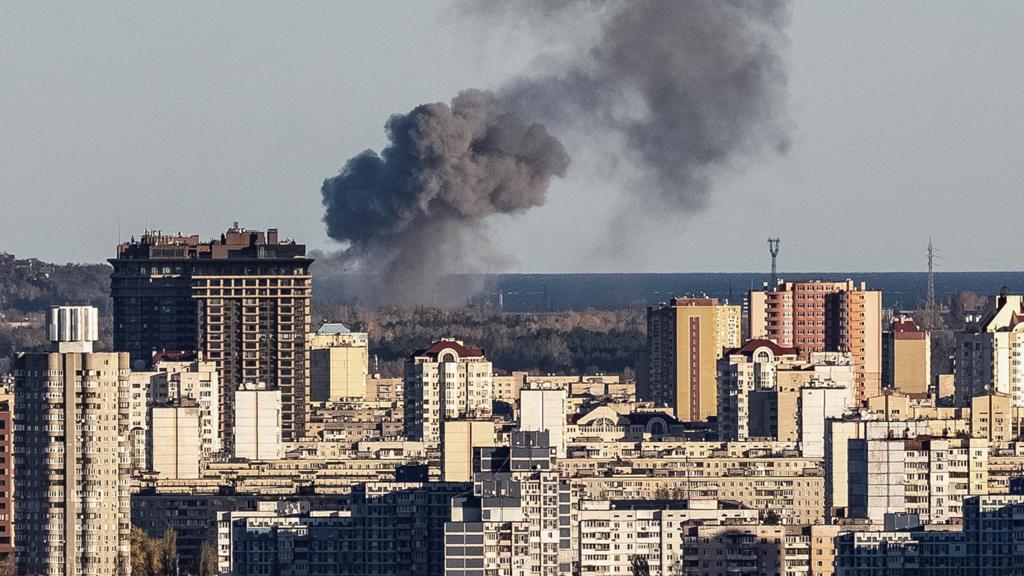
The southern branch of Druzhba delivers about 10 million tonnes of crude annually to Hungary and 6.5 million tonnes to Slovakia. After Russia’s 2022 invasion of Ukraine, the European Union eliminated most Russian oil imports but created an exemption for these two landlocked countries. That carve-out, once considered temporary, is now a strategic vulnerability as attacks increase both in frequency and in severity.
Each new strike raises the risk of prolonged outages or permanent damage. As a result, Druzhba has shifted from a commercial asset to a geopolitical instrument influencing diplomacy, regional energy strategy, and internal EU decision making. The stability of Hungary and Slovakia’s fuel systems now hinges on a pipeline running through hostile territory under repeated attack.
Hungary and Slovakia in a Tightening Crossfire
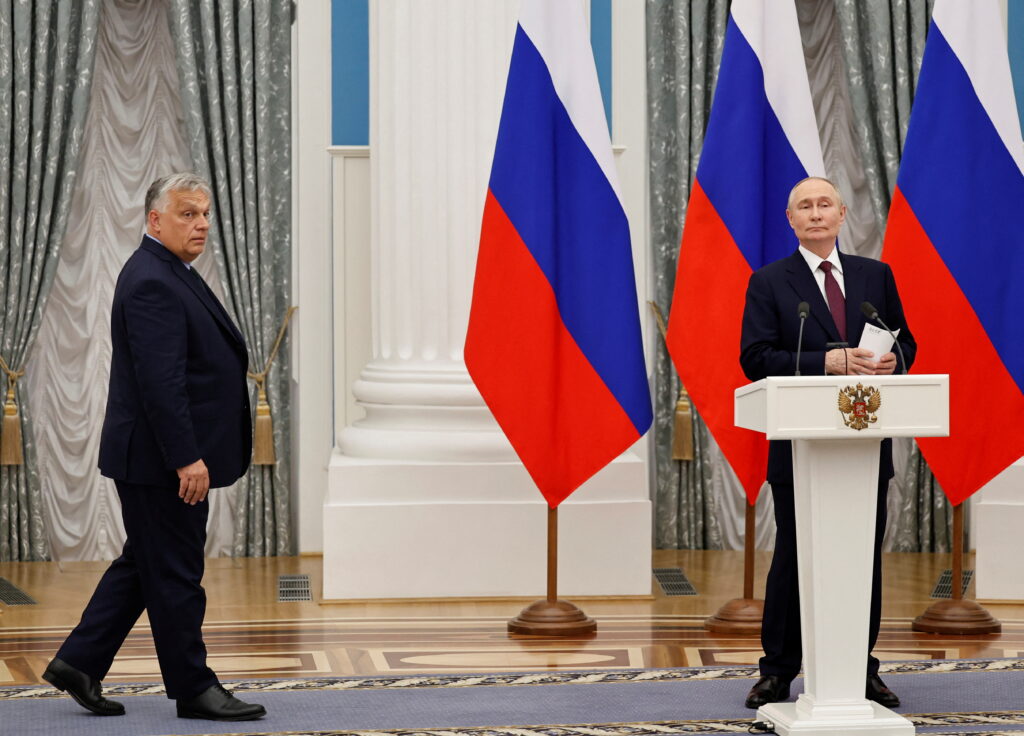
Hungary and Slovakia sit at the center of this crisis. Their key refineries, including MOL’s Danube Refinery and Slovnaft in Bratislava, are deeply tied to national fuel supply chains and employment. Hungarian Foreign Minister Peter Szijjarto has argued that without Druzhba, Hungary would be physically unable to supply itself with fuel due to infrastructure limits.
Industry assessments, however, point to a more complex picture. Reports indicate that up to 80 percent of Hungary’s crude could be rerouted through the Adriatic pipeline in Croatia. The core challenge is not physical impossibility but rising costs, logistics hurdles, and political hesitation. This gap between political statements and industry capability fuels uncertainty and complicates planning for both countries as risks escalate.
The Limits and Costs of Alternative Routes
Redirecting crude through Croatia’s JANAF pipeline comes with complications. Sea-based shipments cost more than direct onshore flows, while sanctions restrict available volumes. These factors increase operational strain on Hungary and Slovakia, especially during extended disruptions.
MOL’s chief executive, Zsolt Hernadi, stated in August that if Druzhba flows were halted, Slovakia would need to rely on strategic reserves and would be unable to export refined products. This would reduce Hungary’s fuel imports by about 20 percent.
Hernadi also noted that Slovakia’s refinery provides roughly one-seventh of Ukraine’s diesel through Hungary. Any lasting disruption would affect Ukrainian logistics, adding another layer of strategic consequence. Alternative routes exist, but their limitations underscore the region’s continued dependence on a single pipeline.
Ripple Effects Across Central Europe and Russia
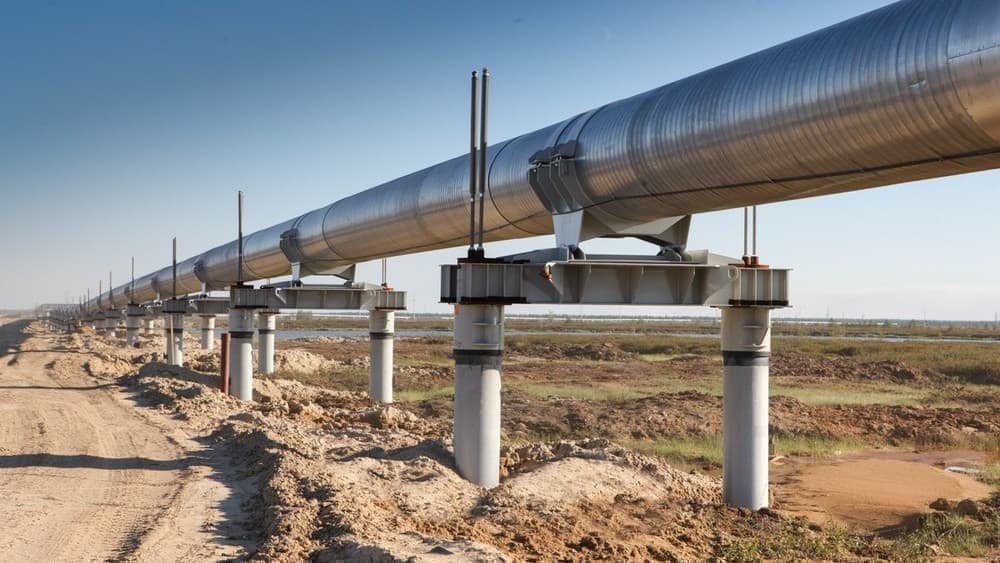
The consequences of the pipeline strikes reach far beyond Hungary and Slovakia. Slovnaft supplies about 10 percent of Czech diesel, meaning any loss in output threatens Czech energy security. Fuel stations across the region have already faced supply concerns, while smaller transport companies are bracing for rising costs and thinner margins.
Inside Russia, the accumulated damage to refineries and pipelines has accelerated price shocks. Domestic gasoline prices have risen more than 50 percent since January, with additional increases through the fall. This inflation pushes households toward rationing risks and adds new pressure on Russia’s transport sector. As the attacks continue, the economic strain becomes harder for Moscow to manage.
Strategic Logic and Rising Diplomatic Tensions
Ukrainian President Volodymyr Zelensky has consistently argued that strikes on Russian refineries are the most effective sanctions because they immediately reduce the Kremlin’s export revenue. On September 5, after meeting Slovak Prime Minister Robert Fico in Uzhhorod, Zelensky said Ukraine would not halt retaliatory operations as long as Russian attacks on Ukrainian energy facilities continued.
Diplomatic tensions have followed. Hungary banned Ukrainian commander Robert “Madyar” Brovdi from the Schengen Area in September, citing concerns over sovereignty. Meanwhile, the European Commission has maintained that Hungary and Slovakia hold more than 90 days of emergency crude reserves, enough to weather short-term disruptions. However, sustained damage to Druzhba would rapidly drain those reserves and force an abrupt and costly shift to alternative supply routes.
The Road Ahead for Europe’s Energy Security
Druzhba moves roughly 730 million barrels per year worth an estimated 43.8 to 46.7 billion dollars at current prices, representing a major share of Russia’s oil export revenue. Year-over-year income has already fallen by about 20 percent due to sanctions and price caps. As winter approaches, the stakes continue to rise, with heating demand and market volatility highlighting the fragility of the pipeline.
The pattern is now well established. Ukraine can continue to strike, Russia can continue to repair, and the EU can rely on reserves for limited periods. But a sustained cycle of attacks risks cascading disruptions. These include higher consumer fuel costs, reduced refinery output, job losses, and friction within EU politics. The future of Druzhba is more than just an energy story; it will shape economic stability and security decisions across Central Europe for years to come.
Sources:
Kyiv Independent, December 3, 2025 (HUR intelligence source statement)
Reuters, December 3, 2025 (pipeline attack confirmation)
The Moscow Times, December 3, 2025 (Russian domestic impact)
Trading Economics, December 4, 2025 (population and economic data)
S&P Global, August 26, 2025 (energy industry analysis)
CEIC Data, November 30, 2025 (Hungary population statistics)