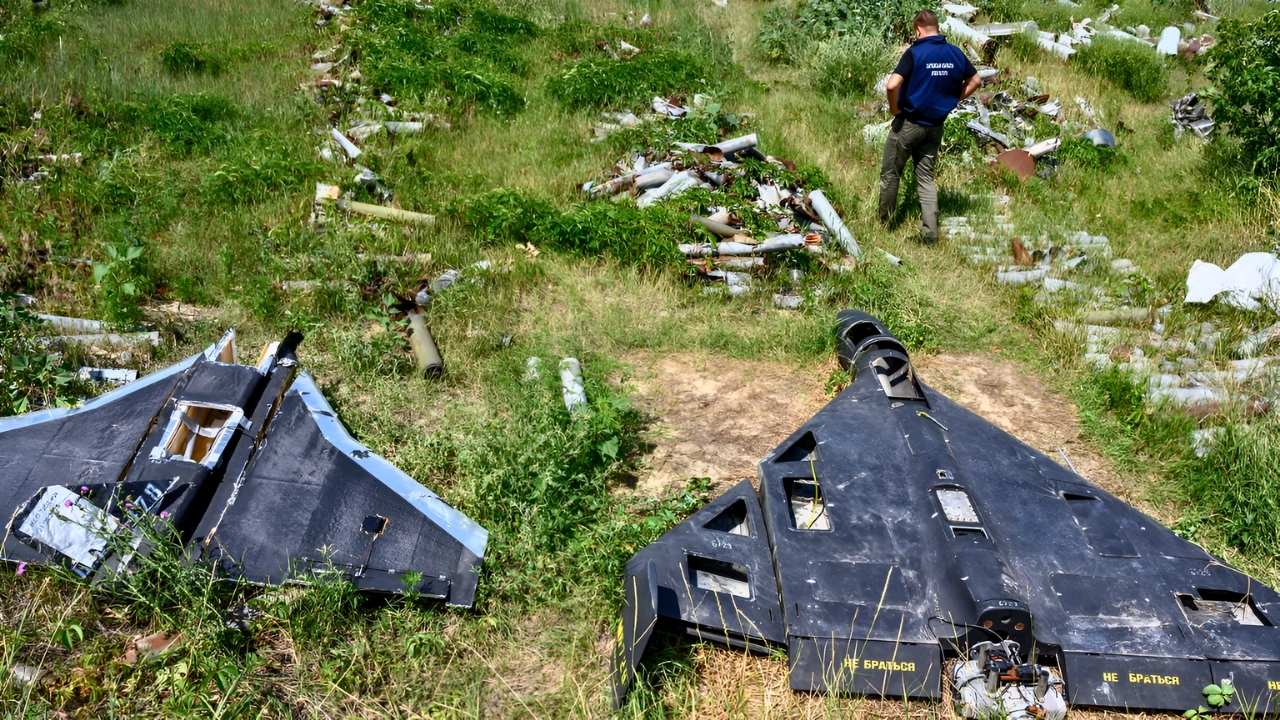
On November 5, 2025, Ukrainian forces executed a precision strike that obliterated a Russian ammunition and drone storage facility at occupied Donetsk Airport, marking a watershed moment in the conflict. The warehouse contained approximately 1,000 fully assembled Shahed drones and 1,500 warheads—a combined stockpile of 2,500 munitions eliminated in seconds. Satellite imagery confirmed the facility’s complete destruction, with analysts estimating damage between $50 million and $100 million. The strike represents the single largest loss of Russian drone inventory throughout the entire war.
In the weeks following a critical Pentagon authorization in November 2024 permitting Ukraine to deploy long-range weapons deep inside Russian territory, Ukraine launched a coordinated multi-target campaign that fundamentally altered the conflict’s geography. In November 2025, Russia’s rear-area infrastructure faced sustained Ukrainian precision strikes, collapsing Moscow’s longstanding assumption that interior regions would remain insulated from kinetic attack.
The Weapon and the Strike
Ukrainian forces executed the Donetsk operation using a domestically integrated FP-2 long-range attack drone. The platform penetrated Russian air defenses and struck the depot directly, triggering massive secondary detonations as stored Shahed drones and warheads ignited simultaneously. Within seconds, the entire warehouse was erased. The strike demonstrated Ukraine’s rapidly advancing capability to conduct intelligence-driven deep operations using advanced unmanned systems.
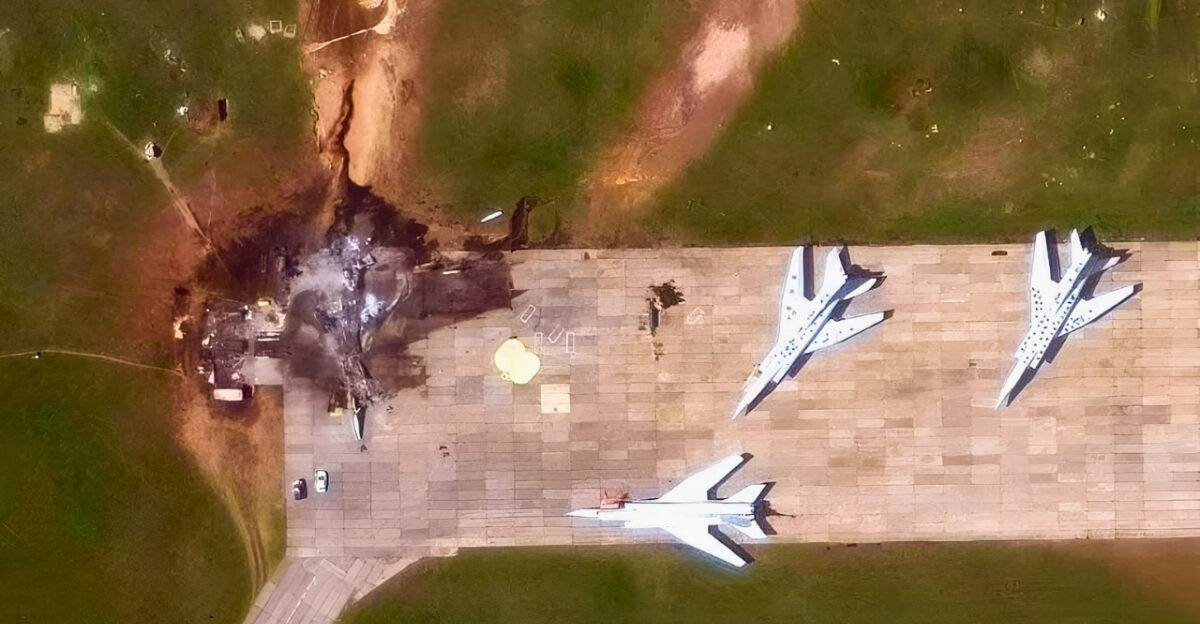
Post-strike satellite imagery provided indisputable verification. The detonation zone displayed scorched earth, blast cratering, and widespread debris dispersion consistent with full stockpile ignition. This level of orbital confirmation left no space for Russian denial and elevated the strike from battlefield claim to documented strategic fact.
Expanded Campaign Across Multiple Targets
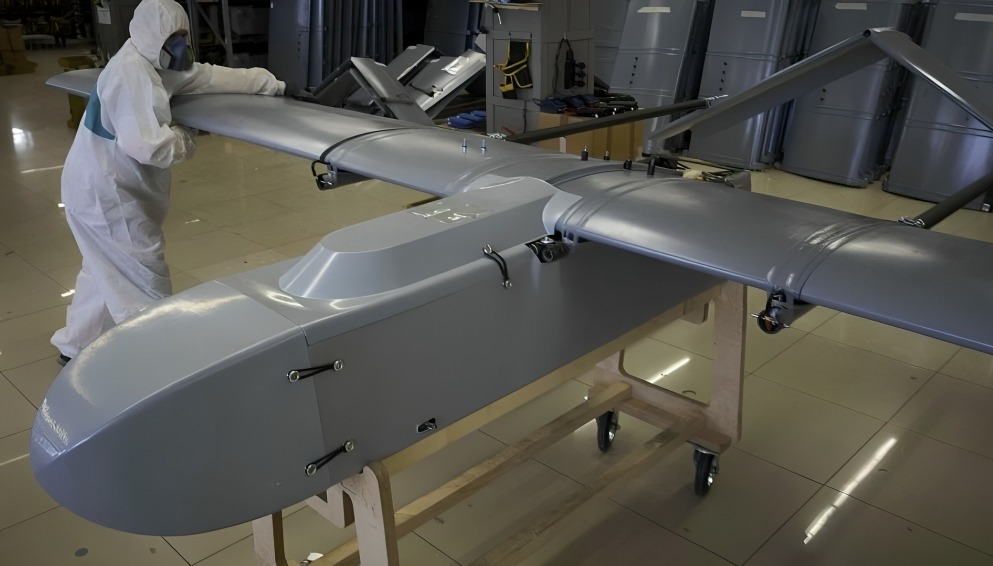
The Donetsk explosion was part of a broader Ukrainian campaign in November 2025. Ukrainian forces struck arms depots in occupied territories, a fuel storage facility in Luhansk, and two Orion-drone hangars at Kirovske airfield in Crimea on November 13. These strikes over multiple days confirmed a new Ukrainian operational tempo defined by multi-target, intelligence-linked precision rather than isolated engagements.
At Kirovske airfield, the destruction of two hangars housing Russian Orion reconnaissance and strike drones further degraded Russia’s unmanned aviation capability. The Orion platform plays a central role in Russian surveillance and precision targeting operations across southern Ukraine, making the strike strategically significant beyond its immediate material impact.
ATACMS Penetrates Russian Territory
On November 18-19, Ukraine launched U.S.-made ATACMS missiles into Russia’s Voronezh region, hitting the Pogonovo army training ground. This marked a major ATACMS strike deep inside Russia following the November 2024 authorization. Each missile carries a substantial warhead and can strike targets at ranges up to 300 kilometers, allowing Ukraine to reach military facilities across Russia’s Voronezh, Bryansk, Kursk, and Belgorod regions.
The strike shattered the long-standing assumption that training grounds deep inside Russia were safe from Ukrainian attack. Training facilities now require frontline-level air defense coverage, forcing Russia into difficult allocation choices. Protecting interior bases means weakening protection for frontline forces, while the psychological effect on Russian trainees is severe—soldiers now face battlefield risk before even reaching the front.
Cascading Strategic Consequences

The destruction of a significant portion of Russia’s operational Shahed stockpile immediately reduces the scale and frequency of drone barrages against Ukrainian cities and infrastructure. Ukrainian air defenses gain a narrow but vital window to conserve interceptors, repair radar systems, and reposition networks in anticipation of Russia’s next phase of attacks.
With estimated losses exceeding $100 million across strikes in November, the financial impact forces Russia to shift funds away from other weapons programs while simultaneously investing heavily in air defenses across vast interior regions previously considered secure. Replacing drones, hangars, fuel infrastructure, and training equipment strains an already stretched war machine.
A Turning Point in Warfare

By destroying 1,000 Shaheds, 1,500 warheads, multiple depots, two Orion hangars, and striking a major Russian training base inside Russia itself, Ukraine has demonstrated an unprecedented deep-strike capability. Distance is no longer protection. Russia must now defend everything, everywhere. Ukraine’s November 2025 strikes mark a decisive transition into a phase of the war where rear-area sanctuaries no longer exist, fundamentally reshaping the conflict’s strategic geometry.
Sources
General Staff of the Armed Forces of Ukraine Situation Report (November 5, 2025)
Institute for the Study of War (ISW) Russian Offensive Campaign Assessment (November 14, 2025)
Ministry of Defence (UK) Defence Intelligence Update (November 27, 2025)
White House Press Briefing/Statement on ATACMS Authorization (November 2024)