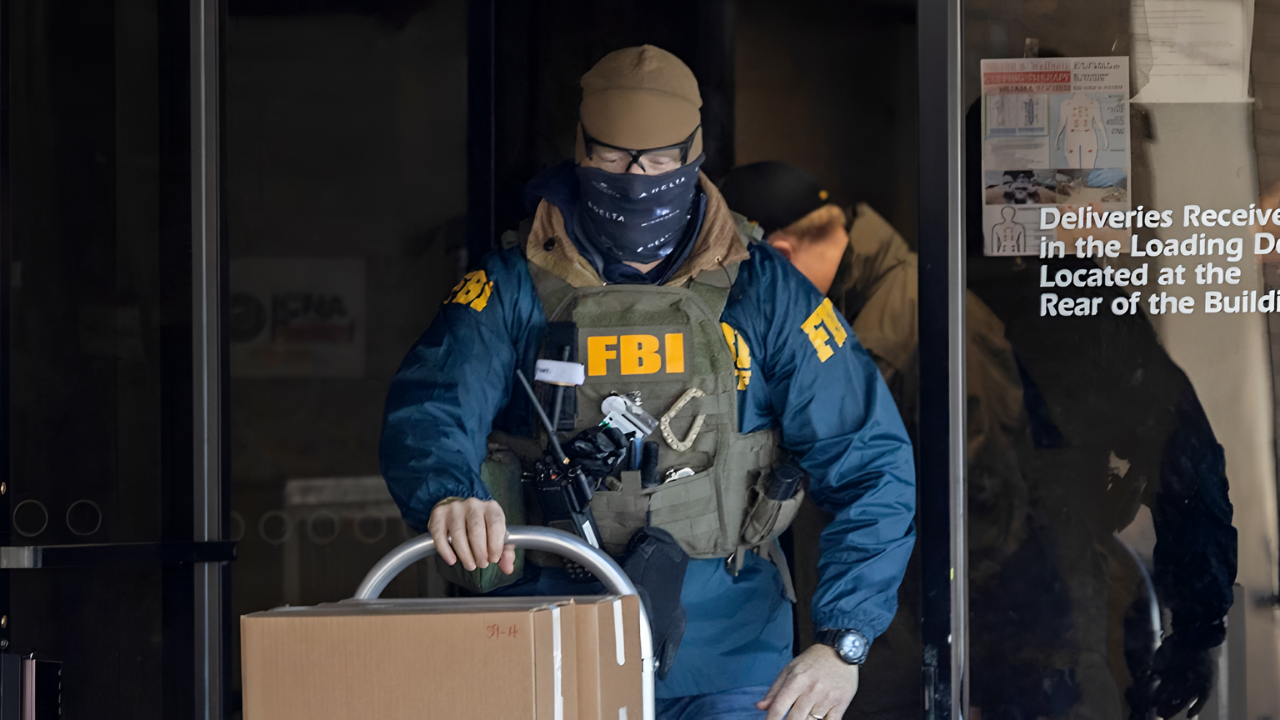
Federal prosecutors have charged 98 people in what they call one of the largest fraud cases in Minnesota’s history. The schemes involved stealing billions of dollars meant for children, low‑income families, and others in need. Most of the fraud took place through pandemic‑era aid and long‑running public programs.
Authorities have already recovered or seized tens of millions of dollars, but investigators believe the full amount stolen is much higher. The cases focus on the misuse of federal aid for child nutrition, Medicaid health benefits, and other safety‑net programs. The discovery has led to audits, frozen payments, and closer oversight at both the state and federal levels.
Feeding Our Future at the Core of the Scandal
At the center of the cases is Feeding Our Future, a Minnesota nonprofit that claimed to feed children during and after COVID‑19 lockdowns. Federal investigators say the group submitted about $250 million in fake meal reimbursement claims.
Founded in 2016, Feeding Our Future sponsored meal distribution sites and claimed to help feed thousands of children from low‑income families. Instead, prosecutors say participants created fake invoices, claimed meals that were never served, and used the money to buy luxury cars, homes, and other personal items.
So far, 78 people have been charged in the Feeding Our Future case, including its founder, Aimee Bock, who has been convicted. More than 60 others across connected cases have either been found guilty or pled guilty. Prosecutors called it a large‑scale theft from programs meant to ensure children didn’t go hungry when schools and child‑care centers were closed during the pandemic.
State officials had raised early concerns about Feeding Our Future, questioning its unusually high meal counts and rapid growth. But the organization sued the Minnesota Department of Education, accusing it of discrimination and delays. That lawsuit prevented the state from stopping payments while the courts considered the case.
When the federal government loosened rules to speed up food aid during COVID‑19, payments flowed more easily and with less oversight. These weak controls, combined with legal constraints and poor coordination between state and federal agencies, allowed the fraud to grow unchecked for years.
Somali Community Under Scrutiny
Of the 98 people charged overall, 85 come from Minnesota’s Somali community in the Minneapolis–St. Paul area. Many of the accused ran or worked for organizations that claimed to feed thousands of children daily but allegedly did not. Prosecutors say some defendants used public funds to buy expensive houses, cars, and businesses. One defendant, Ahmed Mohamed Artan, is accused of stealing nearly $1.7 million, while another, Sharon Denise Ross, was sentenced to over three years in prison for a $2.4 million fraud scheme.
Community leaders say the heavy focus on Somali defendants has unfairly stigmatized the wider community. They argue that legitimate groups are being treated with suspicion and that real aid programs are suffering. Federal officials insist, however, that prosecutions are based on evidence of financial crimes, not ethnicity or background.
The controversy has sparked debate about how to hold criminals accountable without harming honest organizations that serve refugees and immigrant families who rely on aid programs.
Far‑Reaching Effects and Calls for Reform
The fraud investigations have had a ripple effect across Minnesota’s public services. Federal officials have frozen about $185 million in child care funding while reviewing how the money is managed. This pause affects services for nearly 19,000 children, leaving families and day‑care centers uncertain about future payments. Auditors have also found signs of fraud in at least 14 other publicly funded programs. One housing effort lost an estimated $104 million, and investigators suspect similar theft in Medicaid and autism services.
Prosecutors estimate that a portion of the $18 billion Minnesota has spent on Medicaid since 2018 may have been illegally claimed. Meanwhile, investigators are also looking into alleged abuse of pandemic Paycheck Protection Program loans worth roughly $400 million. Some of the same people and groups from the Feeding Our Future case are being examined in that probe.
Minnesota’s government faces tough questions about how such large‑scale fraud went unnoticed. Governor Tim Walz said state officials were told not to alert suspects while the FBI investigated, which limited their ability to act sooner. Critics argue that regulators still should have strengthened oversight long before the scandal grew so big.
In response, the state and federal governments are now tightening rules for nonprofits involved in food and child care programs. Reforms include stricter background checks, more site visits, and better tracking of financial records. Authorities have seized millions of dollars in assets — from luxury cars to bars and real estate, that were bought with stolen public funds.
Policy experts say deeper reforms are needed. They warn that overlapping responsibilities between state and federal agencies make fraud hard to detect early. Without stronger monitoring systems, they fear similar schemes could happen again, in Minnesota or elsewhere in the country.
Federal investigators describe the current cases as “just the tip of the iceberg.” More arrests and charges are expected as they work to recover lost funds and rebuild public trust. Minnesota now faces the challenge of restoring critical services and proving that taxpayer money can once again reach the people who need it most.
Sources
“Federal Jury Finds Feeding Our Future Mastermind and Co-Defendant Guilty in $250 Million Pandemic Fraud Scheme.” U.S. Department of Justice, District of Minnesota, 19 Mar 2025.
“Here’s What the Trump Administration Is Doing to Crush Minnesota’s Fraud Epidemic.” The White House, 2 Jan 2026.
“Half or more of $18 billion paid out by Medicaid in Minnesota may be fraudulent, US attorney says.” CBS Minnesota, 17 Dec 2025.
“Federal officials double down as deadline looms to unfreeze $185M in Minnesota child care funds.” KSTP 5 Eyewitness News, 5 Jan 2026.